What price justice when small fines fail to act as a deterrent for big forest crimes?


What does a $200,000 fine for illegal teak on luxury yachts say about the true cost of forest crime?
When penalties are small, companies can absorb them as a cost of doing business, with little consequence for their overall profit margins.
Forest crimes are perceived as low-risk, high-reward offences, which ultimately reflects a wider problem of how forest crimes may be treated by companies and corporations that drive up demand for forest products. It ignores the scale of the issue, which often involves transnational organised criminal networks which facilitate the illegal extraction of timber resources at the source.
EIA investigations have repeatedly shown that illegal logging and timber trafficking are enabled by networks of companies, brokers, corrupt officials and criminal syndicates operating across source, transit and destination countries. Unsustainable demand for valuable timber drives resource theft, forest loss and abuses against forest-dependent communities.
In the face of global forest cover decline, the unsustainable demand for high-value timber products, such as the tropical hardwood Burmese teak from conflict-torn Myanmar, continues to grow. Downstream companies operating in high-value markets can be powerful drivers of forest crime – their demand for prized timber and other forest goods creates the commercial incentive for illegal extraction.

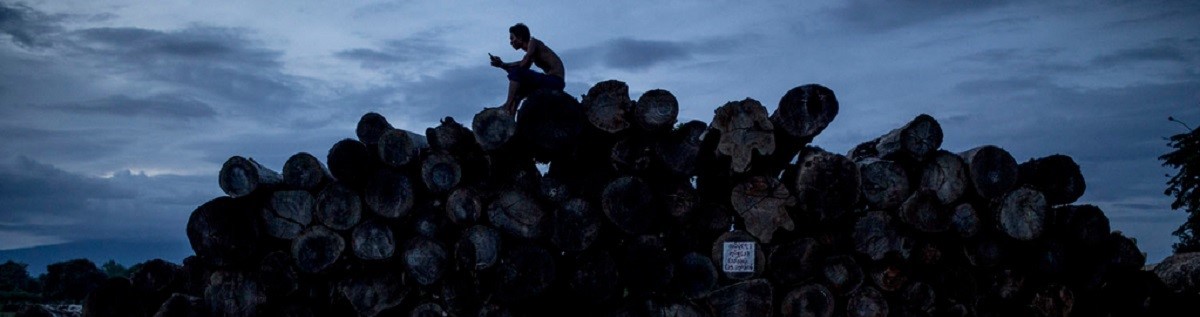
Teak decking is highly prized for use on luxury yachts
The case luxury yacht builder Sunseeker illustrates the problem. In August 2026, a US court confirmed the terms of a May 2026 plea deal after Sunseeker International Ltd and Sunseeker USA Sales Co Inc pleaded guilty to two Lacey Act violations for using illegal Burmese teak on two multi-million-dollar yachts imported into the US.
The companies received a sentence which included a $200,000 fine, up to five years’ probation and a compliance plan. Sunseeker International had already been fined £358,760.60 in the UK for importing this teak and other illegal timber in breach of the UK Timber Regulation. The yachts fitted with the illegal teak in the UK were subsequently exported to the US for sale.
According to US prosecutors, the teak used in the imported yachts had an approximate total value of $20,400. However, the two yachts alone had a combined value of more than $4 million, meaning the fine paid by Sunseeker was just five per cent of the total value of these yachts.
When businesses are caught doing wrong, the financial consequences are often small compared with the value of the goods they sell and that imbalance helps make forest crime a low-risk, high-reward business, not just for traffickers but also for corporate buyers willing to accept illegality as a manageable risk.
For more than a decade, EIA has exposed the risks associated with timber from Myanmar. Corruption and opacity in the harvesting and sale of Myanmar timber were entrenched well before the 2021 military coup.
Following the coup, sanctions were imposed on the state-owned Myanmar Timber Enterprise (MTE) – which is responsible for the harvesting and sale of all timber in the country – once the MTE came under the control of the military. In the years since, MTE has continued to oversee monthly auctions of Myanmar timber as these sales are a key revenue source for the military.
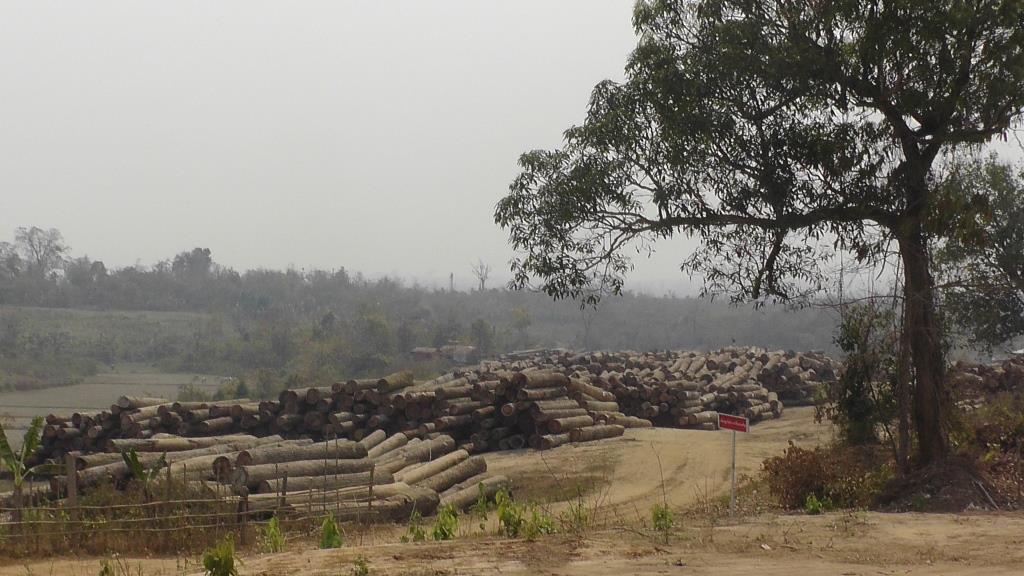
Myanmar Timber Enterprise log depot (c) EIA
In 2020, the EU Timber Regulation Expert Group concluded that legality could not be verified and risk could not be adequately mitigated for any timber imports from Myanmar, but continued corporate demand for Burmese teak has nevertheless sustained a lucrative market linked to resource theft, deforestation and revenues generated for the military junta.
Where companies have ignored well-documented risks, a fine based only on the value of seized timber is unlikely to provide adequate deterrence.
The sentencing memorandum, submitted to the court by Sunseeker’s lawyers, provides an insight into how Sunseeker has interpreted the enforcement action taken against it. The memorandum described the offence as a “compliance lapse” with “no identifiable victims” and no need for “restitution or other remedial relief”.
In EIA’s view, however, this case is an example of a successful cross-border enforcement action against illegal timber trade by both the US and UK, but the penalties imposed are plainly too low to reflect the scale of the luxury goods involved or to deter companies from treating illegal timber as an acceptable business risk.
This framing also fails to recognise the harm caused to Myanmar’s people and forests, treating the offence instead as a routine business issue. The sentencing therefore falls short of what the memorandum describes as “just punishment” or an “adequate deterrence”.
The US Government itself has recognised the wider criminal context. At an April 2026 TIMBER Working Group roundtable, Adam Gustafson of the Department of Justice said: “[t]imber trafficking is not a victimless crime. Unlawful profits are funding terrorist organisations and drug cartels, driving government corruption and undermining law and order.”
At an APEC Ministerial Meeting on Forestry in China, he also highlighted “[a]ssociated crimes such as money laundering, tariff evasion and corruption exacerbate the problem”.
Since the 2021 coup in Myanmar, revenues from natural resources, including timber, have supported the military. Corporate purchasers are not outside this chain – their orders and margins help determine whether the illegal supply of Myanmar timber remains profitable.
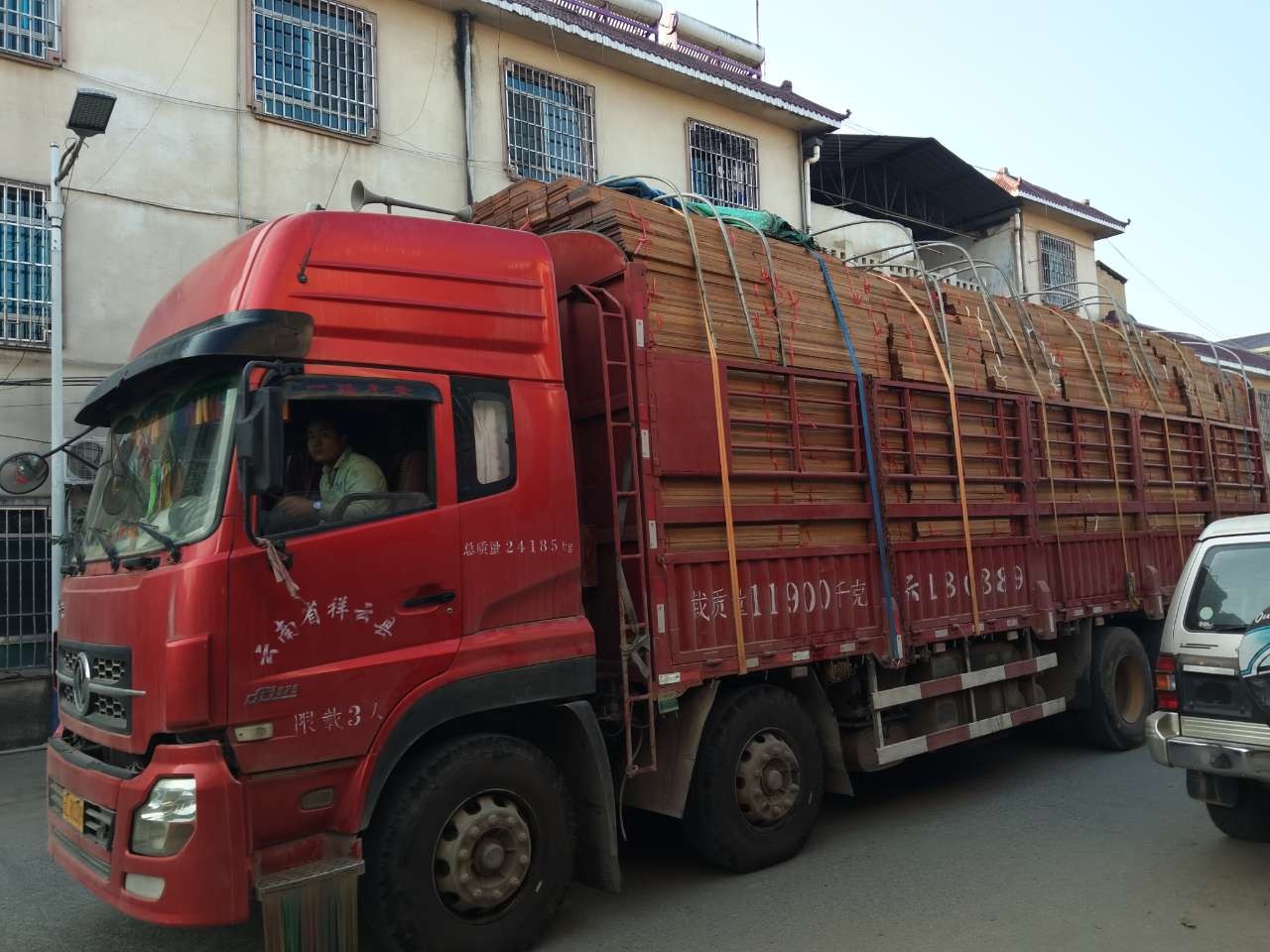
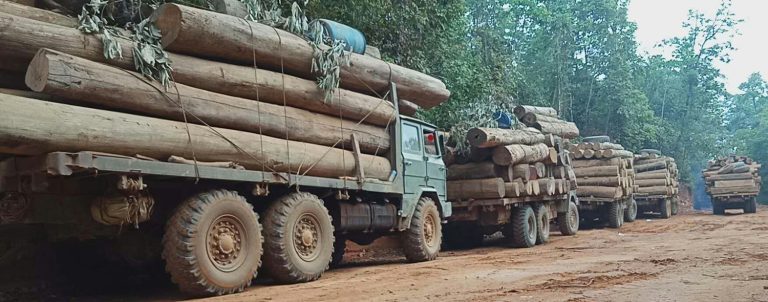
Teak transported by truck in Myanmar, February 2021 (c) EIA
The Sunseeker case falls short of recognising this broader context in the penalties that were issued for breaching the Lacey Act.
In the UK, a Government consultation is shortly expected to lay the secondary regulation needed to operationalise the requirements set out five years ago in Schedule 17 of the Environment Act 2021.
In 2021, the UK introduced legislation under Schedule 17 to prohibits businesses from using illegally produced forest-risk commodities. The ambitions of the UK Government are clear – at the UN’s COP26 Climate Change Conference that same year, the UK made a commitment to stop and reverse forest loss by 2030.
But for the UK to achieve its objectives, it is essential that penalties are strong enough both in Schedule 17 and the UK Timber Regulation to effectively dissuade businesses from becoming repeat offenders and to deprive them of any financial gain for non-compliance.
At the international level, the 13th Conference of the Parties to the UN Convention against Transnational Organized Crime (UNTOC) will meet in Vienna from 19-23 October 2026, where EIA will be present. States are expected to consider a resolution to establish an ad hoc committee to negotiate a protocol on crimes that affect the environment. EIA will be calling for forest crimes, including illegal logging, timber trafficking and deforestation and forest degradation caused by illegal mining and the trafficking of minerals, in addition to broader crimes that affect the environment across the triple planetary crisis, to be recognised as serious transnational organised crimes.
EIA hopes for an outcome where states recognise the broader context of forest crimes, which improves international cross-border cooperation, joint investigations and asset recovery, addresses corruption and money laundering and supports harmonised offences and penalties.
The Sunseeker case shows both what cross-border enforcement can achieve and why the recognition of forest crimes must go further. Shared definitions of illegality enabled US authorities to act on teak previously imported into the UK unlawfully, but a $200,000 fine imposed upon Sunseeker effectively served to reinforce the notion that forest crime is a low-risk, high-reward business.
The implementation of Schedule 17, improvements to the UK Timber Regulation and international cooperation under UNTOC present opportunities to ensure that enforcement follows both forest crimes and the money, targeting corporate buyers, brokers, facilitators and financial networks through proportionate penalties, anti-money-laundering and anti-corruption measures, and asset recovery.
Only then will those who profit, rather than forests and communities, bear the true cost.