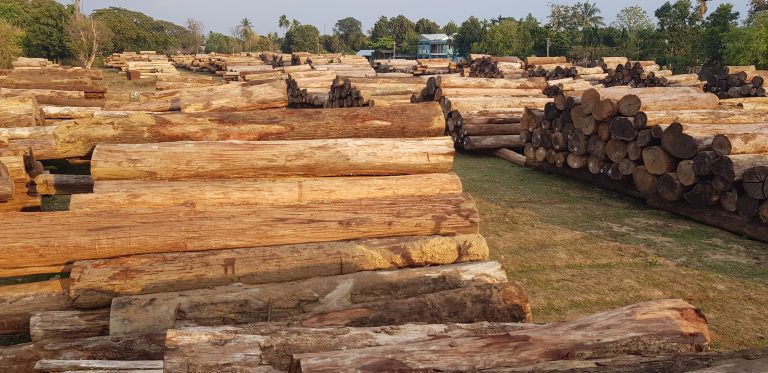
Prosecution of UK yacht firm by US Gov’t sends warning over illegal Myanmar teak


EIA has welcomed the guilty pleas entered by UK luxury yacht manufacturer Sunseeker International Ltd and its US subsidiary Sunseeker USA Sales for violations of the US Lacey Act linked to the use of illegally sourced teak from Myanmar.
The case marks one of the most significant US enforcement actions involving Myanmar teak since the country’s 2021 military coup and demonstrates the continued importance of robust environmental laws such as the US Lacey Act – which prohibits trade in wildlife and plant products sourced in violation of domestic or foreign laws – and the former EU Timber Regulation (EUTR) in combatting illegal logging and associated human rights abuses.
According to the US Department of Justice, Dorset-based Sunseeker admitted to using illegally obtained Burmese teak on yachts imported into the US and agreed to pay a $200,000 fine, alongside compliance measures. The firm is due to be formally sentenced on 20 August.
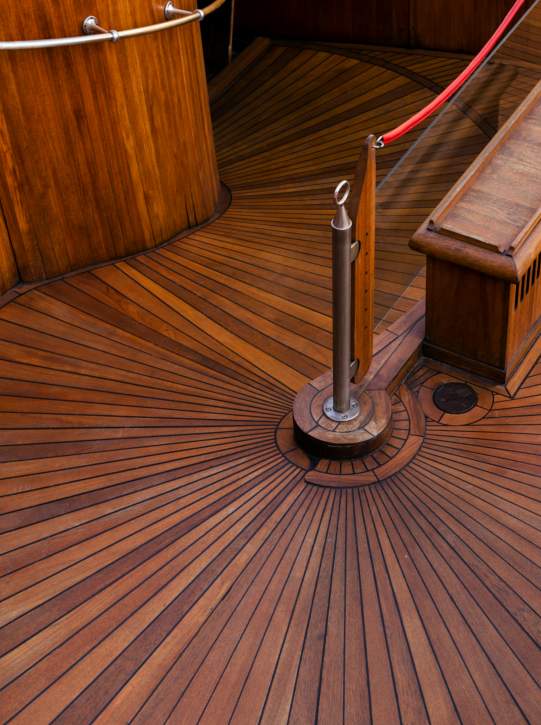
Burmese teak is highly prized for decks and fittings on luxury yachts (c) EIA
EIA Forests Campaigns Leader Faith Doherty said: “The Myanmar teak trade is not a victimless environmental crime. Revenues from this trade have helped sustain a brutal military regime linked to widespread human rights abuses and violence against civilians.
“The US Lacey Act and the EU Timber Regulation have shown that strong due diligence and enforcement laws are essential tools in tackling illegal logging and corporate complicity in high-risk supply chains.
“Given that the two yachts involved in the US case were priced at approximately $2.98 million and $1.07 million, the $200,000 fine is effectively little more than a financial slap on the wrists – nevertheless, this outcome still sends a clear message that companies cannot ignore the risks associated with sourcing teak from Myanmar.”
EIA first exposed Sunseeker’s use of Myanmar teak in 2018 through investigations which found teak linked to breaches of European timber laws entering the company’s supply chains.
In 2024, the company pleaded guilty in the UK to criminal offences under the UK Timber Regulation for illegal imports of Myanmar teak and was fined £358,759.64 by Judge Jonathan Fuller KC at Bournemouth Crown Court.
Judge Fuller said Sunseeker was aware of impending rule changes to timber imports after Brexit which changed its status from ‘trader’ to ‘operator’ and left it in breach of regulations, calling it a “systemic failure”. He pointed out that EIA had flagged the risk of illegal teak in Sunseeker’s supply chain to the company as early as 2018.
Myanmar’s teak trade has long been associated with corruption, illegal logging and severe human rights abuses. Since the coup, revenues from the state-controlled timber sector have helped support a military junta responsible for widespread violence and atrocities against civilians.
The Myanmar Timber Enterprise (MTE), the sole legal exporter of teak from Myanmar, is sanctioned by the EU, UK and US.
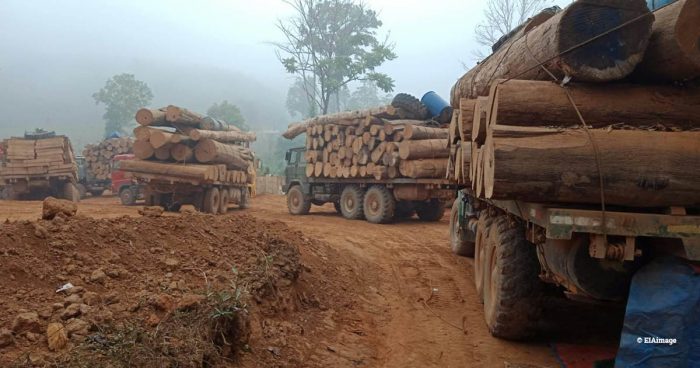
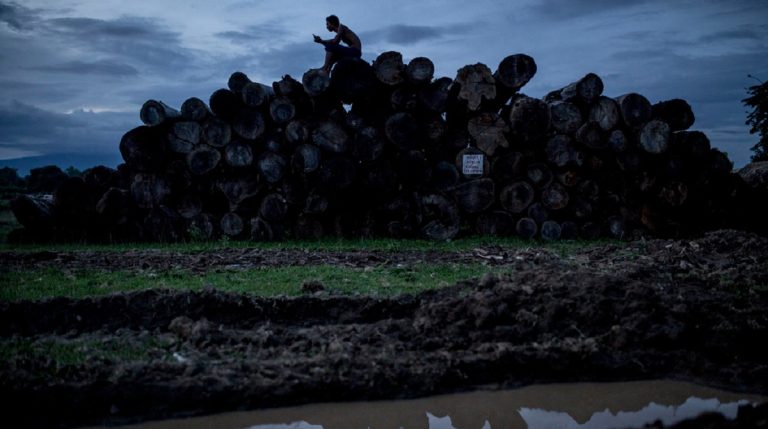
Burmese teak being illegally transported out of Myanmar (c) EIA
EIA’s 2018 report, A Tale of Two Laws, highlighted how weak enforcement and loopholes in implementation enabled illegally sourced Myanmar teak to continue entering international markets, despite mounting evidence of corruption, conflict financing and human rights violations tied to the trade.
The latest US prosecution demonstrates that strong legal frameworks can work when authorities are willing to enforce them.
Myanmar teak remains highly prized within the luxury yacht industry due to its durability and appearance. However, EIA has long warned that sourcing teak from Myanmar carries unacceptable legal, environmental and ethical risks while the country remains under military rule and independent forest governance is impossible.
EIA calls on governments and industry actors to: