

DONATE

Forest reports

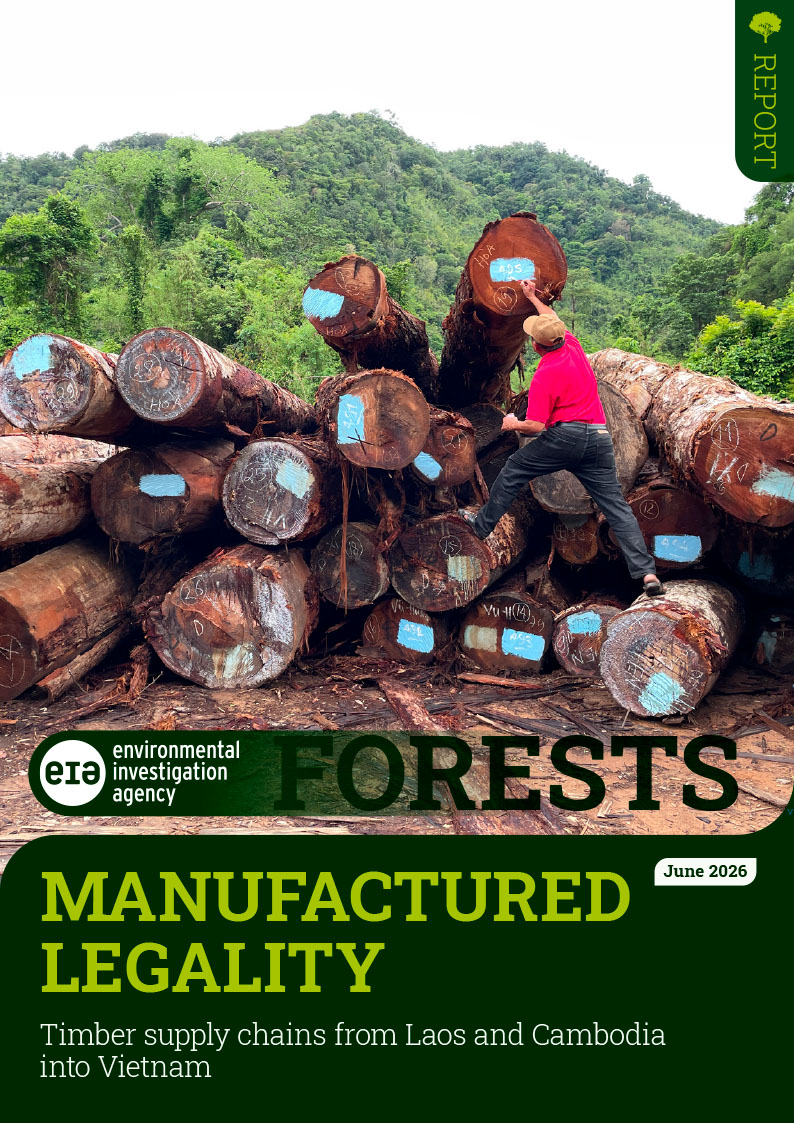
Manufactured Legality

This report examines how timber moves into one of the world’s most important wood-processing hubs - Vietnam. During the past two decades, Vietnam has become a major global exporter of furniture and wood products, supplying markets across Asia, Europe and the US. To support this growth, the country relies not only on its own plantations, but also on timber imported from a wide range of international sources, including neighbouring countries such as Cambodia and Laos.

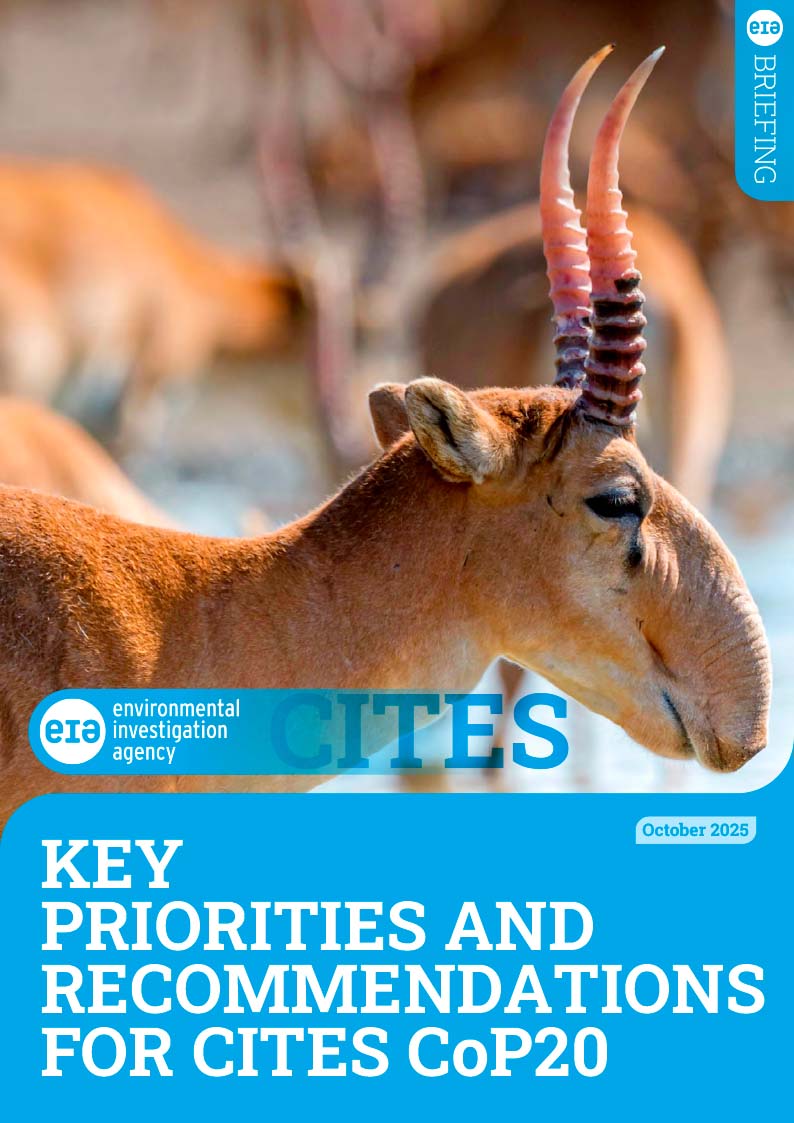
CITES Briefing Document – Key Priorities and Recommendations for CoP20

The 20th meeting of the Conference of the Parties (CoP20) to the Convention on International Trade in Endangered Species of Wild Fauna and Flora (CITES) will take place from 23 November and 5 December in Samarkand, Uzbekistan. EIA will be actively engaging at CoP20 on a range of key issues relating to the protection of elephants, rhinos, Asian big cats, pangolins and vaquita porpoises, in addition to broader compliance and enforcement issues.

A Family Affair

A report by EIA and our Indonesian partner Kaoem Telapak which documents alleged deforestation, corruption and human rights violations in Indonesia’s  palm oil sector by companies which are linked via the involvement of members of the Fangiono family.

The RSPO’s Rules on Deforestation, Legality and Traceability

In this briefing we examine the extent to which the RSPO standard ensures legality, traceability and deforestation free palm oil. At first glance it may look as if the RSPO standard largely ensures palm oil is deforestation-free, legal and traceable. In reality, the system is complicated and many caveats and loopholes allow companies to bypass and bend the rules.

The Palm Oil Black Box

Tracking the overall trade in oil palm is complex due to its many derivatives, products and uses. Many of the trade codes used at an international level are not specific to oil palm and multiple codes can be used for similar products, making trade opaque.

From Risk to Responsibility

By tackling its own consumption and by developing strong international multi-stakeholder partnerships, the UK has a critical opportunity to lead by example in global environmental governance.