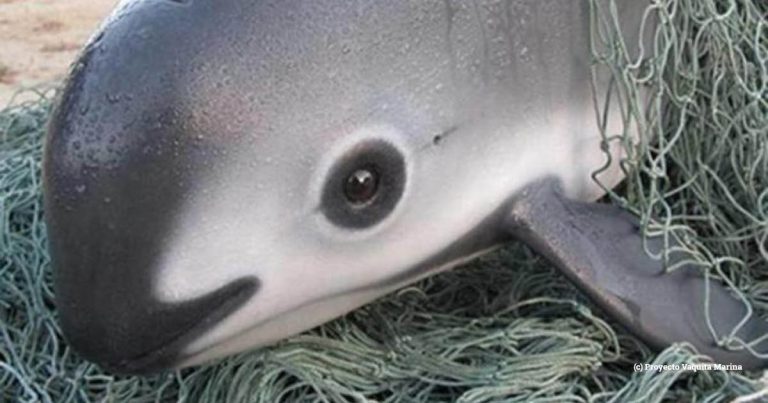
The CITES appendices are lists of animals and plants afforded different levels or types of protection from over-exploitation.
Appendix I lists those species deemed most endangered. They are threatened with extinction and CITES prohibits international trade in specimens of these species except when the purpose of the import is not commercial, such as for scientific research, when trade may be allowed if authorised by both an import permit and an export permit (or re-export certificate).
Appendix II lists species that are not necessarily threatened with extinction at present, but which may become so unless trade is carefully controlled. International trade in specimens of species listed in Appendix II may be authorised by the granting of an export permit or re-export certificate. No import permit is necessary under CITES. Permits and certificates should only be granted if the relevant authorities are satisfied that certain conditions are met, above all that trade will not be detrimental to the survival of the species in the wild.
Appendix III lists species included at the request of a Party that already regulates trade in the species and needs the cooperation of other countries to prevent unsustainable or illegal exploitation. International trade in specimens of Appendix III species is allowed only on presentation of the appropriate permits or certificates.
Species may be added to or removed from Appendix I and Appendix II, or moved between them, only by the Conference of the Parties, either at its regular meetings or by postal procedures.
Why does EIA engage with CITES?
EIA’s engagement with CITES processes stretches back decades and contributes to our overall aim to research and campaign against environmental crime and abuse. Given our focus on species which are threatened with extinction, such as elephants, tigers, pangolins, rhinos and numerous tree species, we work to ensure that CITES provisions are robust enough to protect these species from unsustainable trade.
At CITES meetings, the participation of Non-Governmental Organisations (NGOs) such as EIA (known as Observers during the meetings) is a key part of the process. Prior to and during the meetings, our work includes a range of activities including submission of briefing documents for consideration by the Parties, holding key side-events to draw attention to specific issues, making statements from the floor (known as ‘interventions’) and lobbying behind the scenes – speaking to key Parties and establishing their positions.
We provide information and expert opinion to decision-makers. Indeed, evidence obtained by EIA has been instrumental in securing some of the most important policy outcomes of CITES, such as the 1989 global ban on commercial ivory trade.
We push for country-specific and timebound activities to be directed at Parties identified as playing a key role in illegal wildlife trade and this may sometimes involve lobbying for trade sanctions.
EIA campaigners attend all meetings of the Standing Committee and Conference of the Parties.
EIA campaigners attend all meetings of the Standing Committee and Conference of the Parties.



 Reports and Briefings" height="" width="">
 Reports and Briefings" height="" width="">
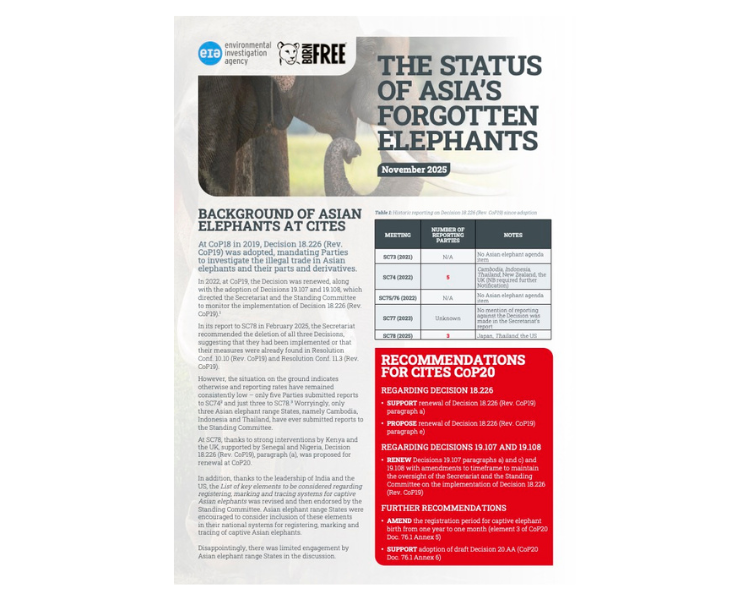 Reports and Briefings" height="" width="">
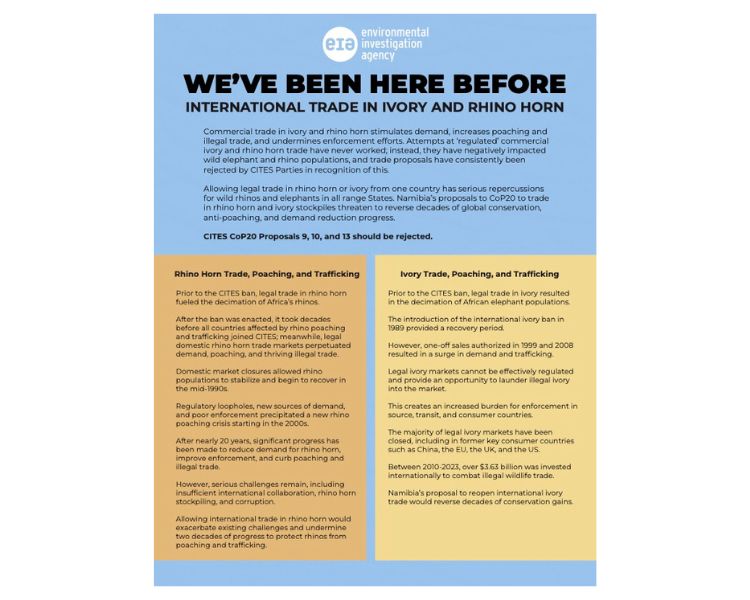 Reports and Briefings" height="" width="">
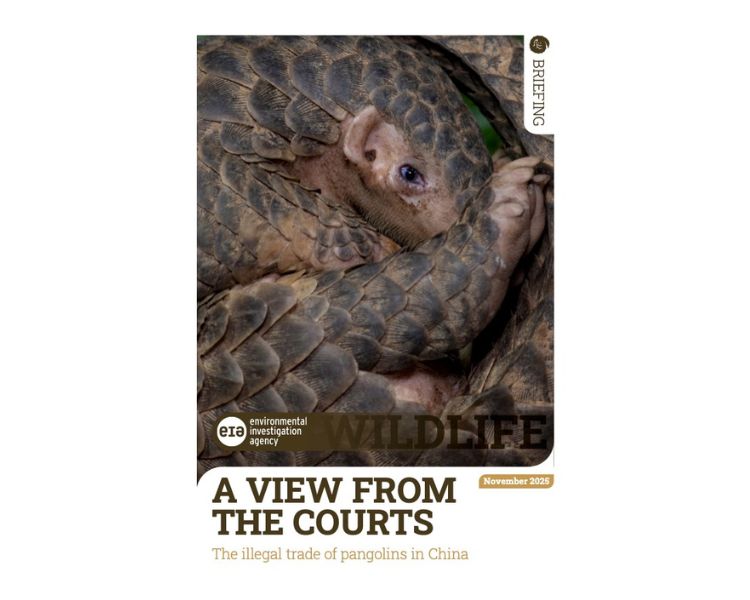 Reports and Briefings" height="" width="">
 Reports and Briefings" height="" width="">