DONATE

Wildlife reports

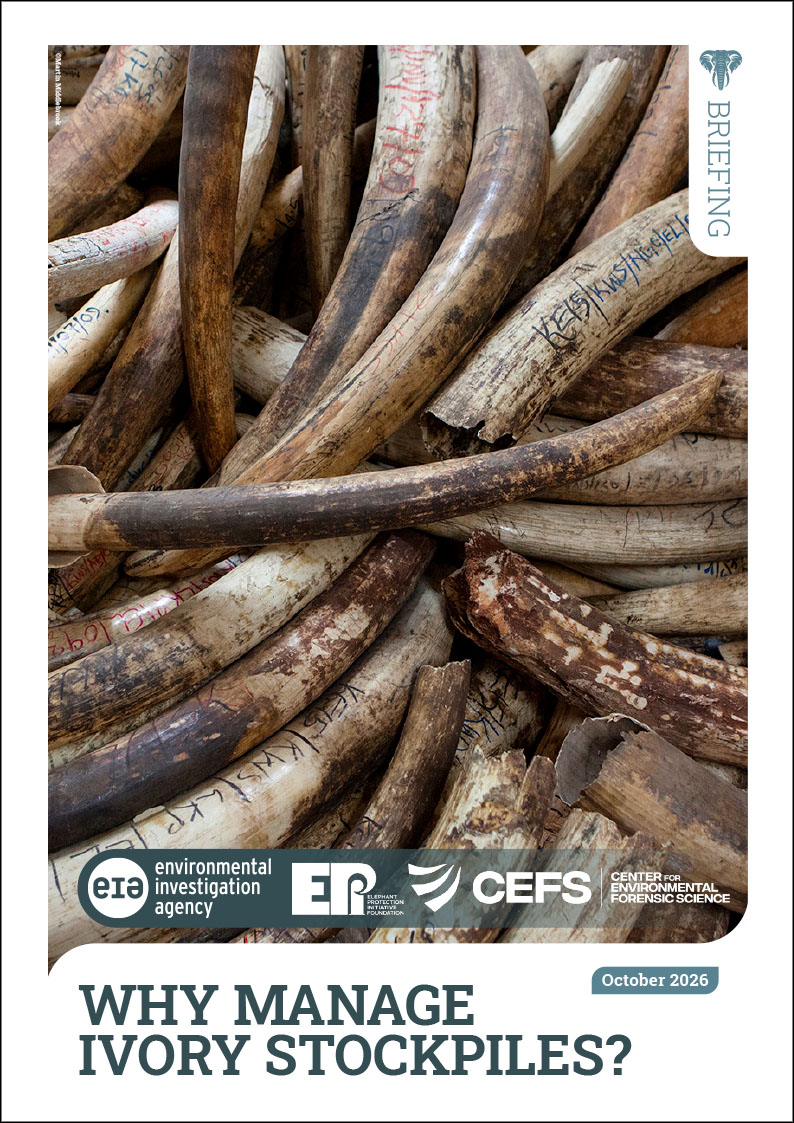
Why Manage Ivory Stockpiles?

In light of ongoing large-scale ivory seizures, renewed attention to the way ivory stockpiles are managed and reported on is urgently needed. This briefing, jointly prepared by the Center for Environmental Forensic Science (CEFS), the Environmental Investigation Agency (EIA) and the Elephant Protection Initiative (EPI) Foundation, examines the current state of stockpile management and reporting. […]
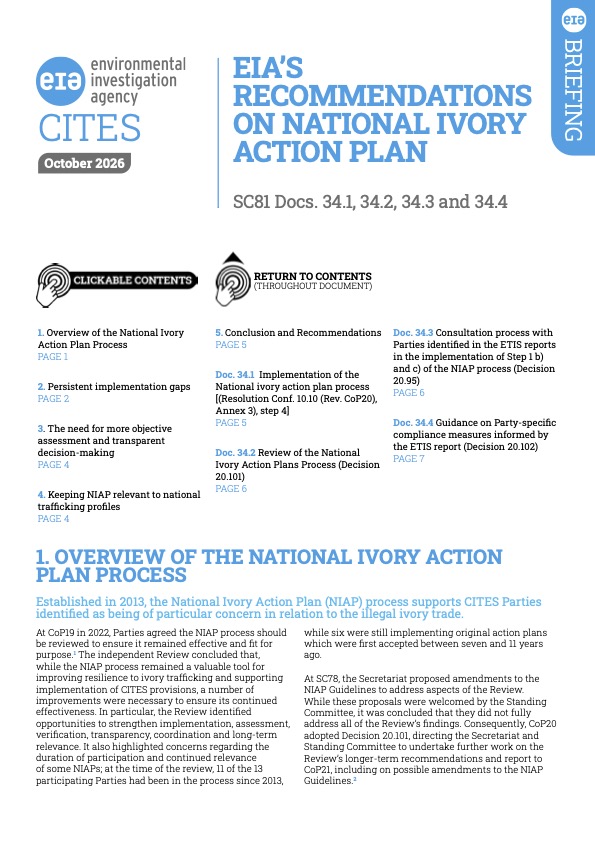
EIA’s Recommendations on National Ivory Action Plan

Established in 2013, the National Ivory Action Plan (NIAP) process supports CITES Parties identified as being of particular concern in relation to the illegal ivory trade. At CoP19 in 2022, Parties agreed the NIAP process should be reviewed to ensure it remained effective and fit for purpose.

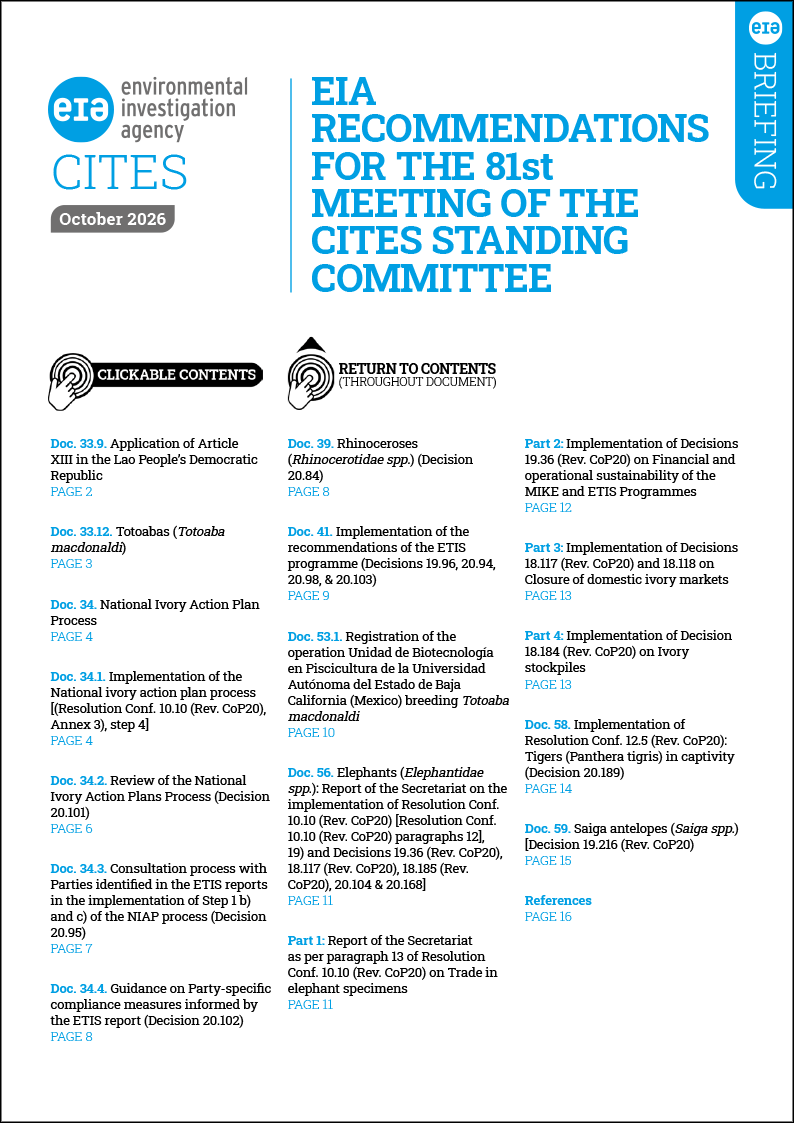
EIA Recommendations for the 81st Meeting Of The CITES Standing Committee

The 81st meeting of the CITES Standing Committee (SC81) takes place in Geneva, Switzerland from 2-6 November 2026. The meeting will consider a range of pressing conservation, compliance and enforcement issues which will help shape international efforts to combat illegal trade in endangered species. EIA’s briefing outlines our recommendations on key agenda items affecting elephants, […]

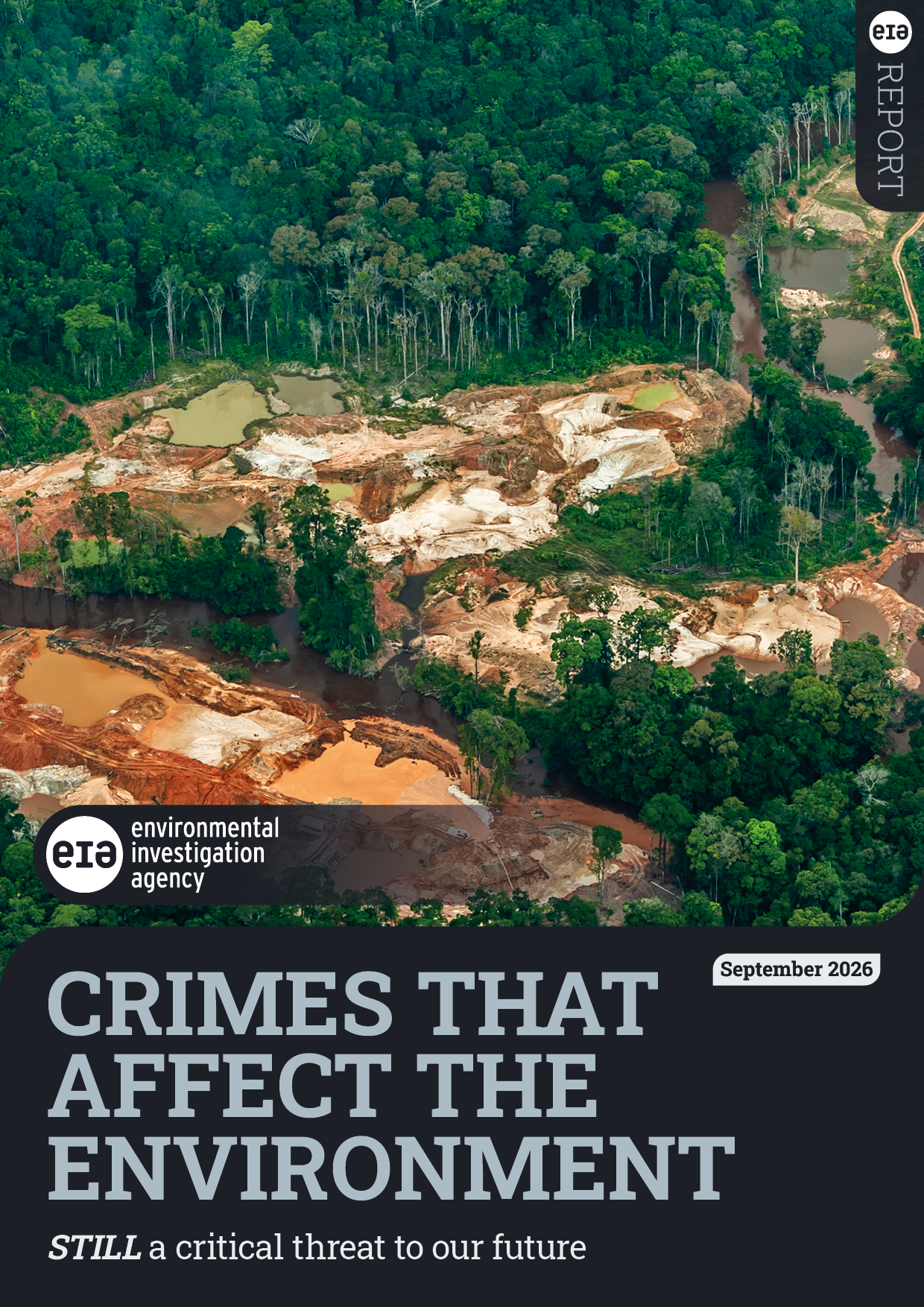
Crimes that Affect the Environment

STILL a critical threat to our future As an organisation that has spent more than four decades investigating and combating environmental crime and abuse across all three pillars of the triple planetary crisis — climate, biodiversity and pollution — the Environmental Investigation Agency (EIA) is uniquely positioned to speak to both the scale of the […]

A View from the Courts

The illegal trade of pangolins in China All eight recognised species of pangolin face high risks of extinction, with the primary threats to their survival being poaching and trade of their meat, body parts and scales. In order to address declining pangolin populations, increasingly stringent measures for protection of the species have been adopted both through the Convention on International Trade in Endangered Species of  Wild Fauna and Flora (CITES) and at national levels.