Long-time observer Clare Perry reflects on the Montreal Protocol’s MOP38 summit

Ten years ago, following a seven-year EIA campaign, I witnessed governments in Kigali, Rwanda deliver a landmark agreement to tackle climate-damaging hydrofluorocarbons (HFCs).
Last week, I returned to the same city for the 38th Meeting of the Parties (MOP38) to the Montreal Protocol, hoping to see that same spirit of ambition and cooperation.
The meeting marked the 10th anniversary of the Kigali Amendment, now ratified by 176 countries and expected to avoid up to 0.5°C of global warming by the end of the century.
There was plenty to celebrate, but also reason for frustration. While Parties reached an agreement on funding for the next three years, progress on strengthening the Montreal Protocol’s institutions and improving atmospheric monitoring was blocked by a small number of countries.
Alongside three EIA UK colleagues, I attended the negotiations to push for stronger action on HFC emissions, illegal trade and other emerging challenges facing the Protocol.
Here’s how the week unfolded.
Prior to the start of the meeting, EIA joined a meeting of the Partnership Forum where we screened our new film 10 Years of Kigali – The Story Behind a Climate Breakthrough.
The film explores the build-up to the Kigali Amendment, its role in sustainable cooling and future issues that the Protocol has yet to address, featuring key stakeholders from the UN Environment Programme (UNEP), the UN Industrial Development Organization (UNIDO), governments, industry and the scientific community.
At that meeting, I facilitated a panel with Baba Drame from Senegal, Chair of the African Group of Negotiators, on accelerating Kigali implementation. Our discussion drew attention to the continued increase in HFC emissions despite the Amendment, the need to strengthen it because most Article 5 Parties are not yet reducing consumption and the importance of training, standards and leap-frogging to climate-friendly technologies.
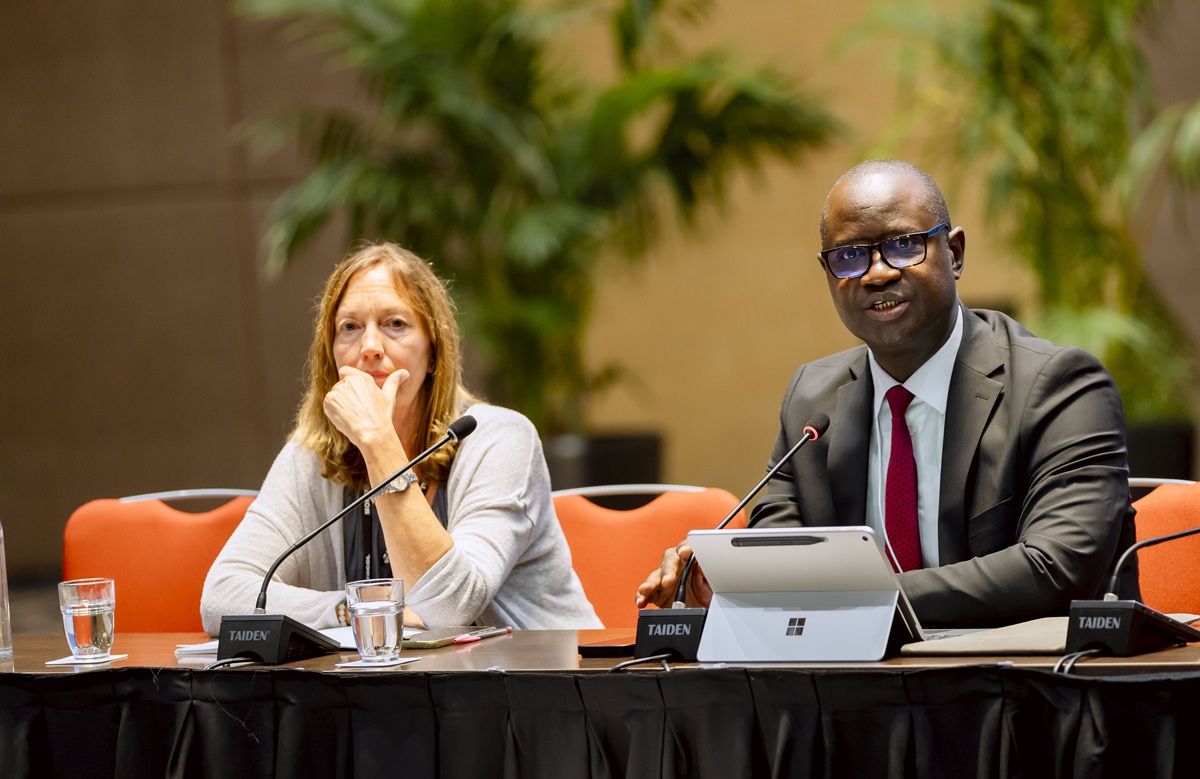
EIA UK Climate Programme Lead Clare Perry and Baba Drame, Director of Environmental Regulation and Control, Senega, facilitate the Partnership Forum session on accelerating Kigali implementation (c) EIA
Replenishment of the Multilateral Fund (MLF) for 2027-29 dominated the negotiations.
Discussions were contentious from the outset. Non-Article 5 (developed) countries challenged the updated funding estimates, which ranged from $906 million to $1.7 billion, pointing to a substantial carryover from the previous funding period. In an unprecedented and controversial move, they requested additional analysis from the Replenishment Task Force (RTF) during the meeting, aimed at reducing the funding estimate.
As negotiations became increasingly difficult, discussions were restricted first to 10 representatives from each group and eventually to just four from each side in an effort to reach a compromise. By the end of the week, an agreement of $695 million was reached, comprising $360 million in new contributions and $335 million from existing funds.
While lower than the previous record replenishment of $965 million, the agreement is still 25 per cent above the average of the last 10 replenishments and allows the MLF’s critical work to continue.
Whether this will be sufficient remains uncertain, particularly given outstanding questions around future funding for China. Even a small reduction in the funding for China, balanced by China’s own contribution to phase-down projects, would ensure that the funding reached the countries where it is really needed.
Efforts to strengthen the Montreal Protocol’s institutions have been ongoing since unexpected CFC-11 emissions exposed weaknesses in monitoring and enforcement in 2018. CFC-11 is a powerful ozone-depleting substance (ODS) that should already have been phased out under the Montreal Protocol.
At MOP38, the African Group of Negotiators, representing 54 countries, proposed moving from years of discussion to concrete action. Together with a similar initiative supported by Canada, Australia, Switzerland and the EU’s 27 member states, there was considerable momentum for change.
Yet despite support from these 84 Parties, a small number of countries, primarily Saudi Arabia, Lebanon and India, repeatedly blocked progress. They questioned the need for stronger monitoring and enforcement measures and raised concerns about new obligations and financial implications.
After four contact group meetings, no consensus was reached. The issue will return to the agenda next year, but the opportunity for meaningful progress in Kigali was lost.
The outcome is hard to reconcile with the determination expressed by countries in 2018, when our evidence of illegal CFC-11 production prompted repeated calls to ensure that such a violation could never happen again. The reluctance of some parties to strengthen the institutions designed to prevent a recurrence suggests an unexpectedly short institutional memory.
Emissions of HFC-23, a powerful greenhouse gas with a global warming potential almost 15,000 times that of carbon dioxide (CO2), continue to far surpass what is expected based on reported data.
In our briefing to the Parties, EIA analysed the findings of a new TEAP/SAP report responding to Decision XXXVII/2: Emissions of HFC-23 and called for Parties to take decisive action to address this issue, including requiring more comprehensive reporting, strengthening atmospheric monitoring and investigating potential emission sources.
The US introduced a draft decision on the first day of the meeting and EIA campaigner Dr Joanna Sparks delivered an intervention in plenary, urging Parties to take decisive action on the substantial gap between reported and observed emissions.
Despite initial resistance, Parties reached agreement after just an hour of informal discussions. The decision focuses on sharing new atmospheric monitoring data and requesting an updated assessment of emissions from the Scientific Assessment Panel at the next meeting.
While this falls short of the concrete measures EIA called for, it provides a foundation for further action next year.
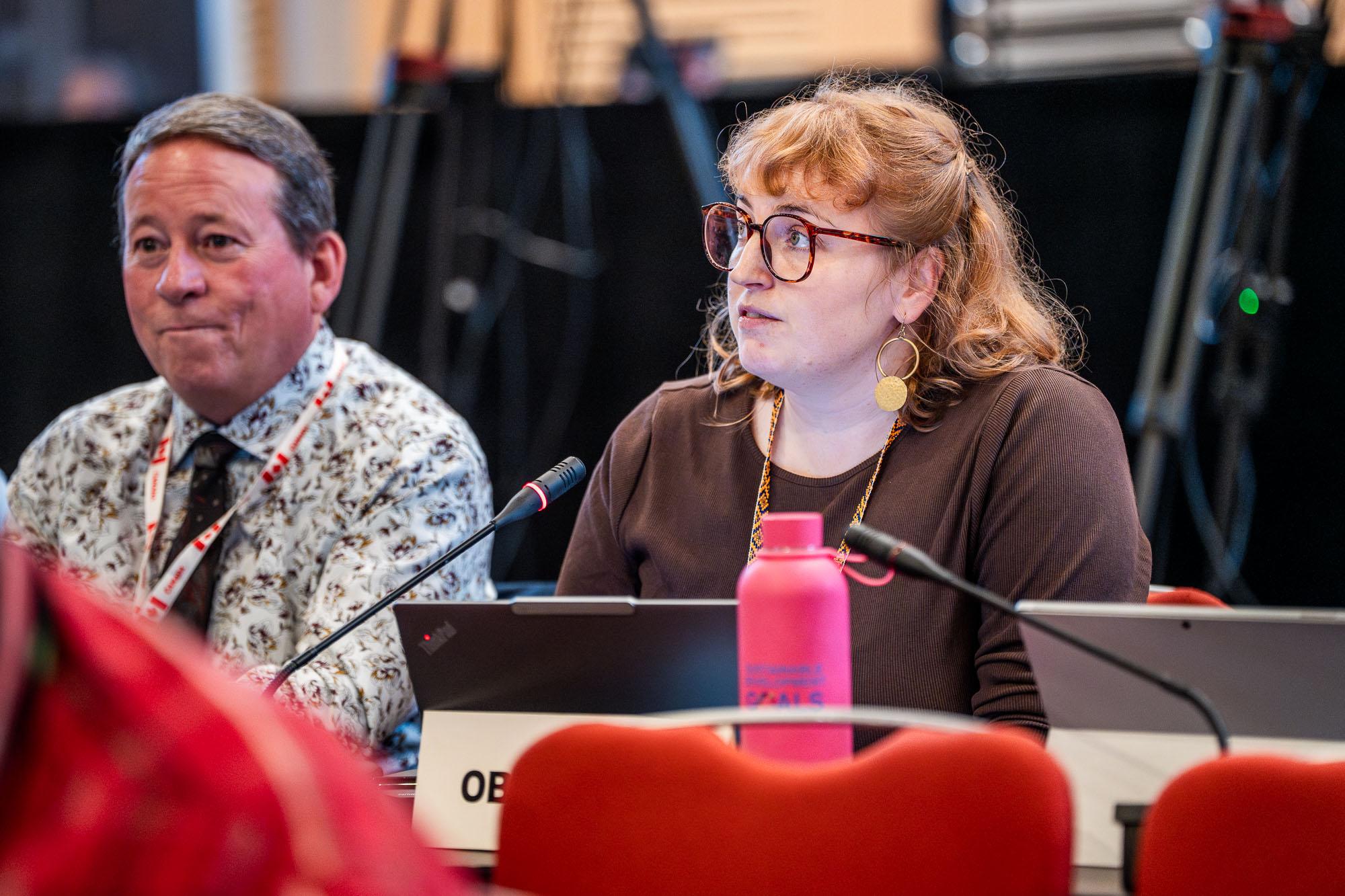
EIA campaigner Dr Joanna Sparks delivered an intervention on HFC-23 urging Parties to action (c) IISD/ENB/Danny Skilton
Measuring the concentrations of controlled gases in the atmosphere allows the scientific community to understand emissions that are occurring and provides critical insights into the progress of implementation and early warning of illegal production and consumption or other unexpected emissions.
Since unexpected emissions of CFC-11 were highlighted in 2018, the Parties have been discussing gaps in the atmospheric monitoring network which remain in many key parts of the world.
As a result, a funding window of $11 million to support three new stations was agreed under the Multilateral Fund, while an EU grant of €4.5 million will support three more (the continued operation of which will be supported by part of the MLF funding). A draft decision submitted by the EU aimed to put in place processes to support the delivery of the projects, ensuring consistent governance processes and clarity on the role of the expert advisory body which will support the projects.
A crucial element of the guidelines developed for the monitoring projects to be funded under the MLF is the requirement for the sharing of the data generated at monitoring stations. This proved a sensitive issue for a small number of Parties at the MOP due to concerns around data ownership and sovereignty.
Despite considerable changes to the proposed text in an effort to reach agreement, India and Saudi Arabia prevented any agreement.
Parties also agreed a series of procedural changes intended to improve efficiency and reduce costs.
These include shortening the mid-year Open-Ended Working Group meeting from five days to four, moving the Technology and Economic Assessment Panel’s progress report presentation online and adjusting translation and interpretation arrangements.
While relatively minor compared with the week’s more contentious negotiations, these changes reflect the growing pressure to ensure the Protocol can operate effectively with constrained resources.
The Montreal Protocol’s expert assessment panels gave the heads-up on their forthcoming assessment reports, which will be published at the end of this year.
The Scientific Assessment Panel (SAP) expressed clear concern around several issues EIA has long been raising to Parties. These included N2O emissions, now the single most significant threat to the ozone layer’s recovery, and emissions of controlled substances used in fluorochemical production (‘feedstocks’), which are currently exempt from controls under the treaty.
Another issue of significant concern is per- and polyfluoroalkyl substances (PFAS) pollution associated with the production and use of fluorinated gases. PFAS are often referred to as ‘forever chemicals’, because they, or their degradation products, do not break down in the environment.
There is increasing alarm in the scientific and wider community about rising levels of trifluoroacetic acid (TFA) in the environment, a PFAS linked to F-gas refrigerants, in particular new low-GWP hydrofluoroolefins (HFOs). Although the Environmental Effects Assessment Panel (EEAP) played down concerns around TFA and its potential health impacts, many Parties shared EIA’s concerns and expressed the need to avoid PFAS pollution as a priority within the refrigerant transition.
We will be examining these reports closely as they form the basis for the next steps that the Parties to the Montreal Protocol might take in future.
The week’s negotiations were interspersed with multiple side events and other meetings providing expert views on critical issues such as lifecycle refrigerant management (LRM), illegal trade in controlled substances, atmospheric observations, cold chain infrastructure and training and certification.
On the first day of the meeting, we participated in UNEP OzonAction’s side event on illegal trade, which launched the new report Illegal trade report in substances controlled under the Montreal Protocol: Trends over the past decade and policy and enforcement responses. EIA presented findings from our HFC illegal trade investigations and new work on ecommerce markets.
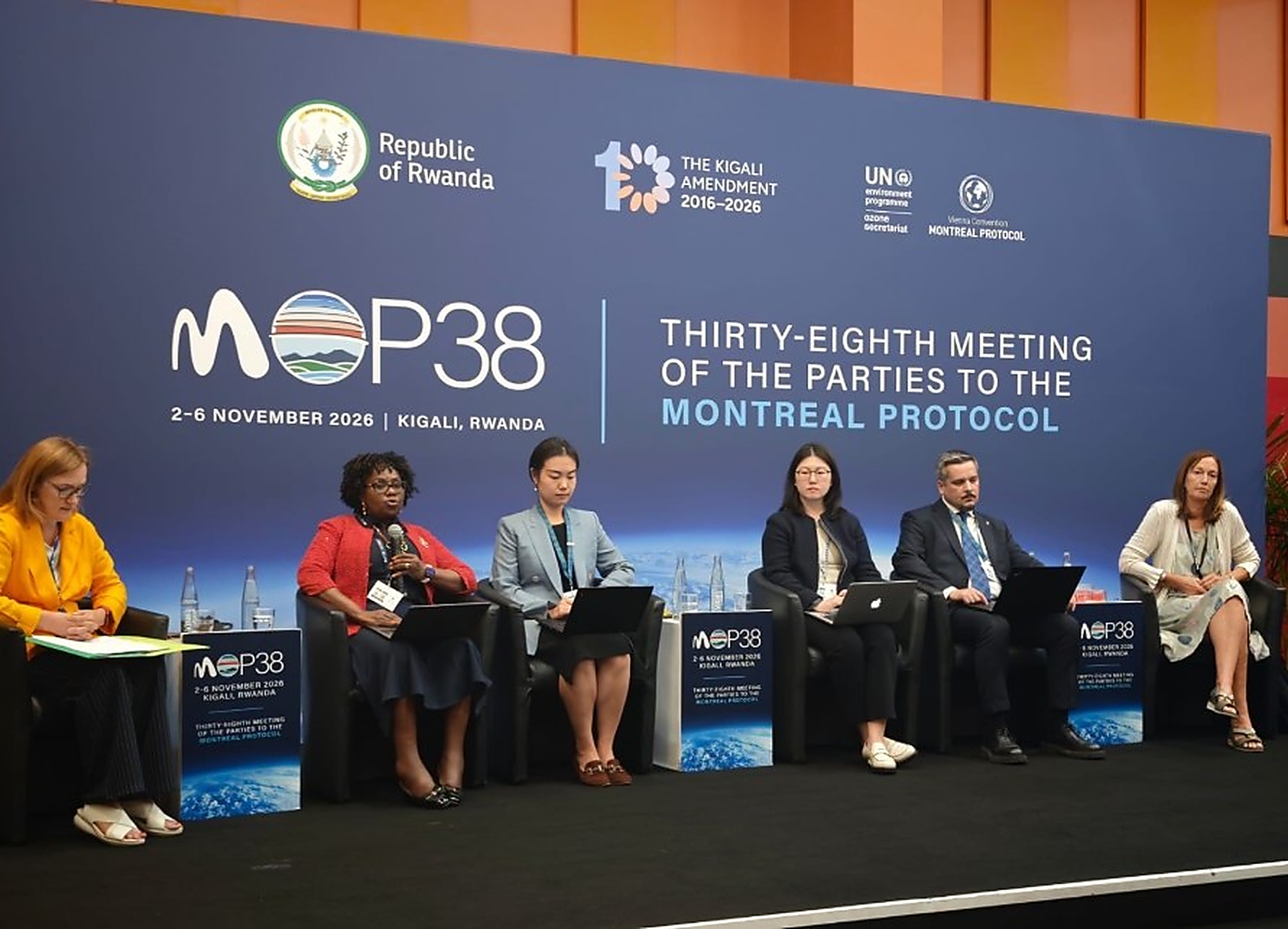
UNEP OzonAction illegal trade side event
On Thursday, EIA Senior Climate Campaigner Tom Nickson organised a side event with GiZ on N2O emissions entitled Nitrous Oxide: The next great ozone threat, drawing on findings from the Scientific Assessment Panel’s 2026 assessment report, with government representatives sharing steps that can and should be taken next under the Montreal Protocol.
EIA also took part in a Natural Resources Defense Council (NRDC) ‘storytelling session’ and the UN Environment Programme-led Cool Coalition and United for Efficiency live consultation on expanding the Cool Leaders recognition initiative to industry in 2027.
As usual, it was inspiring to meet and engage with so many experts who are working incredibly hard to reduce greenhouse gas emissions, protect the environment and provide access to sustainable cooling for all.
I left Kigali with mixed feelings.
Despite all the fanfare for the 10th anniversary, acrimonious discussions around the replenishment of the MLF set the tone and it was hugely disappointing that a small number of Parties blocked progress on several issues across the agenda, even where they should not be controversial.
While I’m in no doubt that the Montreal Protocol is still the world’s greatest environmental success story, that success can’t be taken for granted.
As we approach its 40th anniversary next year, I hope countries can rediscover the ambition and cooperation that delivered the Kigali Amendment a decade ago.
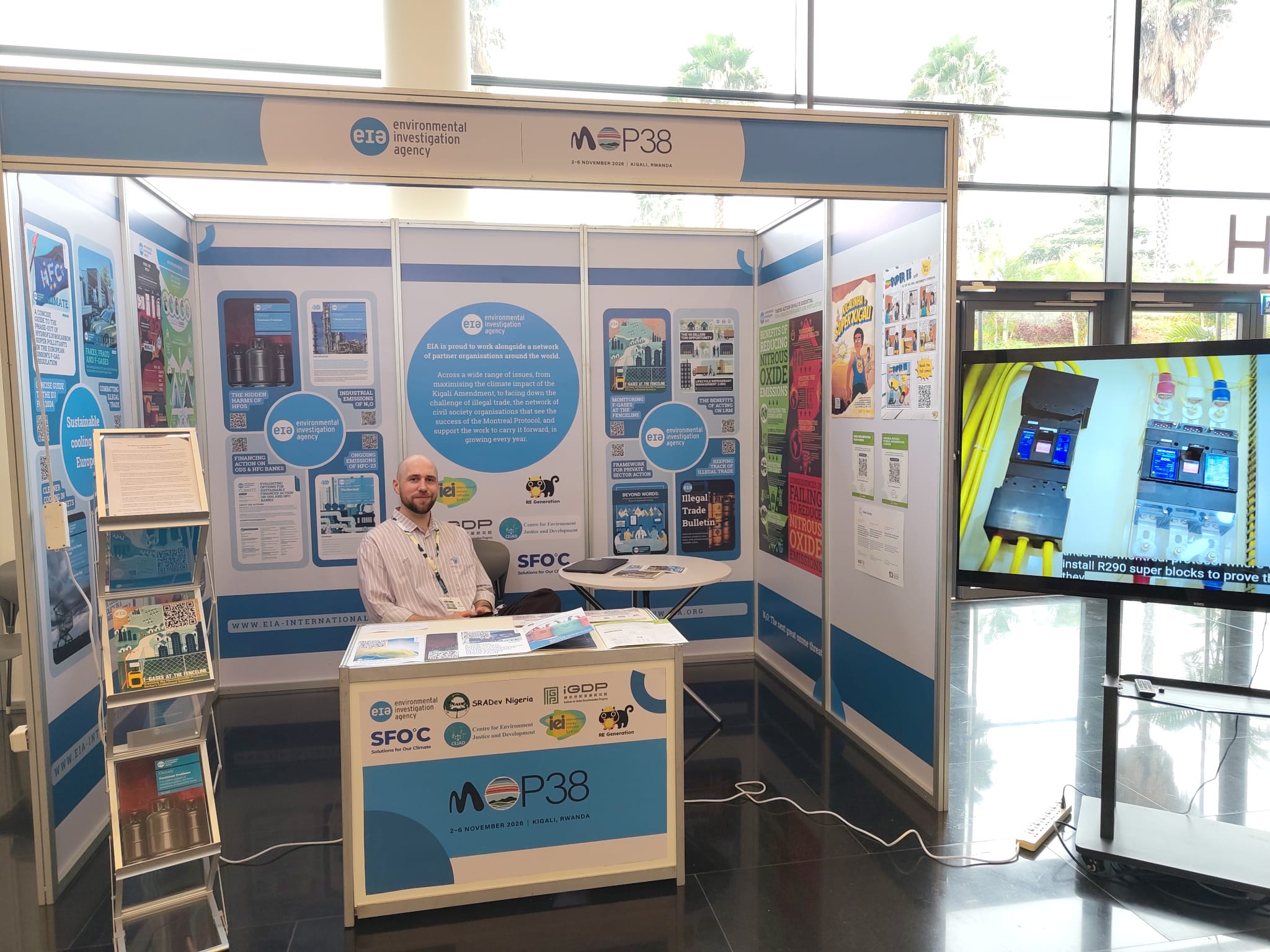
Senior Climate Campaigner Tom Nickson at EIA’s booth