Global Plastics Treaty – we’re still mopping the floor while the tap continues to run



Negotiators are today (30 June) preparing to meet in Nairobi for the next round of closed-door Heads of Delegation (HoDs) meetings that will shape the outcome of the Global Plastics Treaty.
These meetings matter! While informal in name, they increasingly determine what will and won’t make it into the final agreement. After the turbulence of the last meeting of the International Negotiation Committee (INC-5.2) in Geneva last year, the direction of travel is quietly decided in these meetings and the fact that NGOs from across the world are locked out of these meetings makes it critical that we keep a close eye on what is happening.
But reading through the Chair’s outline circulating ahead of the meeting, there is a growing sense of concern that it is being used to quietly get rid of important topics in pursuit of trying to land a plastics treaty at any cost.
A main example of this is the topic of plastic production, the main driver at the root of the plastic pollution crisis, which has quietly disappeared from the agenda and meeting documents without acknowledgement.
Instead, the focus once again leans towards the downstream measures, including waste management and national measures, designed to manage the consequences rather than to address the cause.
These developments raise an uncomfortable but important question as governments head into Nairobi – are we designing a treaty to end plastic pollution or just to cope with it?
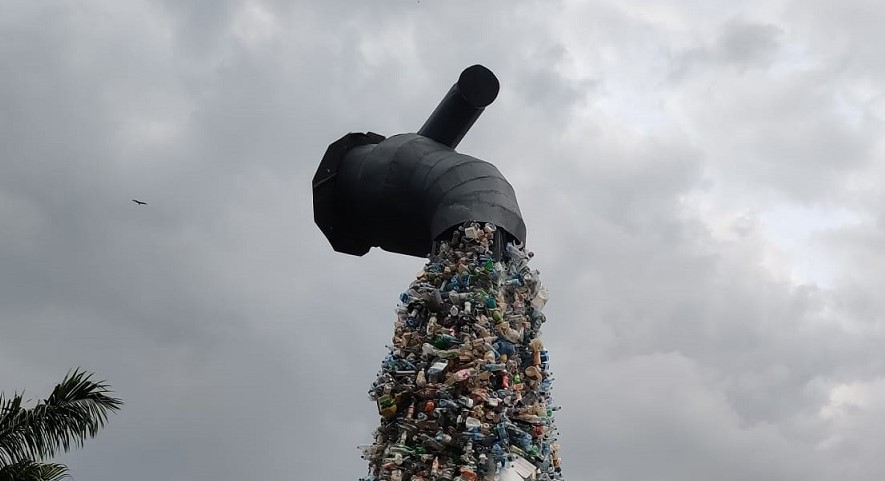
Plastic tap installation outside the first round of Global Plastics Treaty talks, by artist Von Wong
The evidence leaves very little room for ambiguity. Plastic production and consumption is not slowing down but speeding up. On current trajectories, both global production and consumption are projected to reach about 766 million tonnes annually by 2040. This level would represent a dramatic escalation from today’s already unsustainable levels.
This growth is not happening in isolation. It drives a parallel surge across the entire system. By 2040, plastic waste generation is expected to reach roughly 621 million tonnes each year, with more than 112 million tonnes of that waste mismanaged, leaking into ecosystems and disproportionately affecting vulnerable communities.
Even under optimistic assumptions, waste systems are not designed to cope with this scale. The more plastic that enters the system, the higher the likelihood that it escapes.
In simple terms, the tap is not just on – it is being turned up!
And yet much of the policy conversations remains focused on how to deal with the water already on the ground as governments avoid the political and industrial complexities of a global approach to reducing production and consumption, despite it being a necessary condition for long-term environmental and human health.

The world can’t properly address plastic pollution without addressing plastic production
EIA’s Bending the Curve modelling provides a clear picture of how different policy choices might play out across the global plastic economy and why the plastics treaty must enable governments that are ready to tackle this issue head-on to move forward.
It compares a business-as-usual scenario in which no meaningful action is taken on production and consumption with scenarios in which countries begin to act collectively.
In the absence of new measures, the picture is stark. Production continues to rise, waste systems are overwhelmed and emissions from the plastics lifecycle climb steadily, reaching levels fundamentally incompatible with global climate ambition.
But when upstream action is introduced, the system begins to shift in a meaningful way.
When a group of high-ambition countries acts together, global plastic production and consumption can be reduced by approximately 16-18 per cent below business-as-usual levels by 2040.
When that group is joined by a major producer, China, the impact increases dramatically, with reductions of up to 38 per cent.
In the most ambitious scenario, involving additional middle countries such as India, Brazil and South Africa, production decreases by approximately 45 per cent, reducing total volumes to about 420 million tonnes by 2040. The effects cascade throughout the system – waste generation is reduced by more than 50 per cent and greenhouse gas (GHG) emissions fall in parallel.
These are not marginal gains, they are structural shifts demonstrating that even a small subset of countries can show leadership and ambition on plastic production and have a huge environmental impact.
What becomes clear from the modelling is that production is not just another variable, it is the variable that shapes all others. When the volume of plastic entering the system declines, everything downstream becomes more manageable. Recycling systems function better, leakage decreases and emissions fall.
This is not rocket science. Without the upstream control, improvements elsewhere struggle to keep pace and a downstream, voluntary or nationally focussed treaty will fundamentally fail to deliver.

Plastic waste going into landfill, Malaysia
There is a growing disconnect between what the evidence shows and how the negotiations are evolving.
The mandate for the Global Plastics Treaty is explicit – to address plastic across its full lifecycle, from production through to end of life.
But in practice, production is increasingly treated as optional and too politically contentious to anchor in the agreement’s core.
This dynamic is not new. Over the course of the negotiations, measures related to production and consumption have repeatedly been diluted, deferred or bracketed, even as support for their inclusion has grown.
More than 100 countries have directly supported measures on plastic production in the treaty but their voices have been increasingly sidelined. At the same time, scientific and policy evidence have become increasingly consistent in pointing out that downstream approaches alone are insufficient.
Our policy summary for negotiators, Bending the Curve on Plastic Pollution, is unequivocal on this point. Improvements in recycling and waste management deliver diminishing returns when overall plastic volumes continue to rise. Without designing effective global measures to reducing production and consumption, even the most advanced systems are unable to prevent escalating waste and pollution.
This is the central contradiction the treaty now faces.
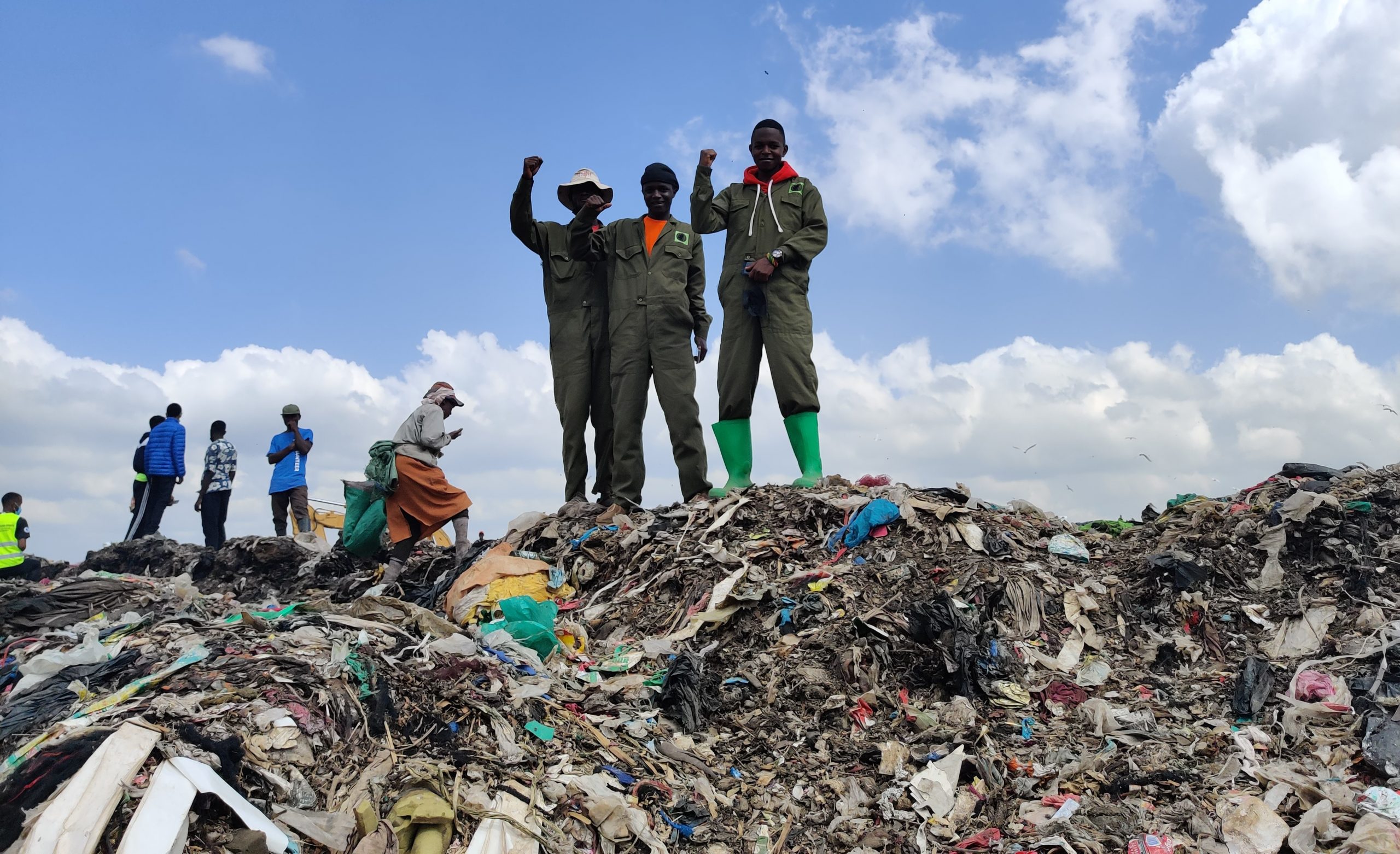
Waste pickers at Kenya’s notorious Dandora refuse site outside Nairobi (c) EIA
The meeting in Nairobi represents a pivotal moment, not because it will produce a final treaty text but because it will shape the boundaries of what that text can include in the coming months.
The risk at this stage of the process is not the outright rejection of production measures, but something subtler. It is an omission.
If production is not clearly included in the Chair’s evolving outline now and remains vague, peripheral or absent, it becomes increasingly difficult to reintroduce it later. Negotiation processes have momentum and what is not prioritised early can disappear altogether.
We urge negotiators to listen to the science, impacted communities and experts who have provided the evidence to support these recommendations.
The Global Plastics Treaty must provide a guiding star to shape all interventions across the lifecycle and measure our collective progress – and this must be defended in Nairobi.