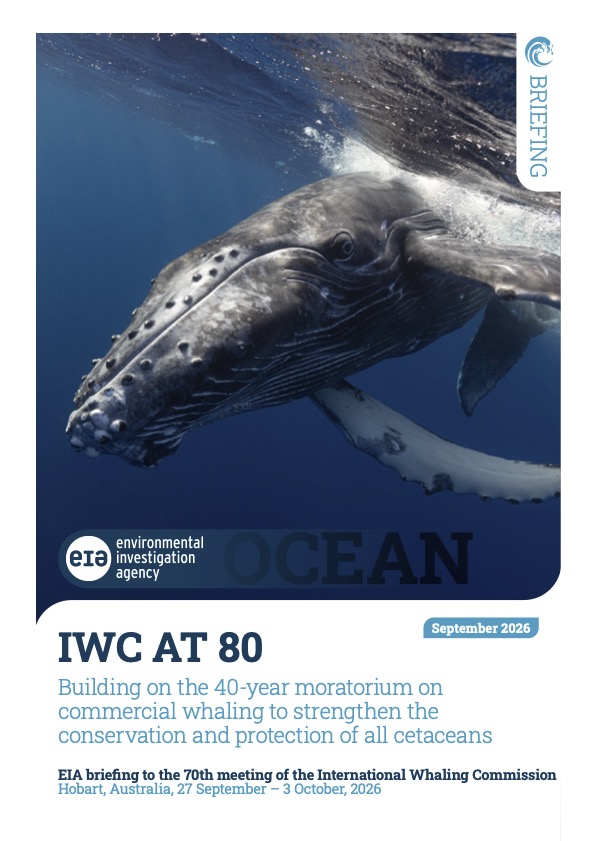
IWC at 80
Building on the 40-year moratorium on commercial whaling to strengthen the conservation and protection of all cetaceans
- Areas of work:
- Campaigns:
Building on the 40-year moratorium on commercial whaling to strengthen the conservation and protection of all cetaceans
Reducing methane emissions from the oil and gas sector is the fastest-acting interventions available to limit near-term temperature rise, and can also support the UK’s energy security, competitiveness, and a credible North Sea Transition.
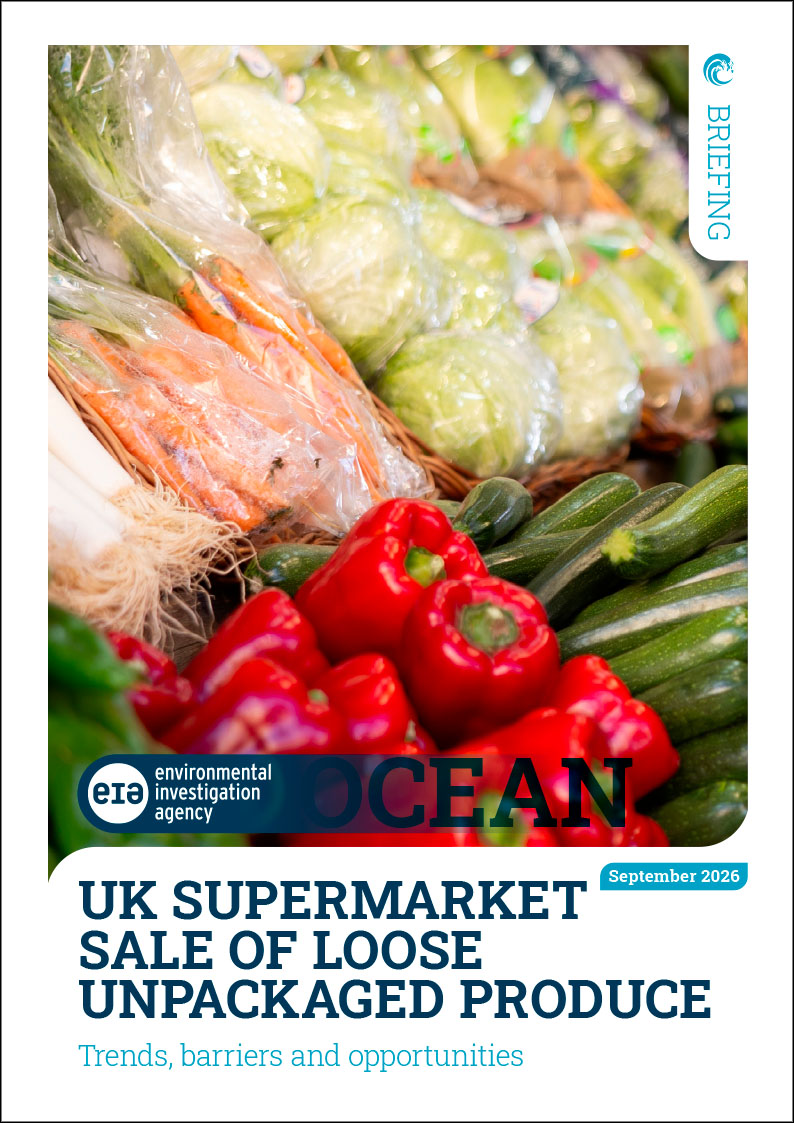
UK supermarkets have made limited progress in reducing plastic packaging for fresh fruit and vegetables and transparency on loose produce sales has worsened since EIA’s last comparable dataset in 2021. While many grocery retailers have signed up to the UK Plastics Pact’s voluntary commitment to sell at least 30 per cent of uncut fresh produce […]
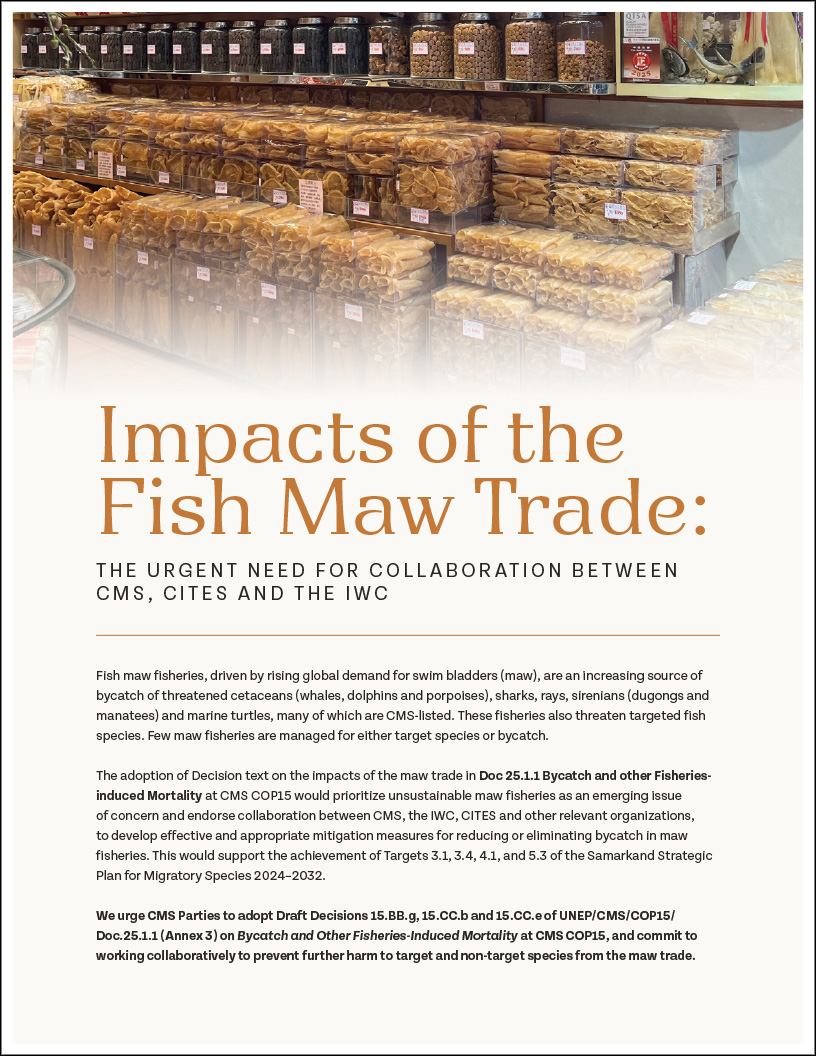
Fish maw fisheries, driven by rising global demand for swim bladders (maw), are an increasing source of bycatch of threatened cetaceans (whales, dolphins and porpoises), sharks, rays, sirenians (dugongs and manatees) and marine turtles, many of which are CMS-listed. These fisheries also threaten targeted fish species. Few maw fisheries are managed for either target species […]
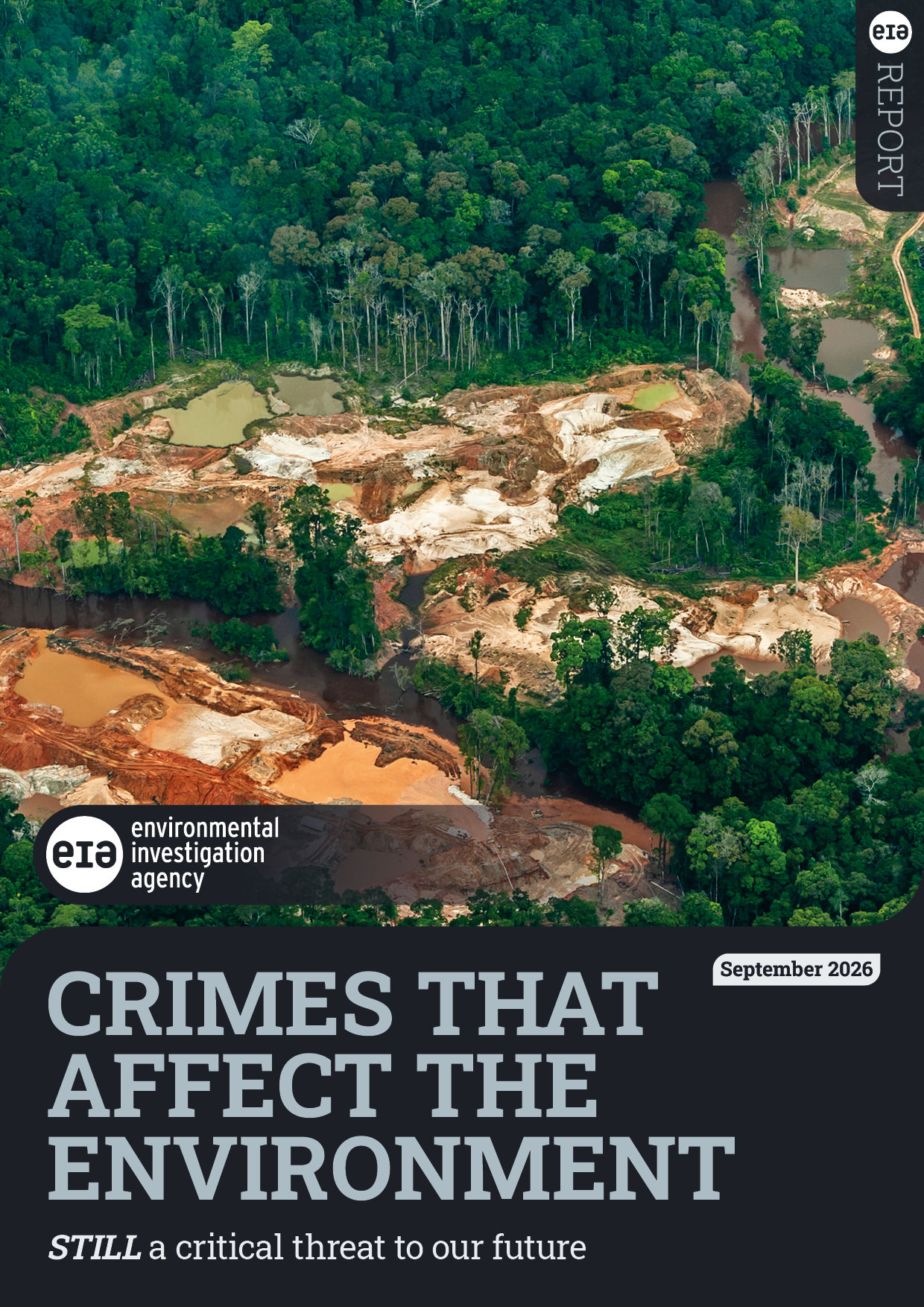
STILL a critical threat to our future As an organisation that has spent more than four decades investigating and combating environmental crime and abuse across all three pillars of the triple planetary crisis — climate, biodiversity and pollution — the Environmental Investigation Agency (EIA) is uniquely positioned to speak to both the scale of the […]
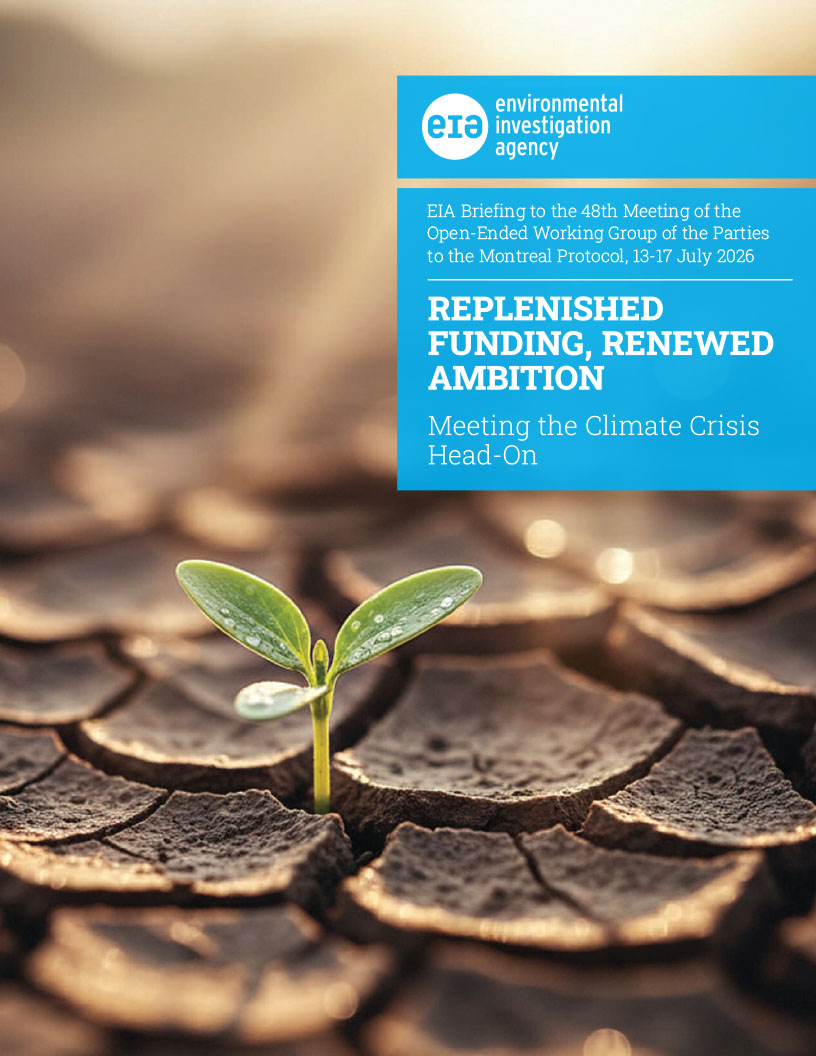
Meeting the Climate Crisis Head-on This year, 2026, marks an important milestone for the Montreal Protocol. In October, Parties will celebrate the 10-year anniversary of the Kigali Amendment, the moment which saw the ozone treaty turn decisively to face the climate threat posed by hydrofluorocarbons (HFCs). As we approach the Kigali celebrations, the 48th meeting […]