Dandora – a polluted, dangerous dumping ground for the global textile trade


We are grateful for the additional contributions to this blog from Solomon Njoroge
In December, I travelled to Kenya’s Dandora dumpsite outside the capital Nairobi with colleagues from EIA. We were there with a specific purpose – to understand what synthetic textile exports look like at the end of their journey.
We did not need to look far.
We were met by Solomon Njoroge, Chairperson of the Nairobi Recyclable Waste Association, who guided us across the site, offering insights on waste streams and the realities of working in Dandora.
Dandora is often described as one of East Africa’s largest dumpsites – but no statistic prepares you for the sensory reality.
Smoke hangs in the air before you see the flames. It settles in the back of your throat and clings to your clothes. The ground shifts underfoot, compacted layers of waste giving way to softer pockets hollowed out by heat and gas building beneath. In some places the earth is warm, in others it is actively smouldering.

Solomon Njoroge
Fires burn across the site, often igniting on their own as methane and trapped heat accumulate deep within the waste mass. They travel invisibly underground before re-emerging metres away. What burns here is not only food waste or paper, it is the polyester dresses and acrylic jumpers, blended fast fashion worn briefly and discarded. It is foam mattresses and plastic-lined blankets. It is thin, single-use hotel slippers from resorts thousands of miles away. It is laminated packaging in foreign languages and textile blends that cannot be separated or recycled.
The smell is chemical and acrid, sharper where synthetic materials are smouldering. Melted polyester shrinks into blackened clumps. Nylon fibres curl and fuse. The smoke is not accidental. It is polymer-based material breaking down into toxic emissions and microscopic fragments.
And life moves through it.
Cows pick their way across the waste mountain. Marabou storks circle and descend through the haze. Informal waste workers move steadily over the unstable surface, sacks slung over their shoulders as they step around slow-burning craters.
At several points, Solomon lays pieces of large, firm waste in front of us to avoid undetectable sinkholes – he knows this place well.
We had come to see textile waste. Scrap and old clothes were everywhere.
In nearby secondhand markets, I saw clothing printed with high school names I recognised from Southern California, sweatshirts embroidered with American football teams, university hoodies and charity event t-shirts from the UK. These were not generic exports. They were garments from identifiable communities, now thousands of miles from where they were first worn.
These objects collapse distance. They make visible the connection between overproduction in the Global North and open burning in Nairobi. What is framed as donation or reuse does not simply vanish when placed in a collection bin. It moves through trade channels, through resale markets and, when quality or volume overwhelms demand, it settles in places such as Dandora.
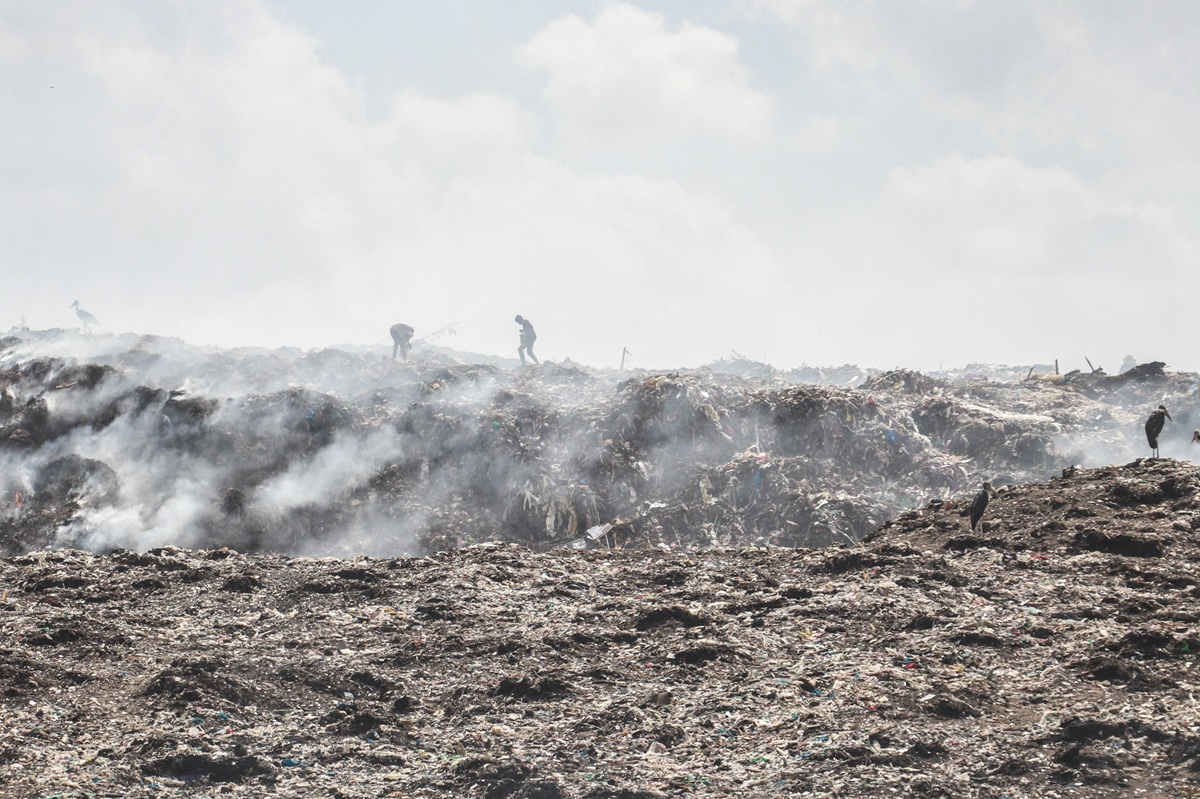
Dandora dump, Nairobi, Kenya (c) EIA/James Wakibia
At the edge of the site, a collapsed mountain of waste had fallen into the adjacent river. Tractors were clawing at the debris, pulling back layers of tangled textiles, plastic and decomposing refuse.
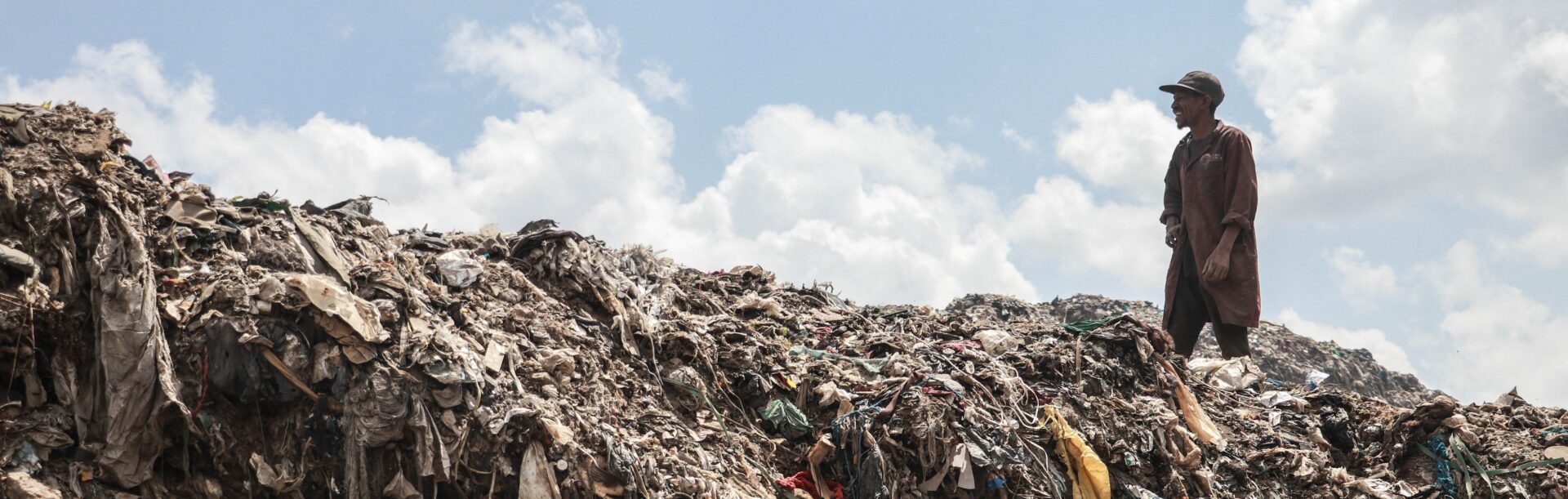
Solomon stood above it on the waste ridge, looking down. The machinery appeared small against the scale of the slide, metal teeth scraping at a mass that had already begun to leach into the water.
Upstream, residents from a nearby community were washing plastics they had recovered for recycling. Children played in the water while their parents worked. The contrast was immediate and jarring – daily life unfolding metres away from a landfill in motion.
The river beside Dandora is not an isolated channel. It forms part of the Ngong River, which feeds into the Nairobi River, then the Athi River, eventually becoming the Sabaki River before emptying into the Indian Ocean.
Contamination entering the water here does not remain in this neighbourhood. Textile fibres, plastic fragments and polluted sediment travel across counties, through farmland and settlements, before reaching the coast. What collapses at Dandora moves across Kenya and ultimately into the sea.
Exposure is not confined to the riverbanks or to those working directly on the waste. When synthetic textiles degrade, they fragment into microplastics. When they burn, they release toxic smoke and fine particulate matter. The clouds that rise from Dandora do not stop at the dumpsite boundary. They drift across eastern Nairobi, carried by wind into surrounding communities. This is not solely occupational exposure. It is urban exposure.
What begins as a bale of secondhand clothing in the US, UK or European Union becomes airborne particulate matter over Nairobi, contaminated sediment moving downstream and fibres travelling towards the Indian Ocean.
This is where the global overproduction of fast fashion ends up.
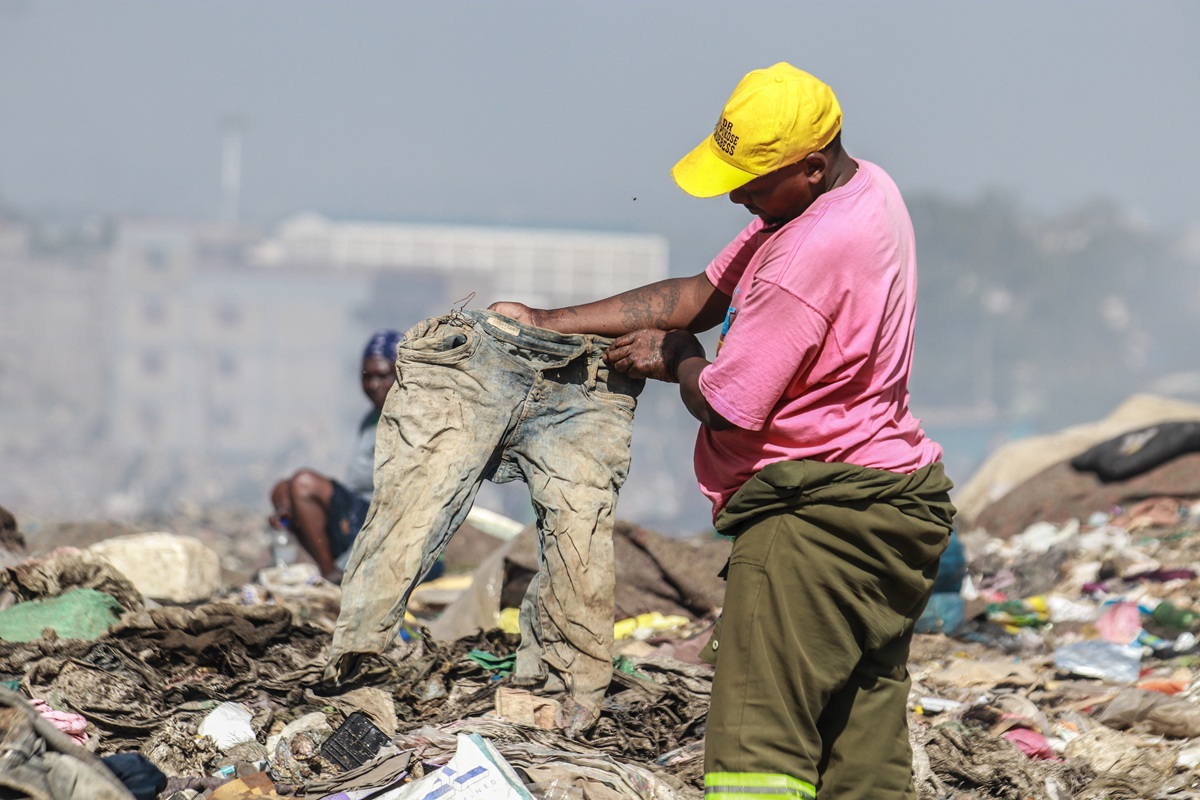
A waste picker working at Dandora (c) EIA/James Wakibia
At EIA, we have argued that the current regulatory framework governing transboundary waste trade fails to capture the reality of synthetic textile exports. Large volumes of secondhand clothing are shipped under the label of reuse or donation. Where garments are genuinely reusable, they can extend product life – but when quality is too low or markets are saturated, the result is waste displacement.
Higher-value garments are often filtered out before reaching dumpsites. By the time material arrives at Dandora, much of the value has been extracted. What remains is lower grade, mixed, contaminated or unsellable. The residual fraction, predominantly synthetic, accumulates or is burnt.
Under the Basel Convention, controls apply to certain waste streams through prior informed consent procedures. But when textiles are declared as products rather than waste, shipments avoid scrutiny.
In our recent submission to the Basel Convention Secretariat, we argued that this gap must be addressed. Secondhand textiles should be treated as waste and subject to controls until they are demonstrably reusable. Classification must reflect material reality, not paperwork.
Polyester, nylon and acrylic are polymers. They generate microplastics. They persist in soils and waterways. They release toxic emissions when openly burnt. The harm done mirrors that of other plastic waste streams and the regulatory treatment should reflect that.
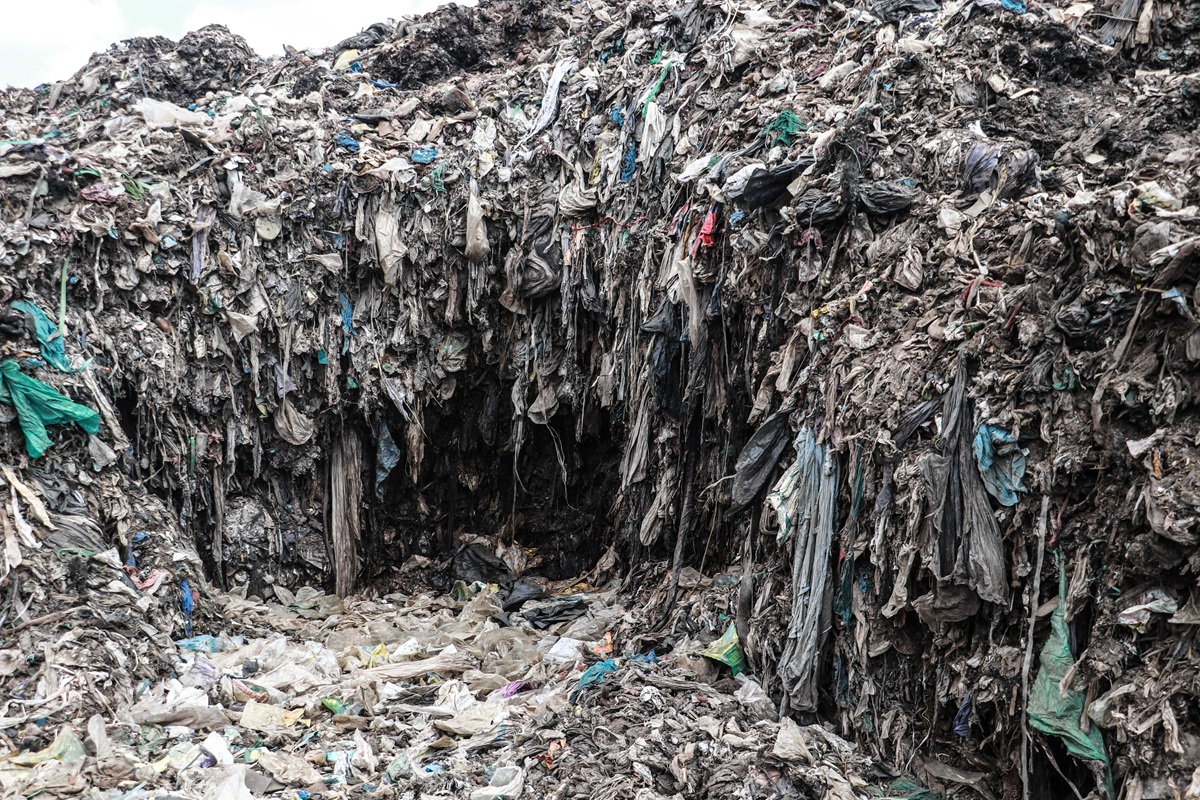
A mountain of textile waste, Dandora, Kenya (c) EIA/James Wakibia
Dandora is also an informal marketplace. Thousands of people depend on the daily income earned from picking, sorting and selling materials recovered from the waste mountain. Entire households rely on this work. Many waste pickers, such as Solomon, work here from a young age.
But this economy is structured by what remains after higher-value fractions have been removed. The dumpsite is the last sorting ground. Workers compete over newly tipped loads, hoping to find something salvageable. Earnings fluctuate with global commodity prices and the quality of incoming waste.
Most waste pickers work without adequate personal protective equipment (PPE). Gloves are thin and easily torn. Masks are rare, despite the constant smoke. There is limited access to formal medical care and no safety net if injury prevents work. For many, there are few alternative employment opportunities. Waste picking is not a choice – it is often the only available source of daily income.
The same global flows that generate mountains of synthetic clothing also generate dependency. Communities become structurally reliant on managing the excess of wealthier economies, even as that excess poisons them.
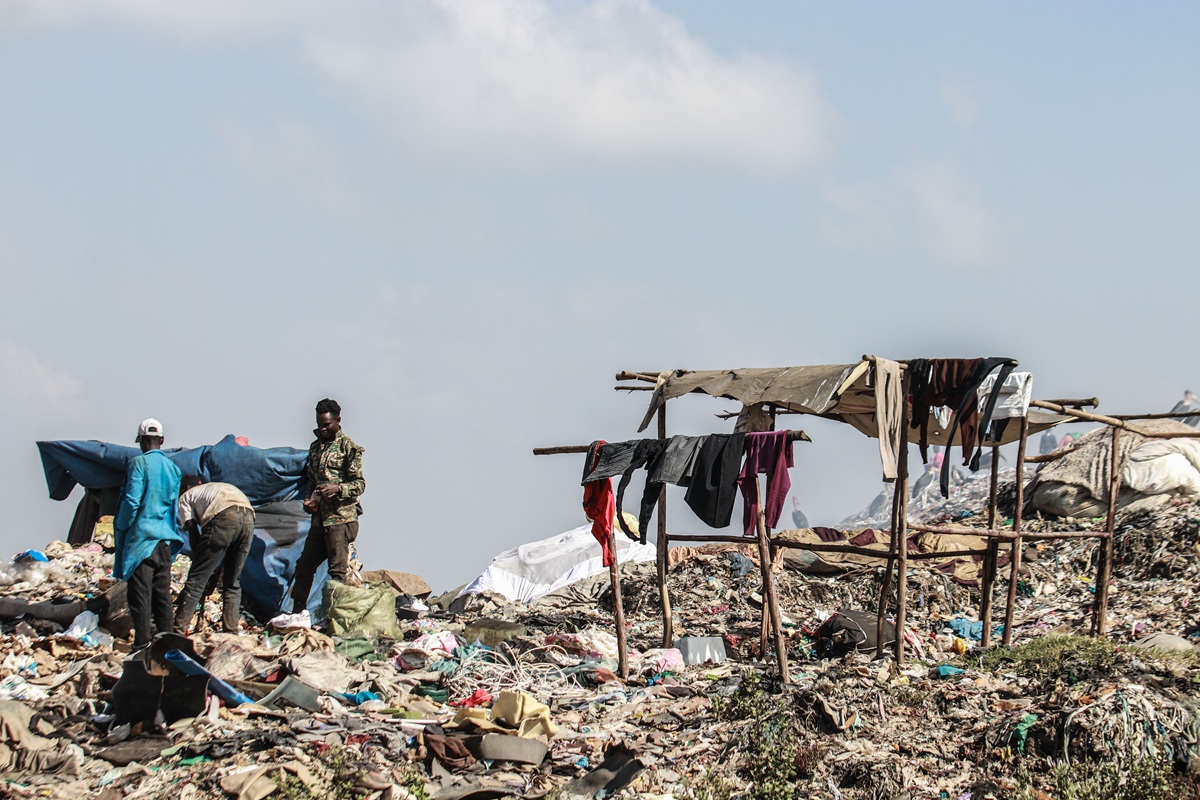
Waste pickers, Danora, Kenya (c) EIA/James Wakibia
Each year on 1 March, waste picker communities around the world mark International Waste Pickers Day. At Dandora, this year’s commemoration is organised under the theme ‘Waste Pickers at the Heart of the Circular Economy: Dignity, Safety, and Recognition’. The objective is not symbolic celebration but a structural change – policy inclusion, occupational safety and just transition pathways.
This matters beyond Nairobi.
If policymakers in Geneva, Brussels, London or Washington are serious about ending waste colonialism and plastic pollution, they must hear directly from the people managing the consequences. Waste pickers understand, in practical terms, which bales are reusable and which are waste in disguise. They see the gap between paperwork and reality.
But inclusion must be genuine. Waste pickers cannot be invited into formal settings for their value as favourable optics or as evidence of corporate ‘partnerships’ that leave underlying trade flows untouched. Too often, informal workers are showcased in sustainability reports while continuing to work without PPE, healthcare or influence over the decisions that shape material flows.
Integration into formal systems must come with protections, fair compensation and independent representation. It must not become a tool for greenwashing by large corporations seeking to legitimise overproduction.
The Dandora waste picker community has set out clear priorities for its 2026 commemoration, including support for PPE, health and safety awareness, recognition certificates and platforms for dialogue with government and private sector actors.
They need financial support for gloves, masks and a first aid kit. Basic safety equipment is still something that must be requested.
If you would like to support the waste picker community in Dandora, including through financial contributions, in-kind support such as PPE or medical services, or technical and institutional participation, you can reach out to them via email.
Recognition must translate into resources.
Standing at Dandora, watching smoke drift over a river that will carry textile fibres across Kenya to the Indian Ocean, it is impossible to pretend that exports labelled as reuse are harmless.
Waste does not vanish at the border. It accumulates in communities with the least protection and the fewest alternatives.
If global environmental governance is to be credible, it must regulate the flows that create this harm and centre the voices of those living with its consequences.
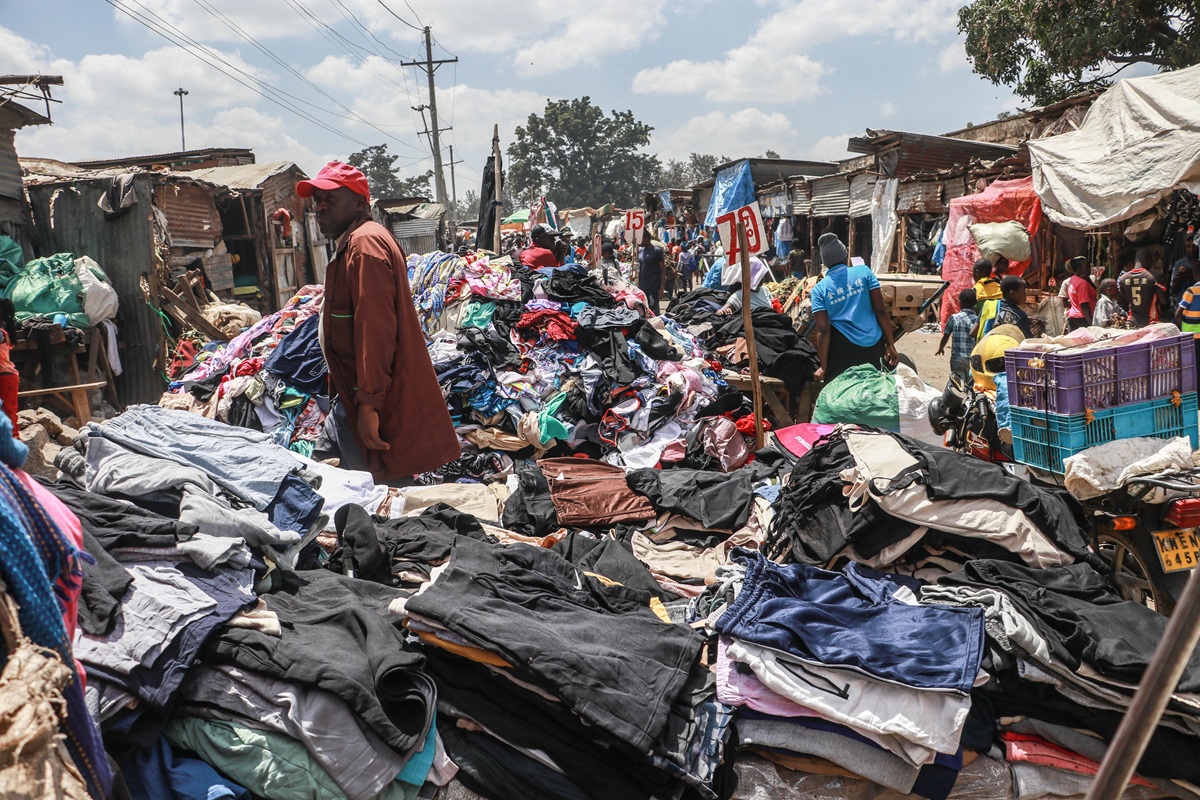
Textles for sale at Korogocho Market, Nairobi, Kenya (c) EIA/James Wakibia.jpg