Climate change – how bad does it have to get before global leaders act?



Climate change is too often viewed as something remote, with its impacts felt in other places, by other people less fortunate.
The following quote popularised on social media has never felt more applicable – “Climate change will manifest as a series of disasters viewed through phones with footage that gets closer and closer to where you live until you’re the one filming it.”
Following a summer dominated by extreme climatic events, widely viewed through videos taken by those affected, it is almost impossible to imagine parts of the world which can be considered safe from these extreme events.
With temperature records continuing to be broken year-on-year and a super El Niño event pouring fuel on the fire, it begs the question how bad will it get before global leaders take the climate crisis seriously?
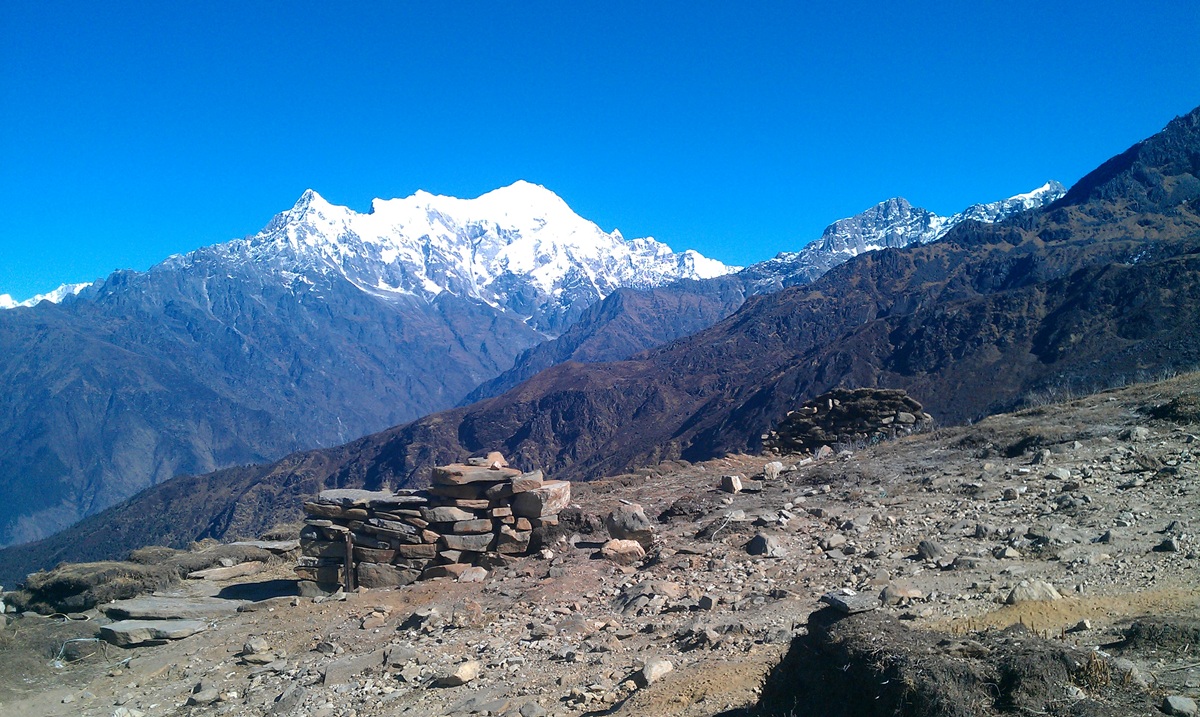
Experts believe the severe floods this week on the Nepal-Tibet border were caused by the collapse of the lower part of a glacier in Nepal near the peak of Mount Langtang Lirung (c) Nirmal Dulalunder, used under the Creative Commons Attribution-Share Alike 3.0 Unported license
The devastating flash-flood on the Nepal-Tibet border marks the most recent catastrophic event resulting in significant loss of human life.
While landslides and floods have always happened in the region, they are becoming more intense and more frequent due to the climate crisis. A warmer atmosphere leads to increase ice melt, which destabilises glaciers and increases the chances of collapse and resulting landslides. Heavy rainfall increases the flow and power of rivers with devastating impacts when they burst their banks.
These factors can combine to super-charge flooding events in the region.
Himalayan communities are subjected to increasingly frequent climate shocks, with less time to rebuild and recover inbetween these events. The priority in the short term must be on supporting the victims of this disaster.
But looking beyond the emergency response, Nepal is designated an Official Development Assistance (ODA) recipient country – to reduce its vulnerability to future disasters, the global community must provide financial support to Nepal, and other countries in the region, for adaptation purposes.
Closer to home, Europe has been subjected to consecutive heatwaves over the past three months that would have been unimaginable just 10 years ago. Record temperatures, combined with a lack of rainfall, have resulted in devastating wildfires across the continent and drought.
Yet politicians remain unwilling to confront the realities of climate change. In Brussels, EU institutions are pursuing a simplification agenda as the continent burns while in the US, the Trump administration’s slogan “Drill, baby, drill” embodies its contempt for multilateral climate action.
Short-term measures aimed at boosting competitiveness and alleviating the cost-of-living crisis are pointless if we ignore the elephant in the room – that increasingly high energy and food prices are all but guaranteed if we continue to treat global heating as a secondary concern.
Some 85 per cent of EU citizens believe climate change is a serious issue – now is the time for brave political leadership.
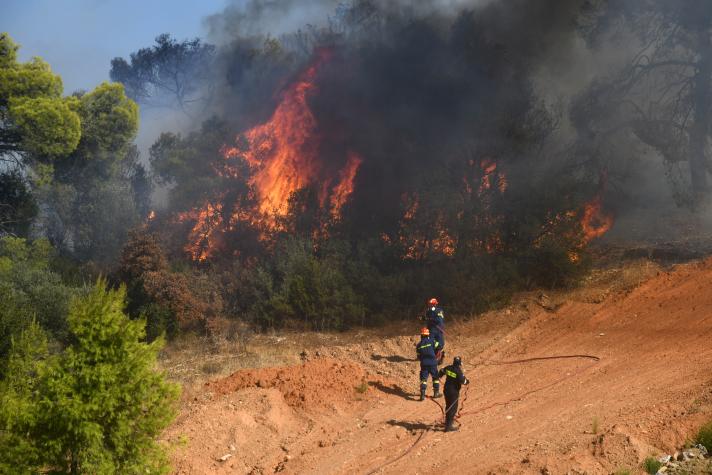
Wildfire in the EU (c) European Union, by Petros Honto
To avoid the worst impacts of climate change, global warming must be limited to 1.5°C, in line with the Paris Agreement. This will be achieved through rapid, sustained reductions of emissions of all major greenhouse gases (GHG).
Meeting this target requires substantial reductions in global carbon dioxide (CO2), including a rapid phase-out of the production and consumption of fossil fuels. However, several other GHG contribute significantly to climate change and must be addressed alongside CO2 if climate goals are to remain within reach. Methane (CH4), nitrous oxide (N2O), fluorinated gases (F-gases) and ozone-depleting substances (ODS), often referred to collectively as super pollutants, together make up more than a quarter of our annual GHG emissions globally.
Many of these gases are short-lived climate pollutants with a disproportionate impact on warming in the near term. Rapid reductions in these emissions therefore offer immediate opportunities to slow warming, giving us more time to decarbonise our economies:
This summer was a wake-up call for our politicians. The call to action is clear. The cost of decarbonising the global economy is trivial compared to the cost of inaction.
Multilateral cooperation and brave political choices are needed to rapidly accelerate climate mitigation and adaptation – it’s past time we started treating the climate crisis with the urgency it demands.