Borneo’s peatlands: A carbon time bomb in the heart of Indonesia’s palm oil frontier


Today we’re pleased to share this guest blog by young EIA supporter and A-level student Ethan Grewal, a keen follower of the work of our Forests Programme who was moved to write following his experiences on a recent trip to Indonesia …
I recently had the rare opportunity to explore Indonesia, one of the most culturally rich and ecologically diverse nations on Earth.
My journey took me deep into the rainforest landscapes of Central Kalimantan, the Indonesian territory of Borneo, where the tension between economic development and environmental protection is visible in every cleared field, every drainage canal and every fragment of remaining forest.
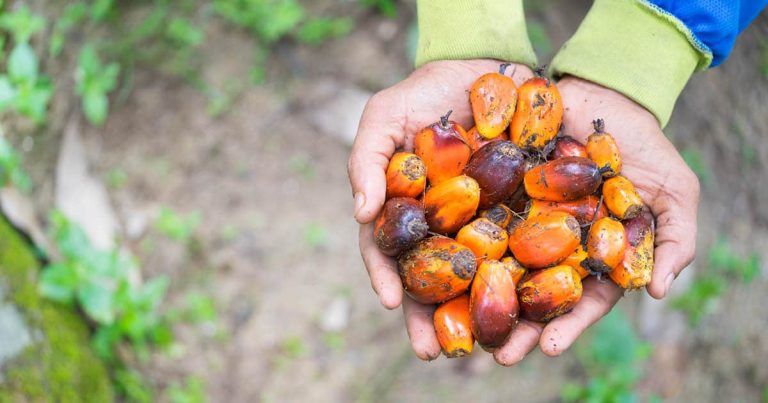
Kalimantan is one of the world’s most intensive palm oil production regions. Across its provinces, 17.5-18.2 million tonnes of palm oil were produced in 2023 alone, according to Statistics Indonesia.
If Kalimantan were an independent nation, its output would make it the second‑largest palm oil producer in the world, surpassing the combined production of Colombia, Nigeria and Thailand.
This scale is driven by Indonesia’s status as a rapidly emerging economy. Palm oil offers a powerful route to income generation because global demand is enormous – its derivatives appear in everything from pharmaceuticals to fuels to everyday consumer goods.
But behind this economic success lies a profound environmental cost.
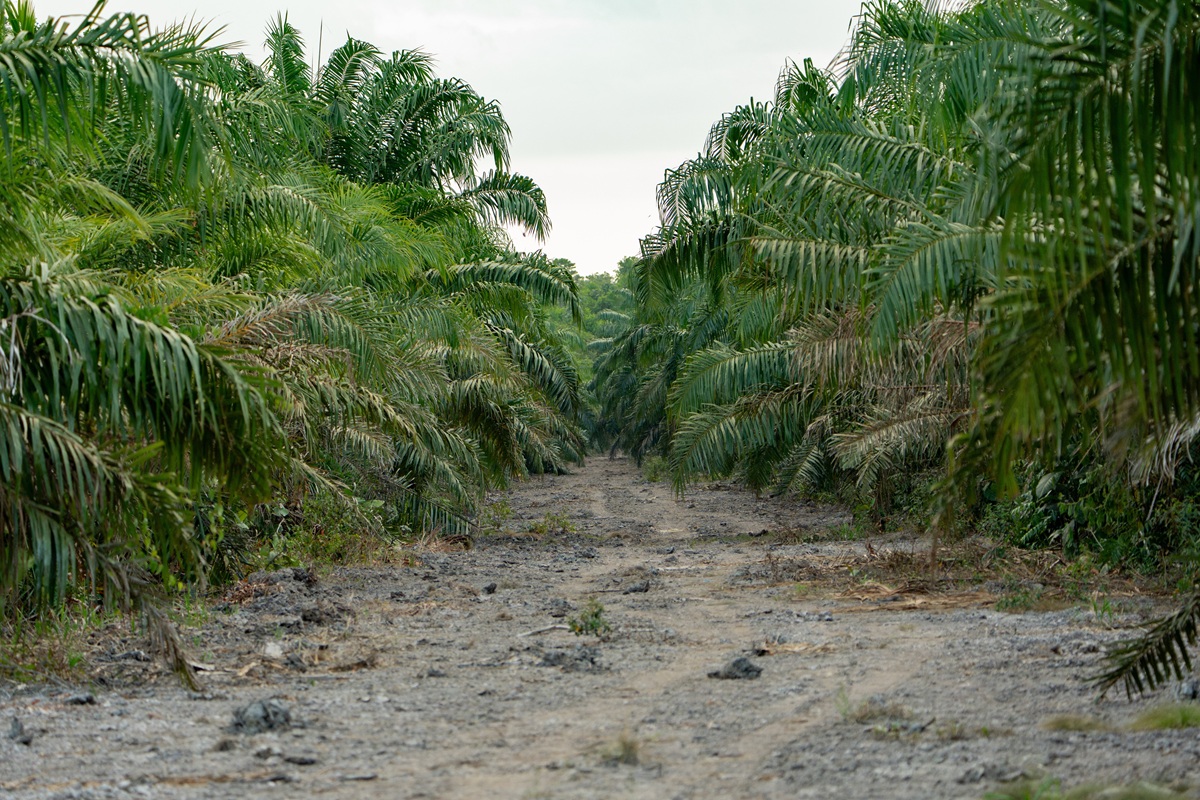
Oil palm cultivation, Kalimantan, Indonesia (c) Ethan Grewal
To understand the sustainability crisis, we must first understand peatland, a scarce, carbon‑dense form of wetland.
Peat forms in anaerobic environments where dead organic matter accumulates faster than it decomposes. Because microbes cannot break down material without oxygen, carbon becomes locked underground for millennia.
Despite covering only three per cent of the Earth’s surface, peatlands store twice as much carbon as all the world’s forests combined. Indonesia alone contains 34 per cent of the world’s peat reserves, making it one of the most critical carbon sinks on the planet.
When peatlands are drained, cleared or burnt, this carbon is released in catastrophic quantities.
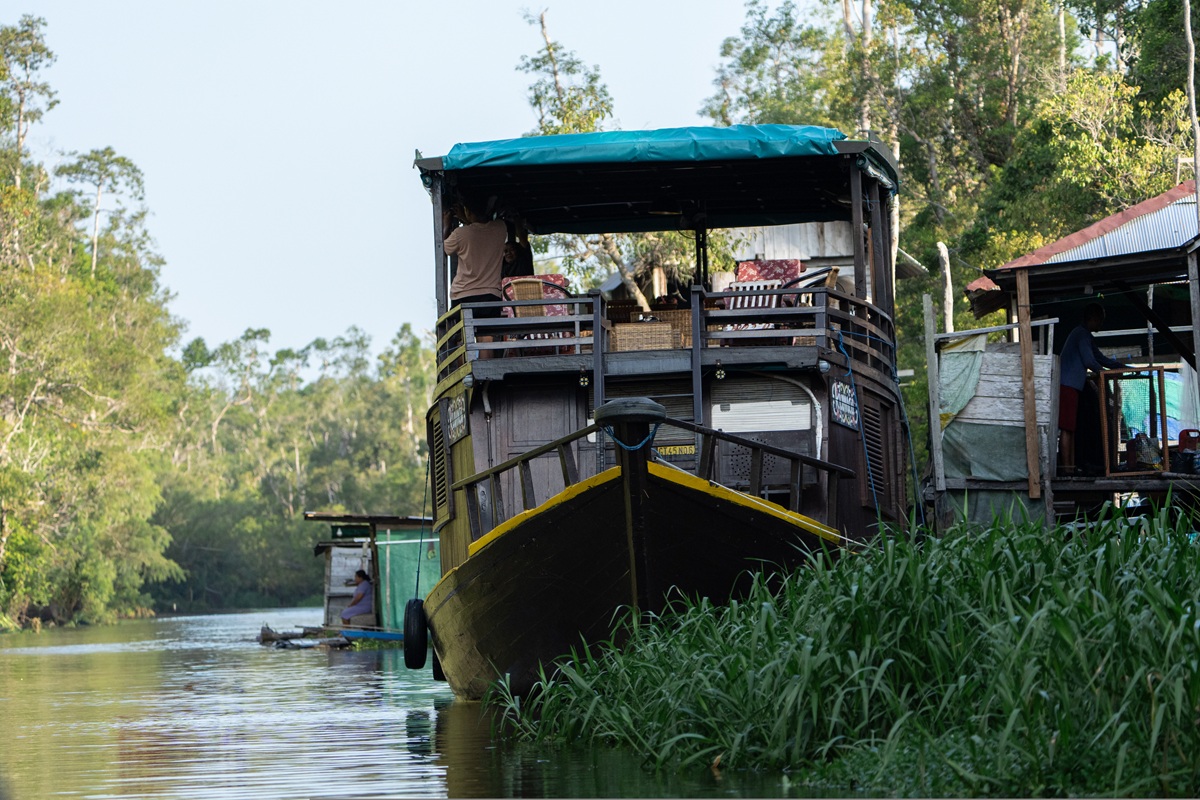
The riverboat from which Ethan saw at first hand the impact of oil palm production on the environment (c) Ethan Grewal
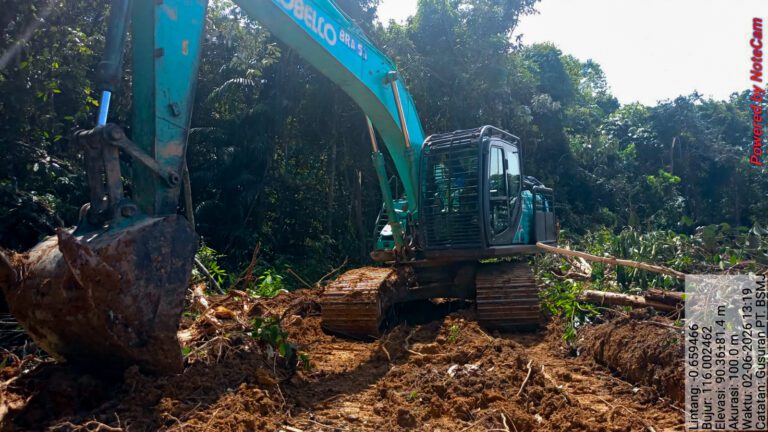
Indonesian environmental NGOs Kaoem Telapak and Pantau Gambut recently examined several palm oil concessions in Central Kalimantan. Their findings highlight a pattern of peatland disturbance within areas that should be protected under Indonesian law.
In one concession, 2,753 hectares of land were identified as protected peatland. Field inspections in 2024 documented extensive drainage canal networks, which lower the water table and dry the peat. Once dried, peat loses its natural fire resistance and becomes highly flammable, releasing vast stores of carbon when fires occur.
These fires contribute significantly to regional haze events and global greenhouse gas emissions.
Indonesia’s environmental laws are robust on paper, but enforcement remains inconsistent.
The country’s national sustainable palm oil scheme, Indonesian Sustainable Palm Oil (ISPO), has struggled to regulate peatland clearance or ensure compliance among concession holders.
Economists often describe this dynamic using the Kuznets Curve, which illustrates how environmental degradation increases during early economic growth before eventually declining as nations strengthen governance and prioritise sustainability.
Indonesia appears to be at the peak of this curve, caught between the drive for economic expansion and the pressing need to protect its ecosystems.

Ethan documenting his trip from the riverboat Kalimantan, Indonesia (c) Ethan Grewal
My time in Borneo made one thing clear – Indonesia is standing at a crossroads.
The decisions made today – by policymakers, companies and international buyers – will determine whether Kalimantan’s peatlands remain one of the world’s most vital carbon stores or become one of its greatest sources of emissions.
Protecting peatland is not simply an environmental issue, it is a global climate imperative.