Palm oil firm fails to act as clearing and evictions re-start in Indigenous lands in Borneo



A long-running land dispute in Indonesia’s East Kalimantan province – dubbed Indonesia’s highest profile land conflict – has erupted again, spurring calls for renewed scrutiny on First Resources, a major palm oil producer and member of the Roundtable on Sustainable Palm Oil (RSPO), over breaches of sustainability commitments.
On 18 June, the Indigenous Dayak Benuaq community of Muara Tae alleged that PT Borneosurya Mining Jaya (BSMJ) – a First Resources subsidiary – carried out new evictions and land-clearing operations in its customary territory, prompting villagers to form human barricades to defend their land, as reported by our Indonesian partner Kaoem Telapak.
The company previously halted clearing in 2012 after community action and complaints. Community leaders warn that without urgent intervention they now risk losing the last remaining forest in their customary territory.
First Resources is part of the RSPO – the most well-known certification scheme for palm oil, intended to assure consumers that palm oil production does not cause environmental or social harms – with the company supplying palm oil into global markets.
The RSPO’s rules require members to respect Indigenous land rights and secure Free, Prior and Informed Consent (FPIC) before development. The company also has its own policies which commit it to respecting customary rights and resolving disputes through a transparent, consultative processes.
However, community members on the ground report a starkly different reality.
Local residents allege that evictions and land-clearing are continuing in their territory, describing daily activity and the use of heavy equipment, sometimes under police escort.
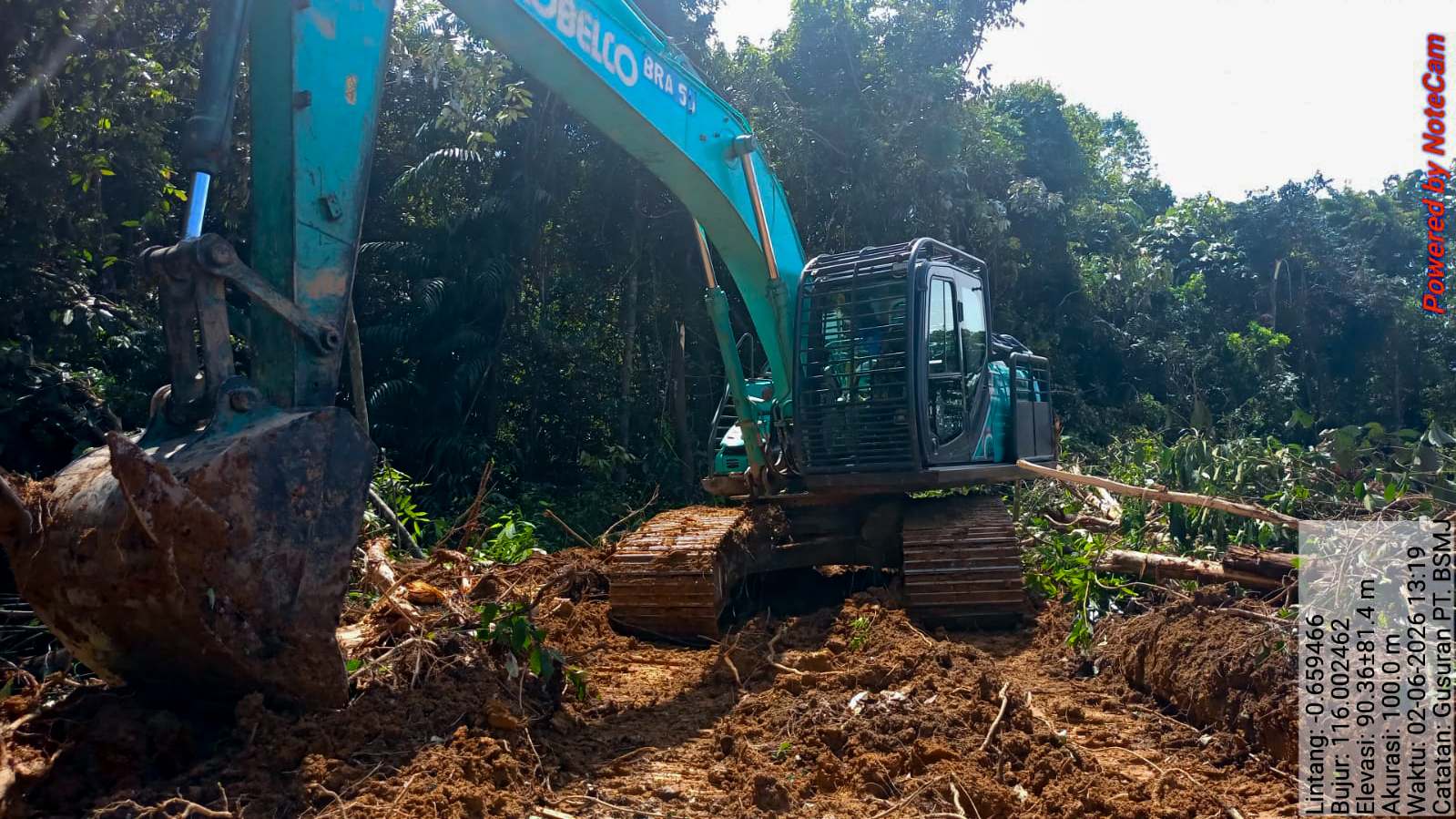
Eviction activity using heavy equipment by PT BSMJ as of 2 June 2026 (c) Kaoem Telapak
For the Muara Tae community, the disputed land is not just territory – it is its last remaining forest, central to livelihoods, culture and identity, after more than a decade of plantation expansion.
The current conflict traces back to 2011 when palm oil companies first entered the area, triggering overlapping land claims and a protracted boundary dispute.
Since then, the community has sought to defend its territory by raised the conflict’s profile at both national and international levels, including:
But to date none of these efforts have delivered a lasting solution and the community still faces the same threats today.
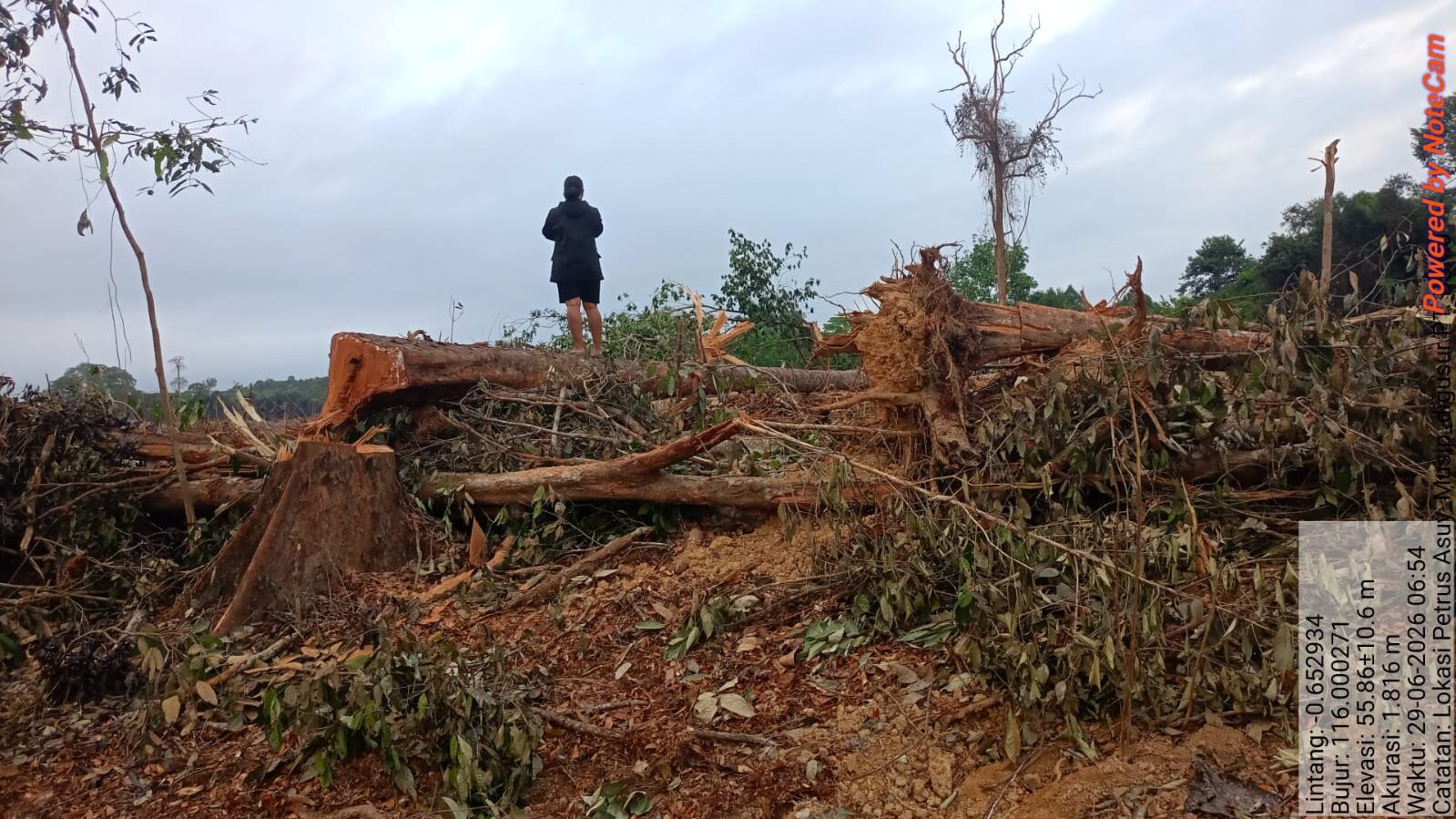
Community surveying land clearing in PT BSMJ as of 29 June 2026 (c) Kaoem Telapak
Muara Tae demonstrates how Indigenous land dispossession can be enabled through state administrative decisions. The transfer of part of the community’s customary territory into a neighbouring jurisdiction weakened recognition of its land claims and facilitated the allocation of disputed customary land to a palm oil company.
This dispute is not simply about administrative boundaries or individual land transactions. At its heart is whether Indigenous customary land rights have been recognised and respected.
While First Resources relies on Government administrative boundaries and land compensation records, the Muara Tae community maintains that the land forms part of its customary territory and should not have been allocated for plantation development without its collective consent.
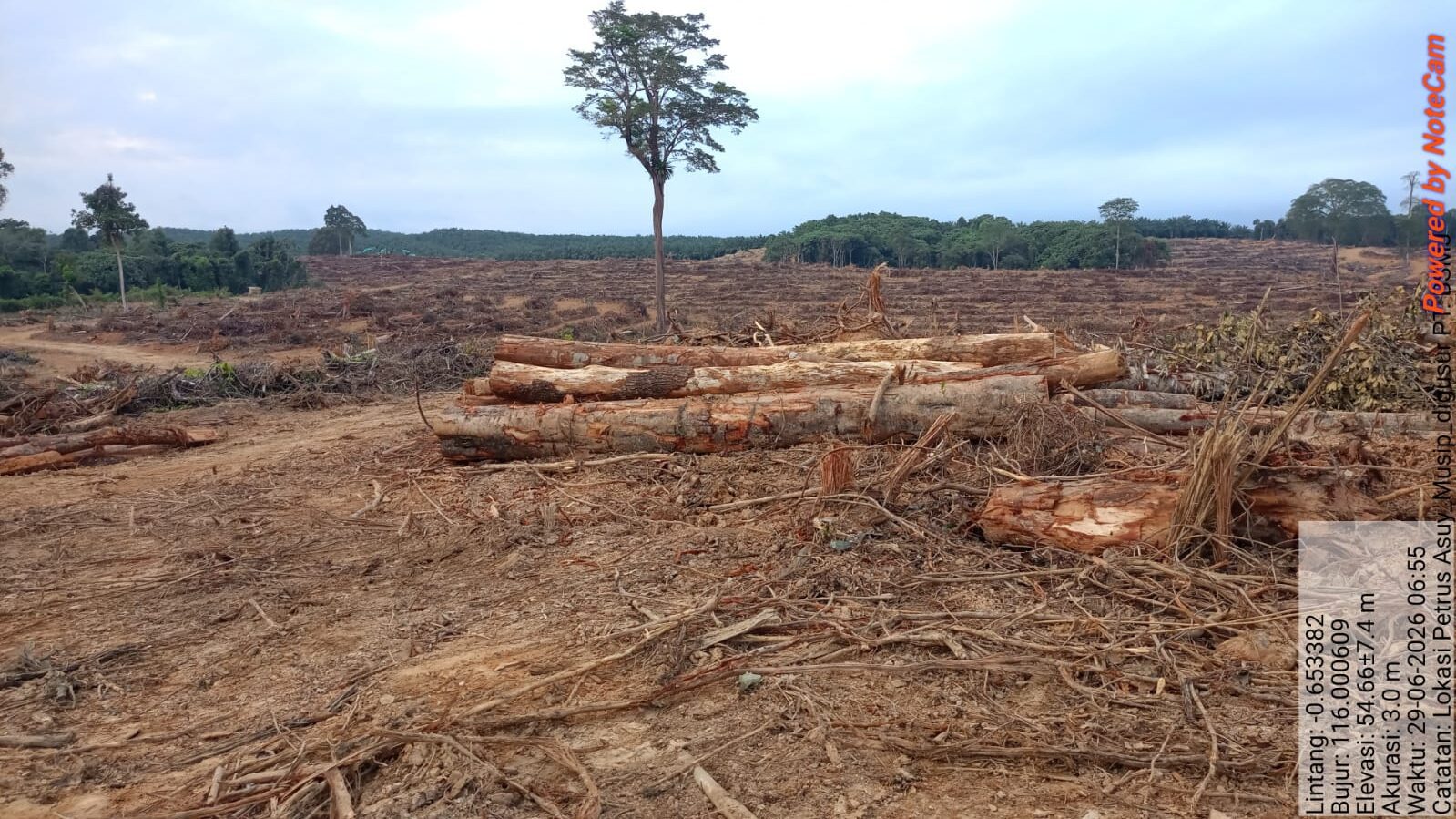
Land clearing in PT BSMJ of 29 June 2026 (c) Kaoem Telapak
The case also highlights a growing tension between sustainability pledges and accountability.
A formal complaint against PT BSMJ – part of First Resources – was filed through the RSPO complaints system in 2012 by EIA, the Indigenous Peoples Alliance of the Archipelago (AMAN) and the Muara Tae Indigenous community, alleging land-clearing without FPIC and failures to compensate communities.
Although the complaint was closed in 2015, the underlying conflict has never been resolved – and has now escalated again.
In 2019, EIA found that RSPO auditors failed to even acknowledge the conflict at PT BSMJ existed, as documented in our critical review of the RSPO’s implementation of its standards – Who Watches the Watchmen? 2.
PT BMSJ is now certified under the RSPO, as well as Indonesia’s national certification scheme, the Indonesian Sustainable Palm Oil (ISPO) standard, but continues to face allegations that suggest non-compliance with core principles, including respect for customary land and conflict resolution.
First Resources has long been under scrutiny, not only for this conflict but also for allegedly operating shadow companies and other ongoing violations, as outlined in our 2025 report A Family Affair with Kaoem Telapak.
In December last year, First Resources was suspended from the RSPO for three months for failing to fully declare its relationship with another company in a complaint case over its alleged shadow companies which took five years to reach a conclusion and sparked outrage from NGOs for the RSPO’s ultimate dismissal of it.
Together, these cases have fuelled concerns among civil society organisations over the effectiveness of corporate sustainability commitments and the RSPO complaints process in delivering timely accountability.
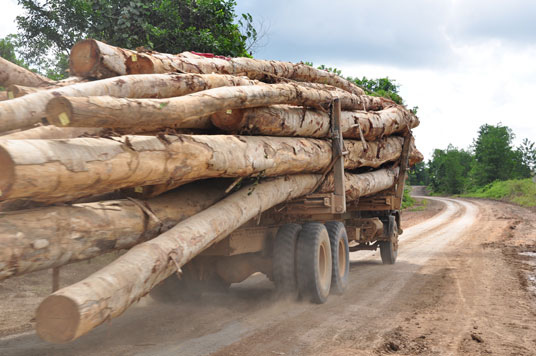
Logging truck near Muara Tae (c) EIA/Kaoem Telapak
The renewed conflict puts First Resources – and certification schemes including the RSPO and ISPO — under pressure to demonstrate that their sustainability commitments translate into real-world accountability.
With evictions ongoing and disputes unresolved after more than a decade, Muara Tae highlights the failures of the Indonesian Government, certification schemes and corporates policies to genuinely protect Indigenous rights.
There is a clear need for more formal legal protections, alongside an immediate halt to the land-clearing and a resolution to this long-running conflict.
Protecting Indigenous rights and forests requires stronger laws, not only in Indonesia but also globally, so that consumers can be confident palm oil – found in thousands of everyday products – is not driving human rights abuses or deforestation.
EIA asked First Resources for a response to the concerns that PT BSMJ has re-started land-clearing and evictions.
First Resources replied outlining its historical efforts to address the conflict and stated that despite the conflict concerning village boundaries and customary claims, it acquired the land parcels that are owned by members of the Muara Tae community administratively located within Muara Ponaq Village through a land compensation process, free from coercion.
It stated that “the Company adheres to officially established government licensing boundaries, and all operational activities are undertaken within the Company’s legally issued concession”.
The company additionally highlighted that it consistently applies FPIC, protects High Conservation Value (HCV) and High Carbon Stock (HCS) areas and “Where land claims or objections arise, the Company adopts a precautionary approach by suspending activities in the disputed area until the matter has been clarified and resolved through the appropriate mechanisms”.
The company did not deny or confirm whether land-clearing has re-started, nor whether any activities would be suspended if confirmed.
Related resources
• Community struggles to save threatened forests in Indonesia (news, 10 November 2011)
• On the front line: Muara Tae’s last stand against big palm oil (press release, 24 January 2012)
• RSPO fails to act as Muara Tae is destroyed (press release, 7 November 2012)