The UK is experiencing increasingly frequent heatwaves – here’s why air-con isn’t the answer




As many parts of the UK swelter under the latest heatwave of the summer, interest in ways to keep cool is skyrocketing.
There has been significant media interest on the relationship between heatwaves and climate change, as well as possible solutions to our overheating problem, particularly whether we should be encouraging the use of air-conditioning (AC) units.
However, discussion in the media often omits key facts about AC systems, particularly that they exacerbate the problem of overheating, both locally and globally.
High energy use is commonly cited and, according to the International Energy Agency, ACs and fans already consume 20 per cent of all the energy used in buildings globally.

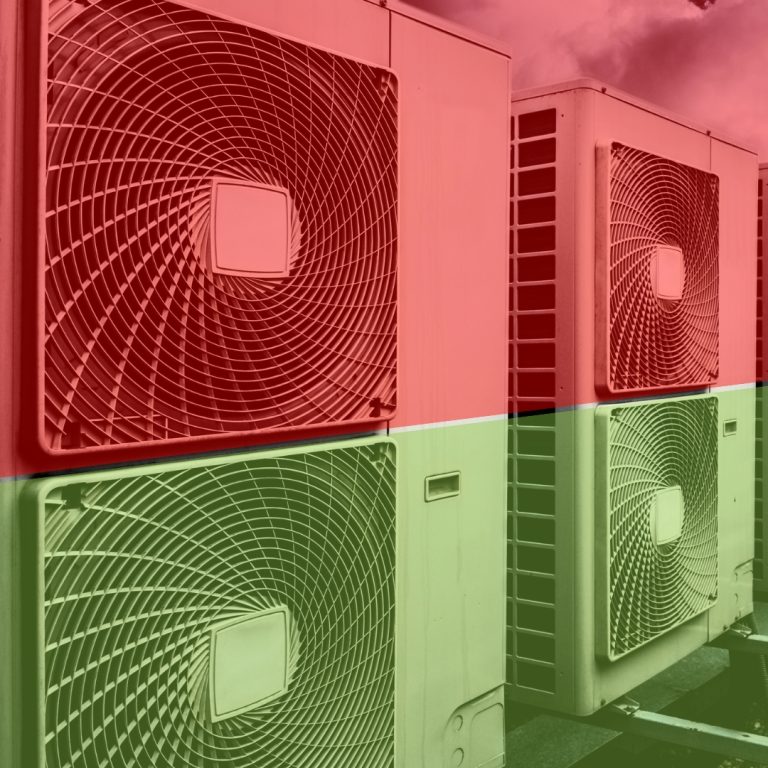
Air-conditioning units
However, ACs are also commonly reliant on super-polluting fluorinated greenhouse gases to run the refrigerant cycle. These gases can have climate impacts hundreds or thousands of times worse than carbon dioxide, making them some of the most potent greenhouse gases in common use. About one-third of the climate impacts of cooling come from the leakage of these refrigerant gases.
Both the indirect (energy associated) and direct (F-gas refrigerant leakage) emissions mean that ACs contribute significantly to climate change and therefore to the increased frequency and severity of heatwaves.
They can also drive up temperatures locally by contributing to the Urban Heat Island effect, where urban areas are often several degrees hotter than surrounding countryside. ACs, by their nature, take hot air from inside and eject it into the space outside. So, while some residents with the funds to install AC units might experience lower internal temperatures, their neighbours who may not be able to afford such home upgrades will have to suffer even higher temperatures.
To reduce climate impact and long-term energy costs, we should prioritise passive cooling and behavioural changes over mechanical cooling.
Alternative solutions to AC include:

Urban tree-planting can lower city temperatures while providing shade
Some interesting new ideas:
Where air-conditioning is installed, we must prioritise:

The UK Government has yet to review its domestic F-gas Regulation
What are governments doing about cooling?
By signing the Global Cooling Pledge at CoP28, the UK and several EU nations — including France, Germany, Italy and Denmark — have each committed to publishing a National Cooling Action Plan. Due to be published in 2026, it is important that these plans set out a comprehensive approach which protects vulnerable people, encourages behavioural and societal change and ensures strong policies that drive the cooling market toward energy-efficient systems with low-impact refrigerants.
The EU is already leading the way in the phase-out of F-gas refrigerants, having significantly increased ambition in a 2024 review, unlocking the door for lower climate impact cooling. The updated regulation is already coming under significant pressure from vested interests in the chemical industry and EIA continues to urge the EU to stand strong by this world-leading legislation.
Despite years of promising to review its domestic F-gas Regulation, the UK Government has yet to do so, leaving consumers with less-efficient cooling run on damaging refrigerants.
The independent climate advisory body, the Climate Change Committee, recently called on the UK Government to match or exceed EU ambition on F-gases.
EIA hopes that a long overdue consultation on domestic F-gas rules will finally recognise the need to align with Europe on cooling.
• EIA manages the CoolTechnologies.org website, which give consumers options for F-gas-free cooling technologies in a range of subsectors. We have also recently released reports on the ability for natural refrigerants to maximise the benefits of the heat pump roll-out and an investor-focused report looking at the cooling emissions from supermarket refrigeration systems.