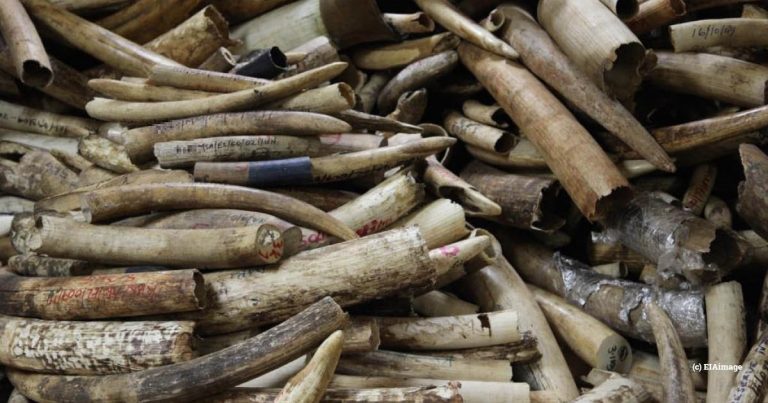
Southern African Development Community reclaims lead role in global ivory trafficking
New EIA analysis indicates the Southern African Development Community (SADC) region is resuming its long-held key role in trafficking ivory to meet demand in Asia.
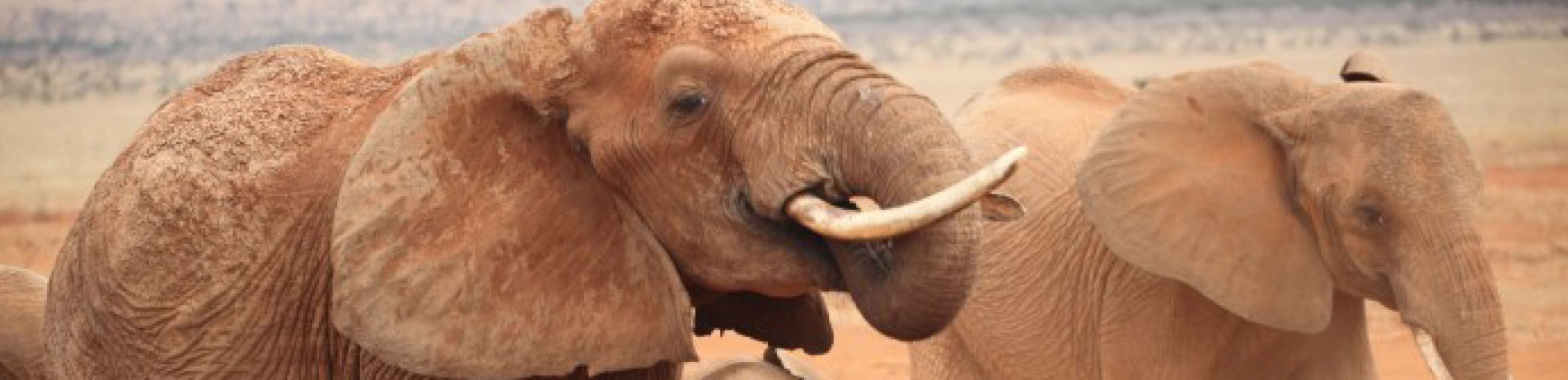
During the late 2000s and early 2010s, the region experienced a catastrophic elephant poaching crisis, leading to a significant decline in African savannah elephant populations.
The 2016 African Elephant Status Report and Great Elephant Census findings showed that regional hotspots such as Mozambique and Tanzania had lost approximately 30 per cent and 60 per cent of their elephant populations respectively over the period under review, with Tanzania losing its elephants due to poaching for the illegal trade in ivory in only five years between 2009-14.
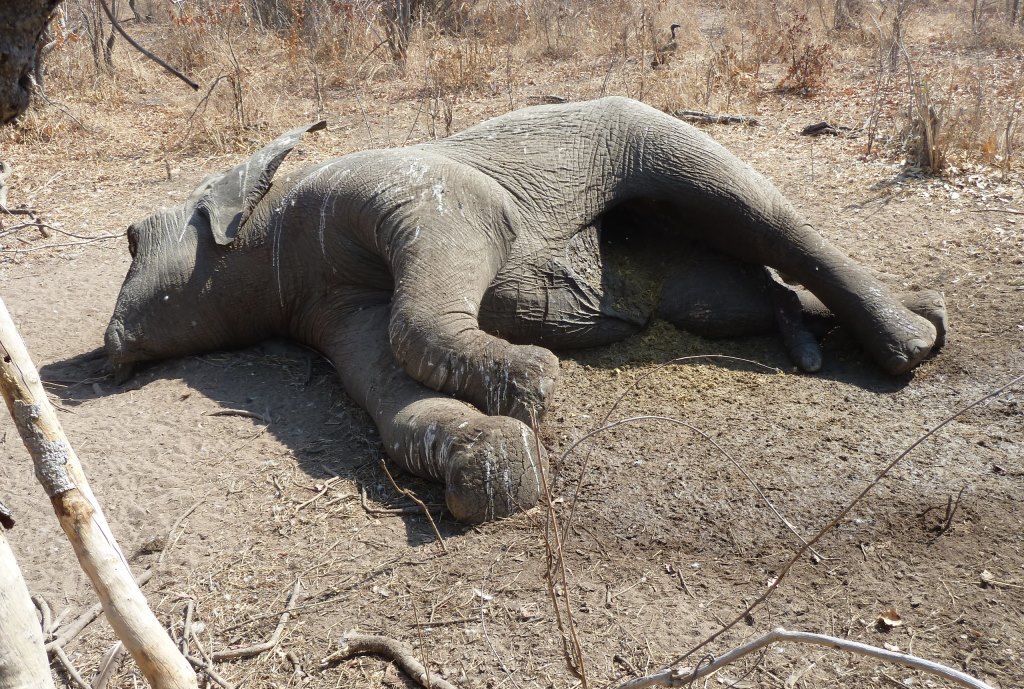
Poached elephant, Tanzania, 2014 (c) EIA
This decline was the most severe continental downturn in African elephant numbers since the early 1990s following the introduction of the international ivory trade ban in 1989.
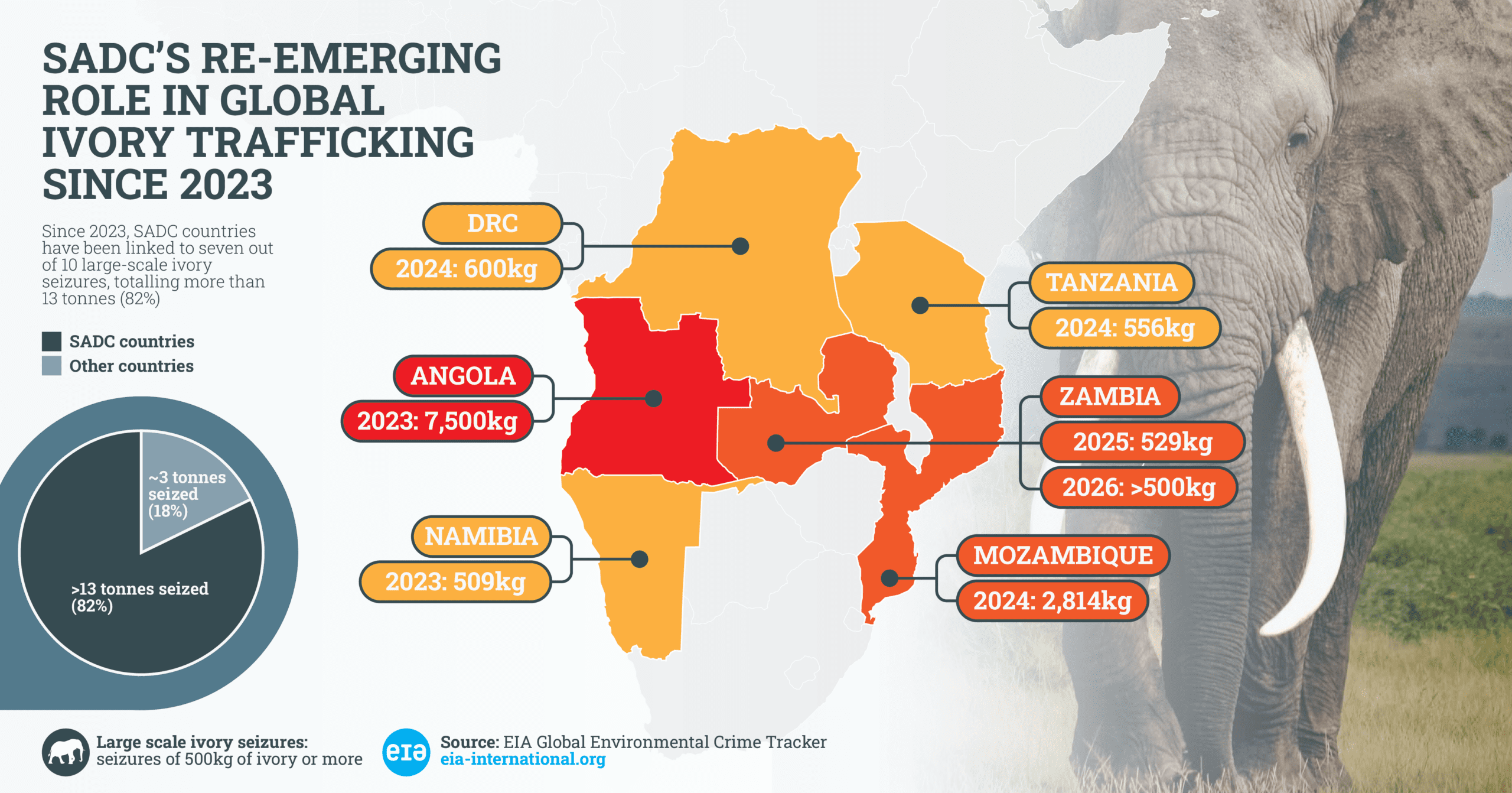
From 2015 onwards, ivory trafficking routes showed a geographic shift, with West and Central Africa increasingly identified as key transit hubs. While relatively few large-scale ivory seizures were publicly linked to direct shipments from SADC countries between 2020-22, the region re-emerged in 2023 as both a source and export hub in global ivory trafficking networks, particularly of large-scale seizures exceeding 500kg.
EIA data indicates that seven out of 10 such seizures worldwide involve SADC countries, accounting for more than 13 tonnes – approximately 80 per cent of the total volume recorded from large-scale seizures.
The latest known incident took place in Zambia in March this year with the seizure of half a tonne of ivory tusks following intelligence provided by EIA.
EIA Senior Wildlife Campaigner Linh Nguyen said: ‘’The continued involvement of SADC countries in major ivory seizures is particularly concerning given their ongoing advocacy for the resumption of international commercial ivory trade.
‘’This is exemplified by Namibia’s proposal at the CITES CoP20 in November 2025, which was rejected by a majority of member states.’’
Nguyen added that stronger coordinated enforcement is urgently needed, including enhanced cross-border cooperation, real-time intelligence sharing, conducting financial investigations and targeted action against high-level traffickers.
“Without stronger collective enforcement, elephants across the region and the wider continent will remain under sustained pressure from the illegal ivory trade, threatening their long-term survival and the ecosystems they support,” she said.
EIA will continue to monitor enforcement actions and subsequent prosecutions to inform policy and strengthen measures against illegal ivory trafficking.