New scientific study shows it’s time to close the Montreal Protocol’s feedstock loophole



The Montreal Protocol’s global phase-out of controlled ozone-depleting substances (ODS) has put the planet’s ozone layer on a path to recovery, but there’s still a significant, overlooked problem.
Behind the Protocol’s successful legacy, there is a surprising secret – vast quantities of ODS are still produced as chemical feedstocks and the resulting emissions are going unaddressed.
A new study by leading scientists makes clear the threat these emissions pose to both the ozone layer and the climate.
Every country in the world has ratified the Montreal Protocol and committed to protecting the ozone layer – this study confirms it is past time for them to act on the feedstock loophole.
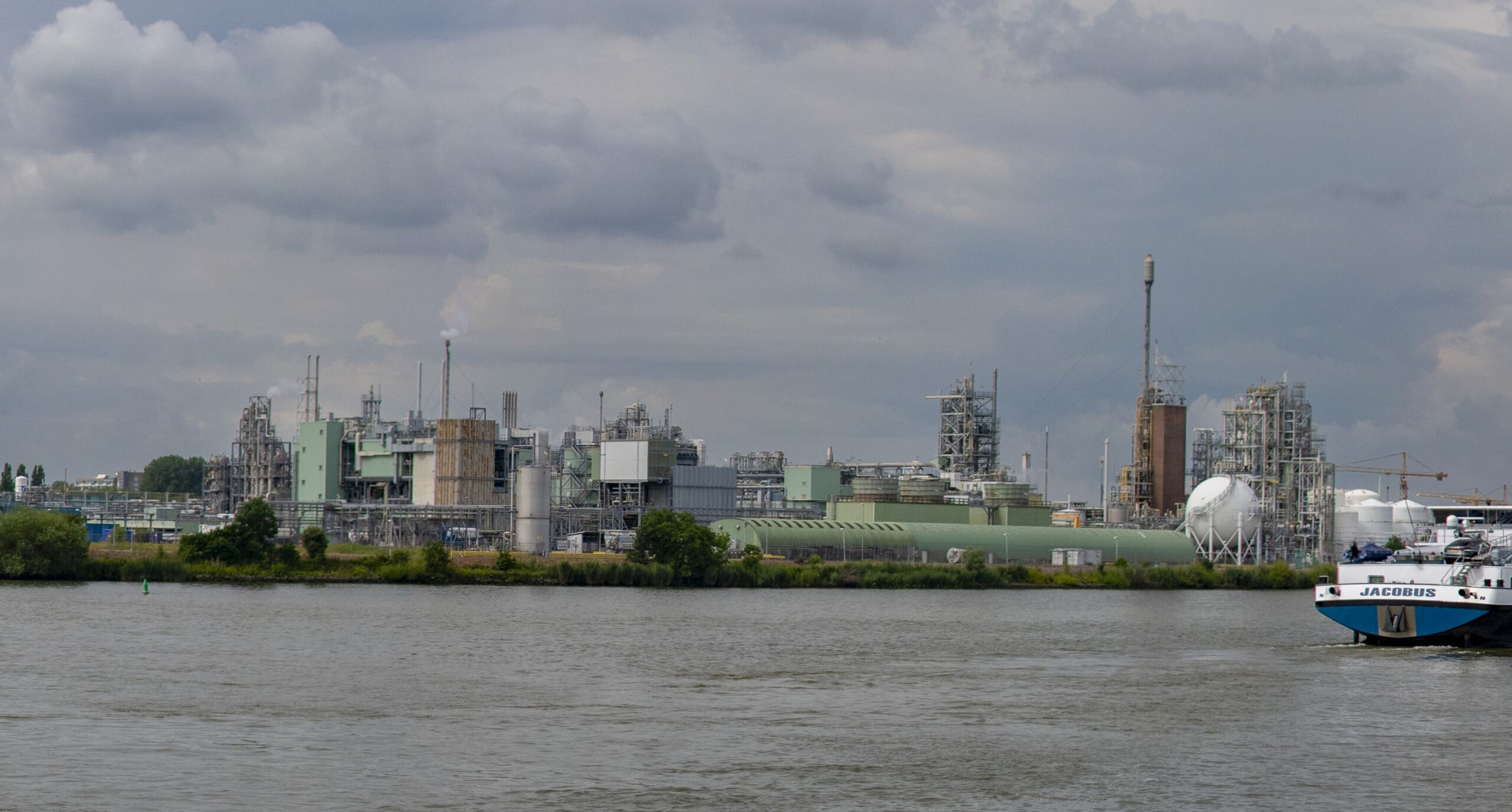
Chemours Dordrecht, in the Netherlands, where ozone-depleting HCFCs are used to make fluoropolymers (c) Paul Van de Velde (Flickr)
Feedstocks are chemicals used as building blocks in the manufacture of other chemical products. ODS and other controlled gases under the Montreal Protocol, including hydrofluorocarbons (HFCs), are used as feedstocks to make other fluorinated gases, plastics and speciality chemicals such as pesticides.
Unlike emissive uses such as refrigeration or foam-blowing, the production and use of ODS and HFCs as feedstocks is not controlled under the Montreal Protocol, leaving countries free to continue their use in chemical production. As a result, the amount of ODS used as feedstock increased by 163 per cent between 2000-24, driven by surging demand for the end products.
The original assumption behind the ‘feedstock exemption’ was that feedstock use is not a significant source of emissions. However, a growing body of scientific evidence disproves this assumption and has brought the validity of feedstock exemptions into question.
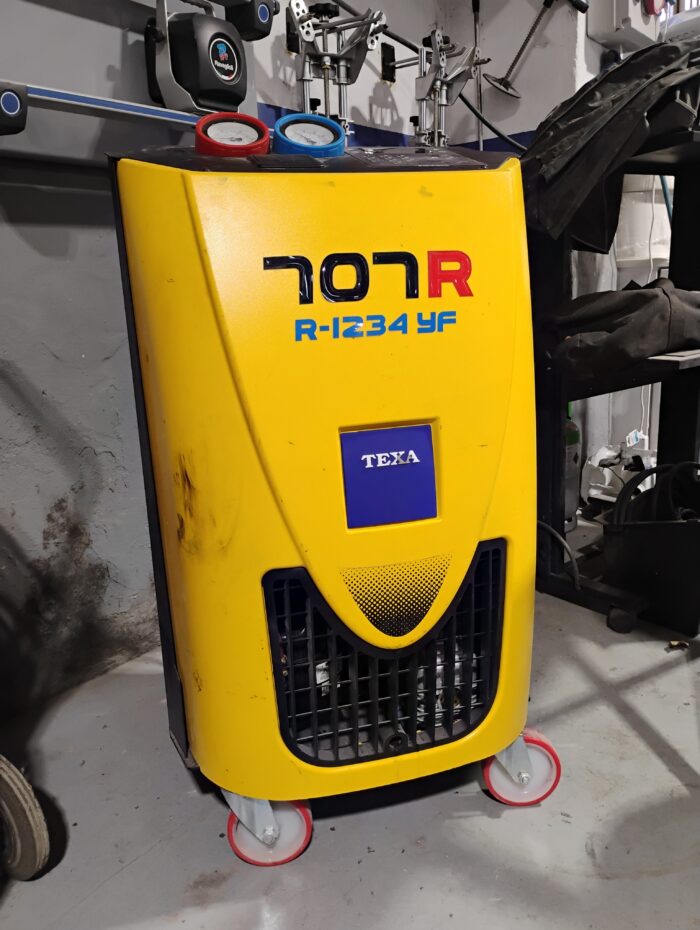
ODS are increasingly used to produce new fluorinated refrigerants such as HFO-1234yf, here seen in equipment used to recharge vehicle air conditioning units (c) EIA
The amount of feedstock unintentionally released during production processes is now believed to be approximately seven times higher than originally assumed, at ~3.6 per cent of the amount produced rather than the initial suggestion of 0.5 per cent – and even higher in some instances.
EIA raised concern over feedstock growth and emissions as early as 2010 and in recent years a number of parties, in particular Australia, EU and Switzerland, have initiated discussions at the Montreal Protocol.
But despite a growing body of scientific evidence, there is yet to be any meaningful action to reduce emissions, with progress repeatedly blocked by a handful of parties opposed to any further reporting or controls.
At the most recent Meeting of the Parties (MoP) in late 2025, proposed decision text on feedstocks faced significant opposition, primarily from India and Saudi Arabia, which questioned both the value and purpose of the decision. After hours of tense discussions Parties ultimately failed to reach any decision.
The recent publication of a new study on feedstock emissions provides fresh evidence which is hard to ignore. The paper Continuing industrial emissions are delaying the recovery of the stratospheric ozone layer was authored by a number of pre-eminent scientists in the field. They examined the use of ODS as feedstocks and the resulting emissions, demonstrating that without action, feedstock-related emissions will delay the recovery of the ozone layer by about seven years, possibly even more, and will contribute significantly to climate change.
Stefan Reimann, from the Swiss Federal Laboratories for Materials Science and Technology (EMPA), who is first author on the study, said: “We’ve gotten to the point where, if we want the protocol to be as successful in the future as it has been in the past, the parties really need to think about how to tighten up the emissions of these industrial processes.”
One of the paper’s co-authors, Susan Solomon from the Massachusetts Institute of Technology (MIT), said: “To me, it’s only fair, because so many other things have already been completely discontinued. So why should this exemption exist if it’s going to be damaging?”
The case for action on feedstocks is now even clearer and EIA will continue to make that case alongside the growing chorus of voices from the scientific community and parties to the Montreal Protocol.
The ozone and climate impacts of the fluorochemical industry have flown under the radar for far too long – the feedstock exemption must be re-examined and ultimately closed.