

About Crimes that Affect the Environment
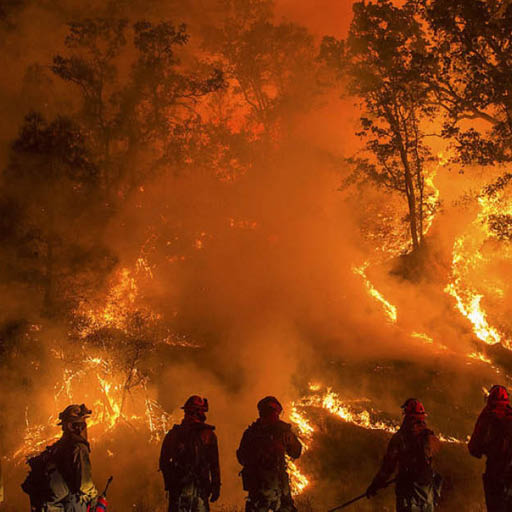
Crimes that Affect the Environment (CAE) refers to illegal activities that harm the natural world — such as wildlife trafficking, forest crimes, waste dumping and fisheries crime — when carried out by structured criminal networks for financial gain.
In the past decade, governments and international institutions have increasingly recognised the scale and complexity of “environmental crimes”, noting that a wide range of acts have negative, harmful impacts on the environment, economies, security and human health. Many related offences extend beyond traditional environmental law and include crimes such as corruption, fraud, violence and financial crimes.
Just as organised crime groups traffic drugs or weapons across borders, criminal networks also traffic endangered animals, smuggle illegally felled timber or dump toxic waste in ways that evade regulations and enforcement. Invariably, these are not opportunistic offences committed by individuals — they are sophisticated, profit-driven operations that often span multiple countries, involve corruption and generate billions of dollars annually.
The United Nations Convention against Transnational Organized Crime (UNTOC) is the primary international legal instrument designed to combat organised crime across borders. It entered into force in September 2003 and has since been ratified by more than 190 countries, making it one of the most widely adopted international treaties. It requires states to criminalise participation in organised criminal groups, money laundering, corruption and obstruction of justice. By harmonising national laws, UNTOC enables countries to work together more effectively through extradition, mutual legal assistance and joint investigations. Despite challenges, UNTOC remains the cornerstone of the global legal architecture for fighting organised crime.
Our response
As an organisation that has spent more than four decades investigating and combating environmental crime and abuse across all three pillars of the triple planetary crisis — climate, biodiversity and pollution — EIA is uniquely positioned to speak to both the scale of the threat and the response required to address it.
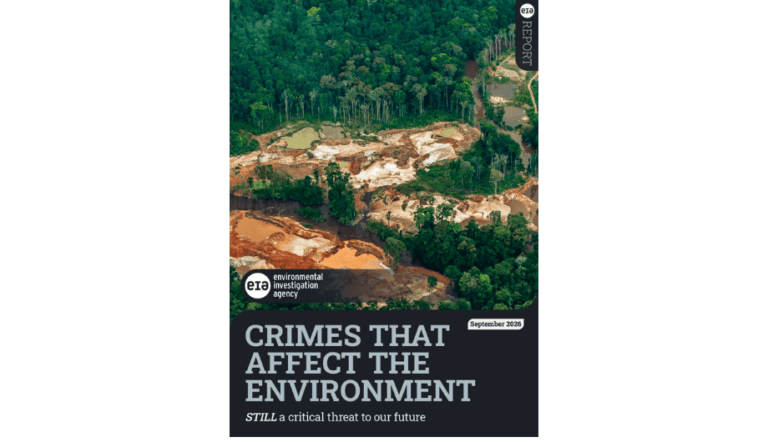
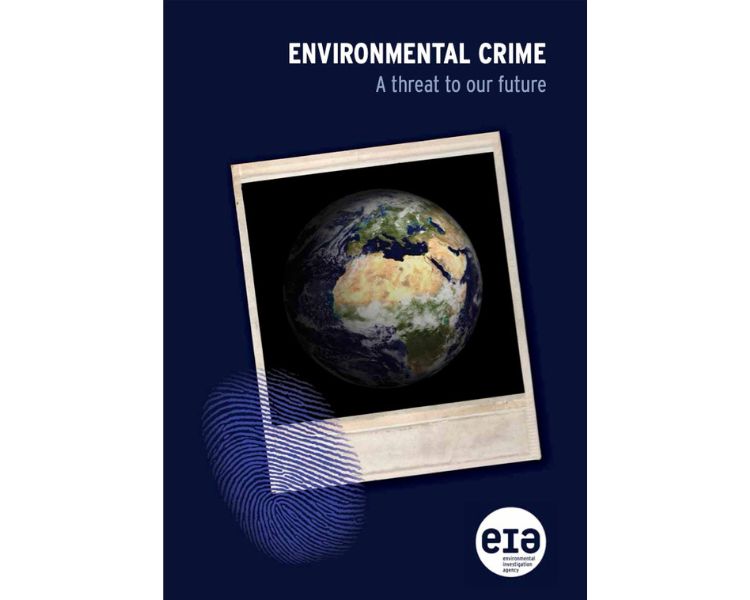
We have been at the forefront of efforts to strengthen the international legal response to CAE under UNTOC for more than two decades. A landmark moment came in 2008 when we launched our report Environmental Crime: A Threat to Our Future at a side event during the 4th Session of the Conference of the Parties to the United Nations Convention against Transnational Organized Crime in Vienna. Presenting alongside then-UNODC Executive Director Antonio Maria Costa, we helped ignite a conversation about whether a new protocol to UNTOC could effectively address CAE — a question that has continued to reverberate ever since.
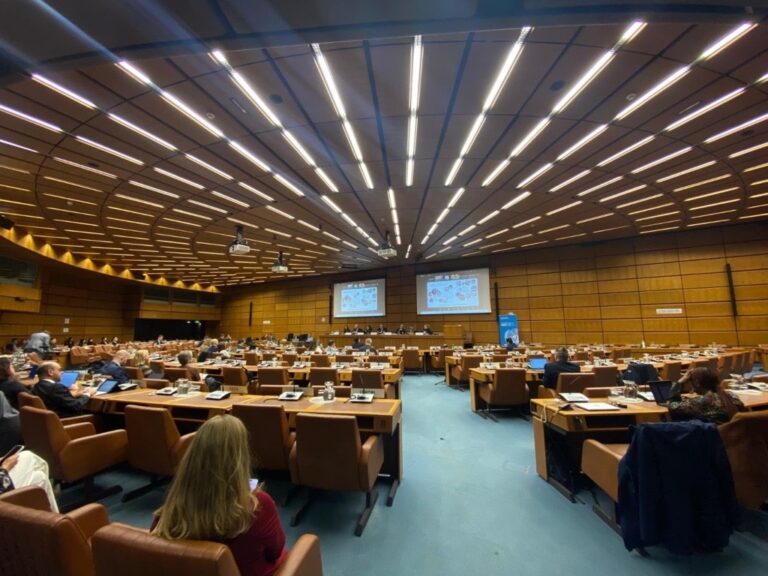
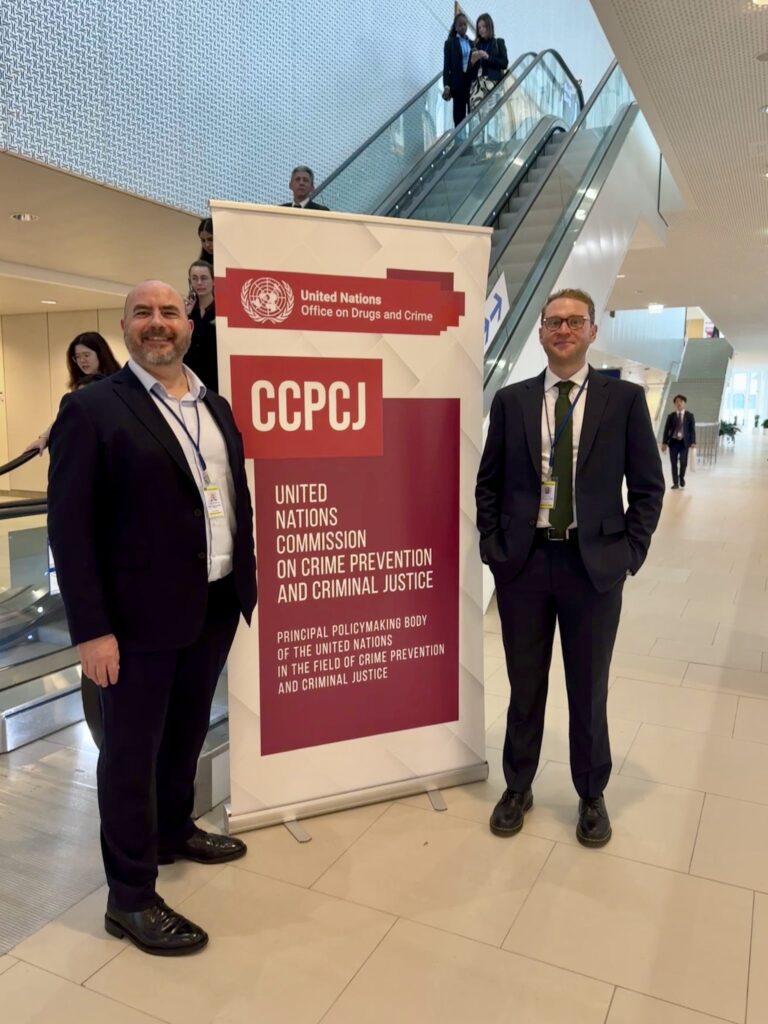
Over the years, we have repeatedly engaged at both the CCPCJ and UNTOC Conference of the Parties, producing briefings, reports and advocacy materials pushing for CAE to be treated with the same seriousness as other forms of transnational organised crime.
More recently, our engagement has intensified around the Open-ended Intergovernmental Expert Group on Crimes that Affect the Environment, the 35th session of Commission on Crime Prevention and Criminal Justice (CCPCJ) and the 13th UNTOC COP in October 2026.
We will continue to call upon global policymakers to act decisively, advocating for a comprehensive and holistic approach to confronting these crimes.