Global meeting on environmental crime fails to live up to expectations



Has the world woken up to the threat of environmental crime? The outcome of several days of dialogue in Vienna this week raises more questions than answers.
More than 100 states, represented by hundreds of delegates, met at the United Nations to negotiate the global response to environmental crime as part of a Second Meeting of the Open‑ended Intergovernmental Expert Group (IEG) on crimes that affect the environment under the UN Convention against Transnational Organized Crime (UNTOC).
Civil society organisations were not privy to the discussions in the committee room, but EIA was present to monitor how the world confronts one of the most devastating forms of organised crime – environmental crime.
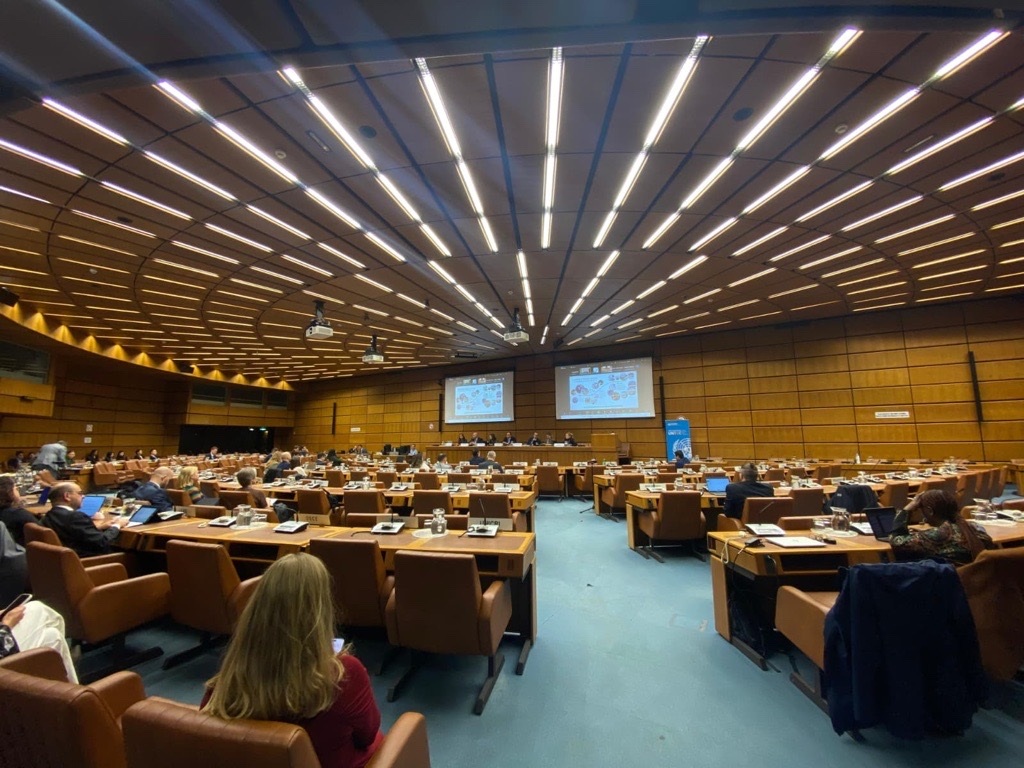
Alongside the formal IEG, EIA Forests Campaigner Kate Klikis and I took part in a 3rd Informal Dialogue with Civil Society on Crimes that Affect the Environment on “Addressing Gaps in the International Legal Framework”, hosted by the Alliance of NGOs on Crime Prevention and Criminal Justice.
We presented on the security implications of crimes that affect the environment, highlighting that these are not victimless and, if left unchecked, will have global implications for geopolitical security.
EIA also moderated the Chair to the IEG’s Special Event on Alternative Livelihoods which explored strategies to prevent crimes that affect the environment.
As one of the few organisations that works across the triple planetary crisis, we expect governments to address all forms of environmental crime, including pollution, waste, deforestation, mining, wildlife trafficking and illegal fishing – the combined effects of which are already having far‑reaching consequences for forests, biodiversity, oceans and communities around the world.

Justin participating in one of the event’s panels
Member states were debating a set of decisions, including whether to support an additional protocol under UNTOC. Going into the meeting, there was hope that these negotiations would result in consensus on the recommendations since many counties had already indicated that they would support a protocol.
But late on Thursday evening, the news came that negotiations had ended with no recommendations at all.
Several countries seemed determined to derail progress and vocalised their demands to “deprotocolise” the discussion, introducing a new word to the diplomatic vocabulary. Several countries, including some of the most economically powerful and culpable for environmental crime, either expressed objection to a protocol or failed to communicate a concrete position, apparently choosing to hedge their bets.
The outcome of these discussions demonstrates that we have a long way to go – and EIA won’t give up. At the upcoming UN Crime Congress in April, we will host two side events titled “Justice for Forests: A Perspective on How Tackling Forest Crimes and Corruption Protects People and Planet” and “Futureproofing Our Planet: Tackling Environmental Crime in the Triple Planetary Crisis”.
Looking ahead to the UNTOC Conference of Parties this October, it remains to be seen whether the international community can succeed in making progress against environmental crime.
The world is watching and its citizens are demanding action, but whether their governments care is another matter.

