Marine protection body must end delay to regulate the shipping of plastic pellets


(c) CEJ, Sri Lanka
Twice a year, EIA Ocean campaigners join the Clean Shipping Coalition delegation at the International Maritime Organisation (IMO) on the River Thames, once for the Sub-Committee on Pollution, Prevention and Response (PPR) and once for the Marine Environmental Protection Committee (MEPC).
This week, we join the 84th meeting of the MEPC in London. Inside the windowless main hall, the agenda is dense and the discussions are technical. Outside, the consequences of those discussions are washing up on coastlines around the world, including on British shores.
EIA sits alongside shipping captains, logistics code experts, career diplomats and petrochemical industry representatives to advance measures to prevent plastic pollution from shipping – and at each meeting we begin by acknowledging yet another catastrophic plastic pellet loss event that has occurred since the last.
This year will be no different.
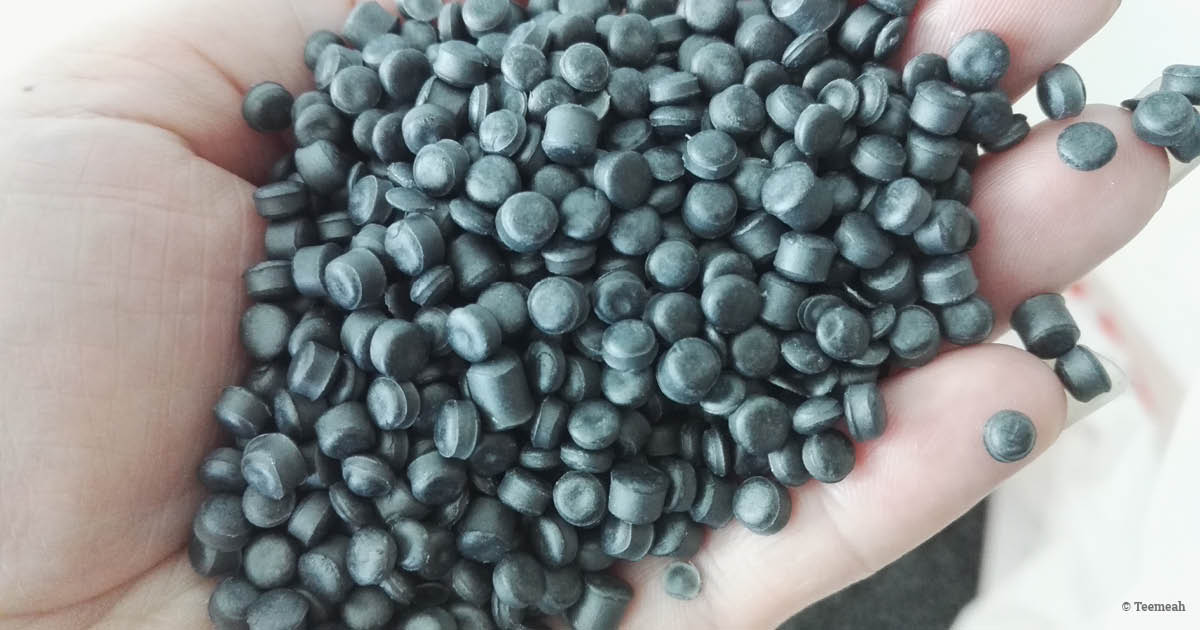
Plastic pellets, the building blocks of most plastic products
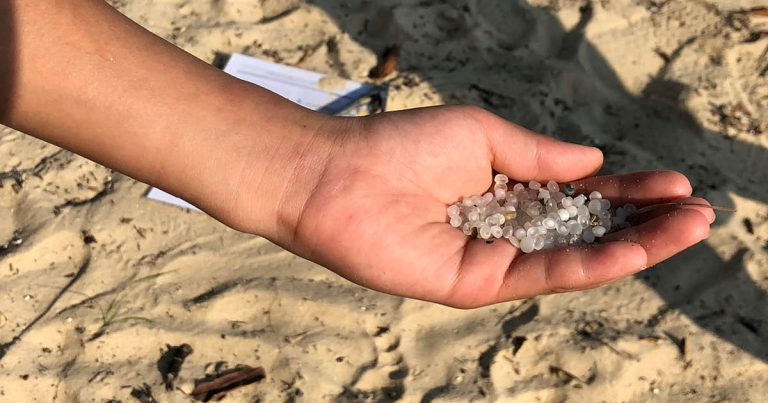
In a factory, virgin plastic pellets appear harmless. Small, uniform and almost clean, they even carry a faint, sweet smell. These lentil-sized plastics are designed to be melted down and turned into nearly every plastic product we use.
But once they enter the ocean, they become something else entirely.
In the marine environment, pellets absorb oil, chemicals and pollutants from seawater. They pick up bacteria. They degrade slowly, not disappearing but breaking down into smaller fragments. They begin to smell stale, chemical and rotten, becoming a toxic cocktail.
Marine life does not distinguish. Fish eat them. Seabirds feed them to their chicks. Turtles mistake them for food. The plastic does not nourish. It accumulates. It poisons. It starves. It moves through the marine ecosystem and into the food chain.
Leading microplastic scientists have demonstrated that pellets act as hazardous substances in the marine environment. Perhaps not in the way envisaged in 1965 when the International Maritime Dangerous Goods (IMDG) Code was first developed, but clearly under any modern, science-based understanding of environmental harm.
Critically, plastic also persists. Plastic from the 1970s are still circulating in the ocean, washing up on beaches. This is not pollution that fades. It is pollution that accumulates.
Persistent, cumulative – but for pellets, it’s largely preventable.
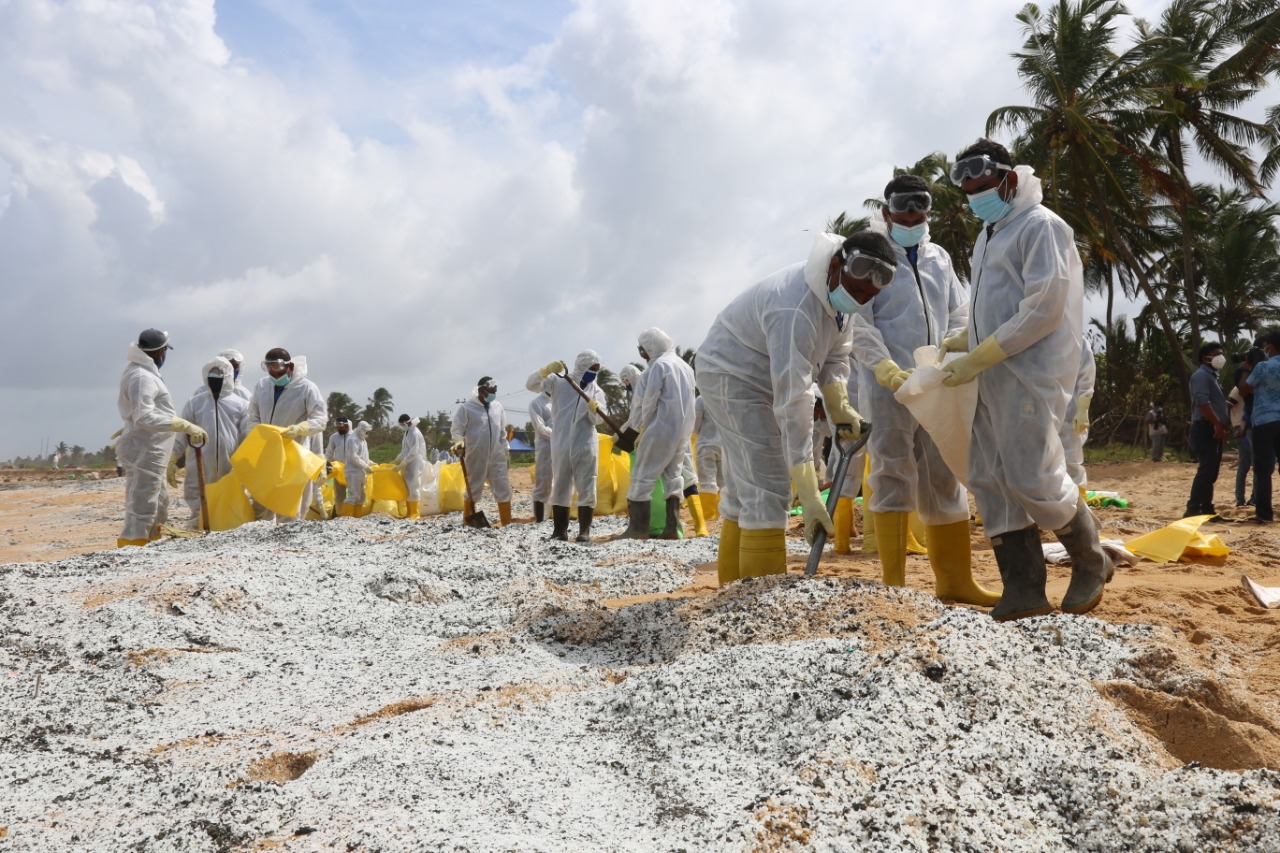
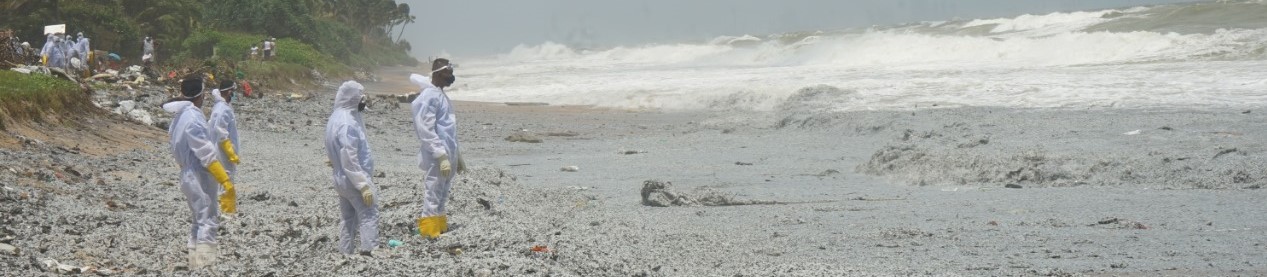
The X-Press Pearl plastic pellet spill off Sri Lanka, 2021 (c) CEJ, Sri Lanka
At the IMO, the 2021 Sri Lankan disaster marked a turning point. When the MV X-Press Pearl released vast quantities of pellets into the sea, the scale of the problem could no longer be ignored.
An estimated 1,680 tonnes of pellets entered the water in the largest recorded marine spill. The consequences were severe and well documented – marine life mortality, contamination of fisheries and long-term ecological damage.
In 2025, Sri Lanka’s Supreme Court ordered $1 billion in compensation, explicitly recognising the scale of environmental harm, including from pellet pollution.
But less than five years later, Sri Lankan waters were impacted again, not from a domestic incident but from pellets travelling across the ocean following the Kerala spill in India. Plastic pollution does not respect maritime boundaries.
Norway, South Africa, the United Kingdom, India, the United States, Spain, France, the Netherlands and Germany have been impacted by shipping loss incidents.
And these are only the major incidents. They do not account for the constant, smaller losses happening in ports and along supply chains every day – pellets spilt during loading, leaking from containers, escaping into waterways. Invisible losses that accumulate into a global problem.
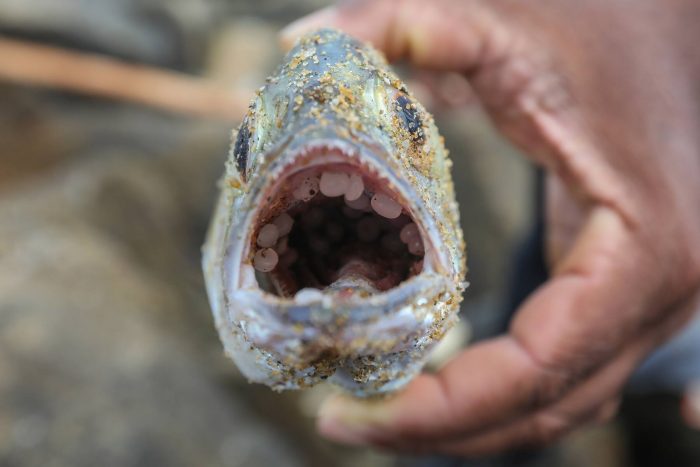
Fish found choked with nurdles following the X-Press Pearl plastic pellet spill off Sri Lanka, 2021 (c) CEJ, Sri Lanka
What makes this particularly stark is that pellet pollution is preventable.
The IMO already has the mandate to regulate pollution from ships. It already has the tools. After the Sri Lanka disaster, governments and industry developed practical measures to prevent pellet loss – good packaging, better labelling and improved stowage.
These measures have been tested through voluntary implementation. Industry and member states have found that they are feasible. They can be integrated into existing logistics systems. And yet progression to mandatory measures continues to be delayed.
For years, discussions have been diverted by arguments from major plastic-producing countries, first as to whether pellets are “hazardous”, then whether they fall within existing classifications and now whether the issue belongs under an environmental protection framework.
These debates have one objective – delay.
And with every year of delay, the pollution continues.
Pellet loss is not an isolated issue. It contributes directly to the broader microplastics crisis, which is accelerating at a pace that risks destabilising marine ecosystems.
Millions of tonnes of microplastics enter the ocean each year, with projections indicating continued and significant increases without systemic intervention. Plastic pellets are a direct and preventable source of this pollution.
This is not simply a matter of contamination. It is a structural weakening of ocean systems, driving us towards a plastic tipping point that destabilises all marine ecosystems and erodes the ocean’s capacity to sustain life.
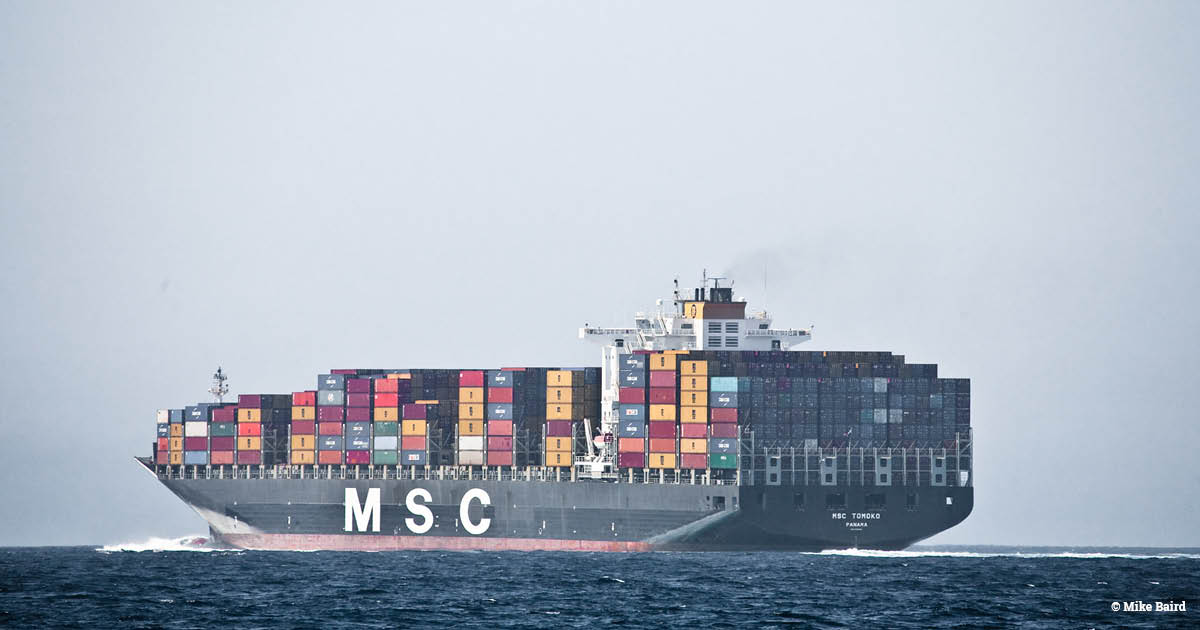
This is not a new issue, nor is it a complex one.
Plastic pellets are transported in large quantities, in packaged form, through established logistics systems. When lost, they pollute the marine environment. The International Convention for the Prevention of Pollution from Ships (MARPOL) exists to do just that – prevent pollution from ships.
The legal and regulatory pathway is clear. What is missing is not authority or technical feasibility, but political will against the blockers.
The IMO has already completed the necessary technical work – it developed, tested and agreed to make it mandatory.
Progress towards finalising those mandatory measures has been slowed by sustained opposition from a small minority of plastic-producing states.
Initial objections focused on classification, arguing that plastic pellets are not hazardous substances and therefore fall outside the scope of existing MARPOL provisions. In response, a pragmatic solution was developed – a dedicated plastics code under MARPOL Annex III, designed to regulate environmental risk directly without requiring formal classification as dangerous goods.
This approach reflects established IMO practice and provides a clear legal pathway forward.
Yet with every pragmatic approach, the basis of opposition shifts. The same plastic producing countries now seek to reframe pellet loss as an issue of ship safety rather than environmental protection, proposing that work be redirected under the Safety of Life at Sea Convention (SOLAS). This position is not supported by the nature of the risk. Plastic pellets do not present a safety hazard during normal carriage. The harm arises from their release into the marine environment.
Reframing the issue in this way risks diverting work from MARPOL, undermining the IMO’s Action Plan to Address Marine Plastic Litter from Ships and introducing further procedural delay.
MEPC 84 represents a critical opportunity to move from analysis to action.
EIA calls on member states to endorse the development of a mandatory code for the carriage of plastic pellets under MARPOL Annex III and to provide clear direction to finalise this work within the next year. Complementary discussions under SOLAS may proceed in parallel, but they must not delay or condition progress under MARPOL.
The evidentiary, technical and legal foundations for action are already in place.
For EIA, the objective is straightforward – to ensure the IMO delivers a coherent, enforceable response to a well-documented source of marine pollution. Continued reliance on voluntary measures is no longer justified.
The pathway is clear and the consequences of delay are visible. The responsibility now lies with the Committee to act.