Is Indonesia’s drive for self-sufficiency in food and biofuels coming at the cost of its precious forests?



With a change of President in Indonesia last year, the country’s Government has announced several policies with the potential to greatly affect forests.
Prabowo Subianto (c) Ministry of State Secretariat, Indonesia
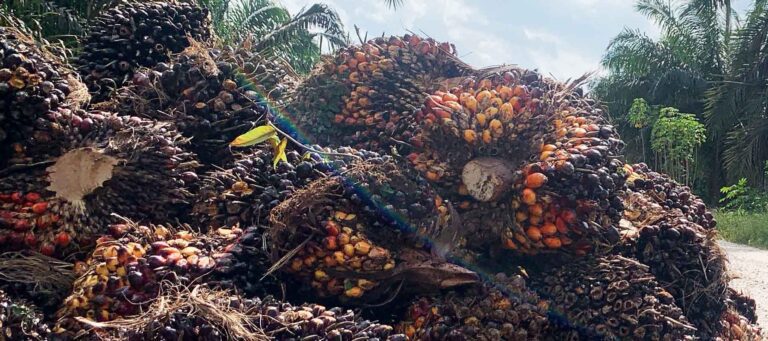
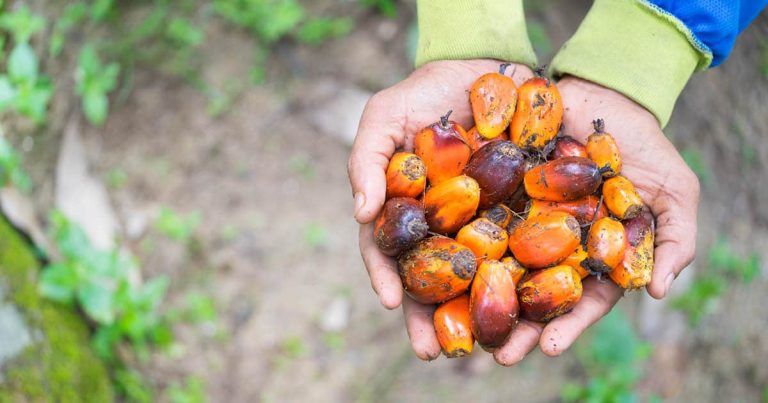
In December 2024, President Prabowo Subianto announced that he thought Indonesia needed to plant more palm oil and that the country should not be afraid of deforestation.
Indonesia’s Forestry Minister Raja Juli Antoni also proposed a massive 20 million hectares (ha) of forest be cleared for food and energy programmes, similar to the area of Scotland and England combined.
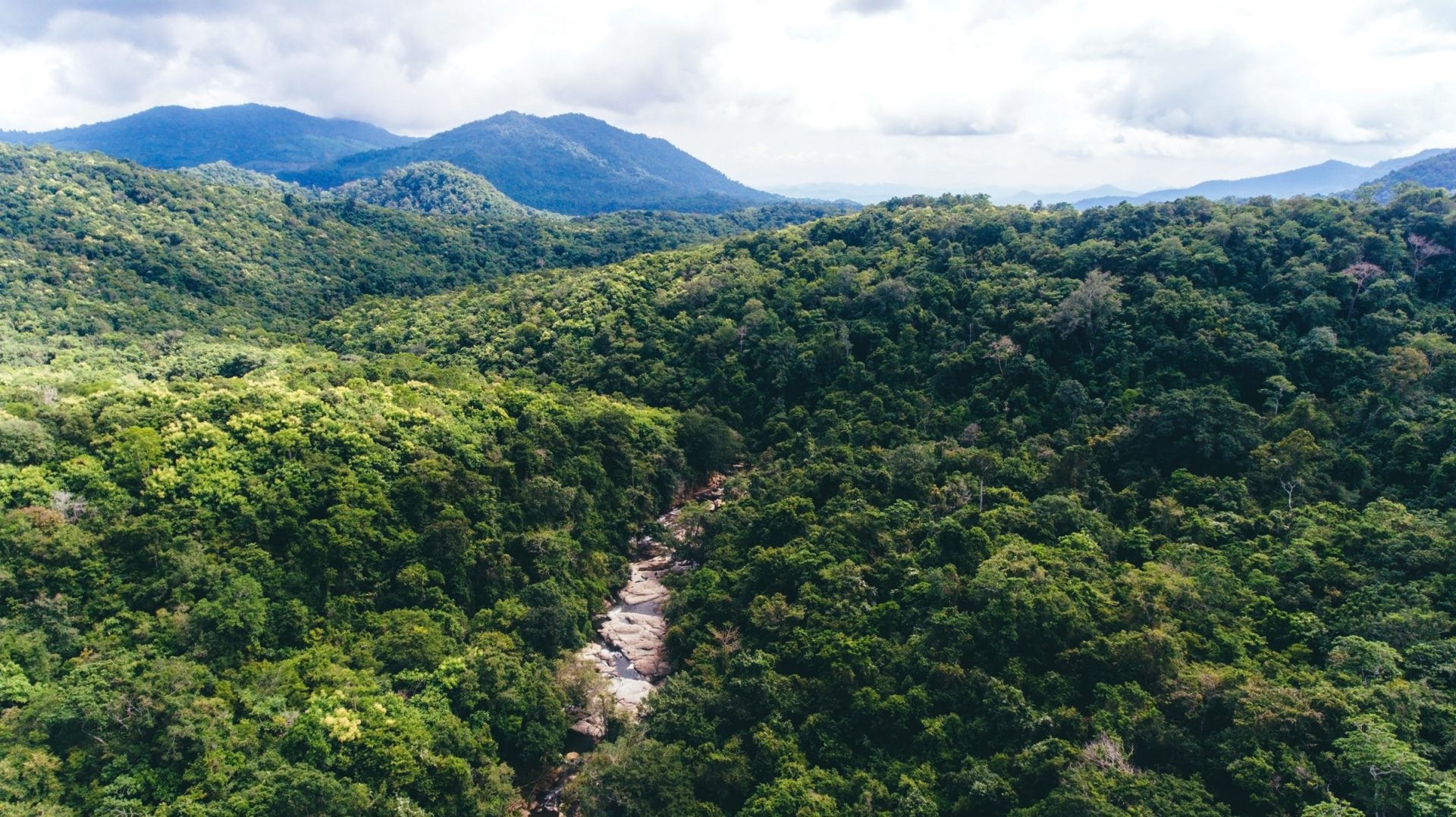
This sparked widespread concern and alarm bells that Indonesia could begin a rapid new phase of deforestation of the 90+ million ha of its current forest cover.
In recent years, Indonesia has seen a downturn in its deforestation rates, with slight upticks in the forest loss in 2023 and 2024 from a low in 2021, losing approximately 1.25 million ha of forest in the past five years.
However, we are still far away from the targets set in 2021 when it was envisaged Indonesia’s forests could serve as a carbon sink. Rainforests are some of the most important ecosystems, being critical for carbon storage, livelihoods and biodiversity.

So far, in the first half of 2025, our analyses based on data from Nusantara Atlas (a mapping tool which tracks deforestation), the regions of Papua and East Kalimantan have experienced the greatest deforestation rate, at 33,300 ha and 21,700 ha respectively.

Deforestation (ha) across Indonesia’s provinces from January 2025 to June 2025
The main commodities driving forest loss in Indonesia can be grouped into timber, palm oil, mining and other concessions (notably Food Estates such as rice, maize and sugar). A concession is a license or permit granted to a company by the Government to utilise the area for resource extraction.
So far in 2025, the greatest forest loss has occurred as a result of palm oil (26,934 ha) and mining (20,884 ha) concessions.
Indonesia’s deforestation (ha) caused by commodities from January 2025 to June 2025
The sugar cane concession operated by PT Global Papua Abadi had the second highest deforestation rate at 959 ha. The sugar cane concession is part of a two million hectare sugarcane Food Estate project by the Government which has been dubbed the biggest deforestation project in the world.
The food and energy estates are national strategic projects by the Government that aim to improve Indonesia’s self-sufficiency in food and biofuels and include crops such as sugarcane, rice, corn and oil palm.
Palm oil is currently responsible for three out of the top 10 deforesting concessions, with PT Inti Kebun Sejahtera accounting for 712 ha, owned by the group Ciliandry Anky Abadi which is also related to the third highest concession and is regularly reported to be responsible for massive amounts of deforestation. Four of the top 10 concessions are owned by the Fangiono family, a billionaire family which has been involved in Indonesian deforestation for decades.
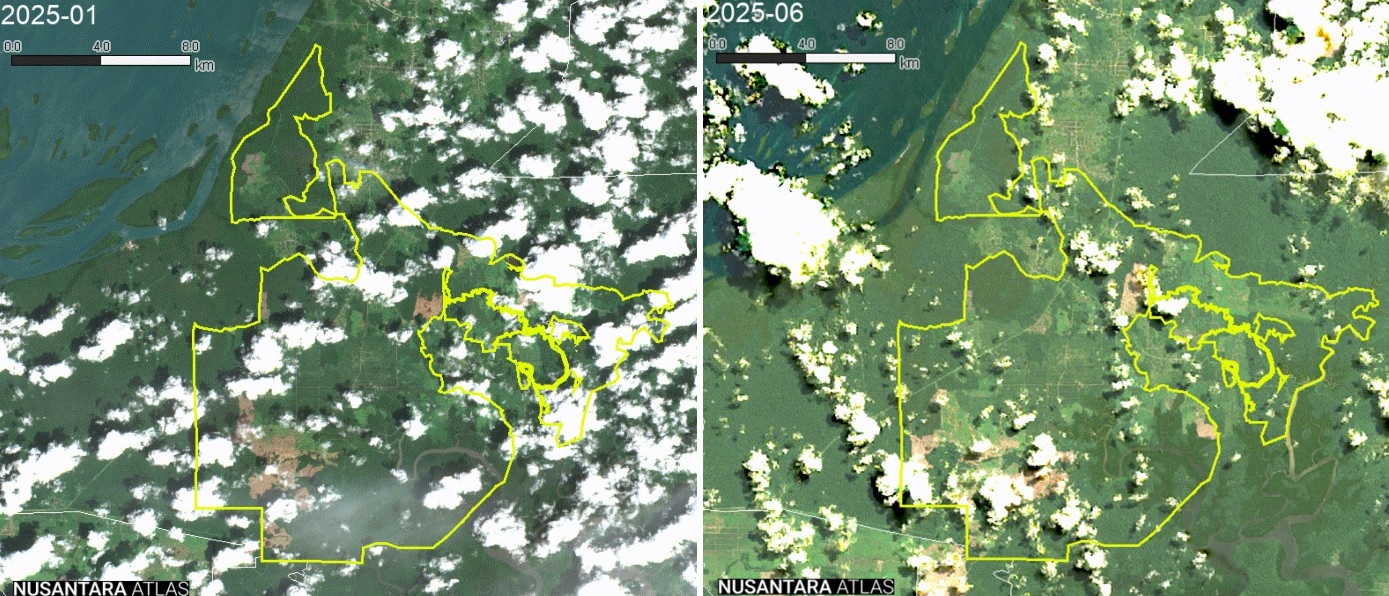
Satellite images of concession Inti Kebun Sejahtera between January 2025 and June 2025
Top 10 concessions (palm oil, mining and other) deforesting in Indonesia from January to June 2025
| Rank | Name | Commodity | Group company | Province | Area deforested (hectares) |
| 1 | PT Global Papua Abadi | other (sugar cane) – Food Estate | Merauke Sugar Group (Fangiono family) | Papua | 1,476 |
| 2 | PT Inti Kebun Sejahtera | palm oil | Ciliandry Anky Abadi (CAA) – Fangiono family | West Papua | 991 |
| 3 | PT Sorong Global Lestari | palm oil | Fangiono family | West Papua | 818 |
| 4 | Berau Coal | mining (coal) | Sinar Mas Group | East Kalimantan | 756 |
| 5 | PT Lahan Agro Inti Ketapang | palm oil | Alam Indah Sdn Bhd/Meadows Capital Ltd | West Kalimantan | 635 |
| 6 | Tiara Mas Investama | other (sugar cane) | unknown | Papua | 635 |
| 7 | Inti Kebun Sawit | palm oil | Ciliandry Anky Abadi (CAA) – Fangiono family | West Papua | 609 |
| 8 | Khatulistiwa Agro Abadi | palm oil | First Borneo |
West Kalimantan
|
590 |
| 9 | Rimbunan Nusantara Abadi | mining (other minerals) | Unknown | Gorontalo | 525 |
| 10 | Banyan Tumbuh Lestari | palm oil | Buana Pratama Cipta (formerly Provident Agro) | Gorontalo | 478 |
The table below details the top five concessions related to logging and pulpwood. These are separated since the concessions are allowed to log, following guidelines, but also have an impact to the environment. Diamond Raya Timber PT, a logging concession, is responsible for 983 ha of deforestation so far in 2025 and has been linked with allegations of illegal logging (Riaubangkit, 2025).
The Fangiono family is also linked with logging concessions such as Grace Putri Perdana, which was responsible for 656 ha of deforestation.
Top five concessions (logging and pulpwood) deforesting in Indonesia from January to June 2025
| Rank | Name | Commodity | Group company | Province | Area deforested (hectares) * |
| 1 | PT Diamond Raya Timber | logging | unknown | Riau | 983 |
| 2 | PT Grace Putri Perdana | logging/pulpwood | Fangiono family | Central Kalimantan | 656 |
| 3 | PT Anugerah Pratama Inspirasi | logging | unknown | Bengkulu | 601 |
| 4 | PT Mutiara Alas Khatulistiwa | logging | unknown | Papua | 493 |
| 5 | PT Dasa Intiga | logging | PT Gagah Putera Satria (GPS Group) | Central Kalimantan | 471 |
* does not include Nusantra low confidence alerts due to greater uncertainty and not always representing deforestation
Not all Indonesia deforestation is happening within concessions mapped in Nusantara Atlas. Notable areas include the Raja Ampat mining concession which was recently highlighted by Global Witness and large unmapped food estates concessions within Merauke.
Indonesia is at a crossroads. The next steps will either safeguard one of the world’s richest ecosystems or undo years of environmental progress. The focus should be on balancing development with sustainability, ensuring that food and energy security do not come at the cost of biodiversity, indigenous people’s rights and the climate.
Indonesia has shown it can lead in tropical forest protection, as seen in its progress from 2016-21 and its global role in climate diplomacy. That legacy must not be reversed.
EIA calls on the Government of Indonesia to: