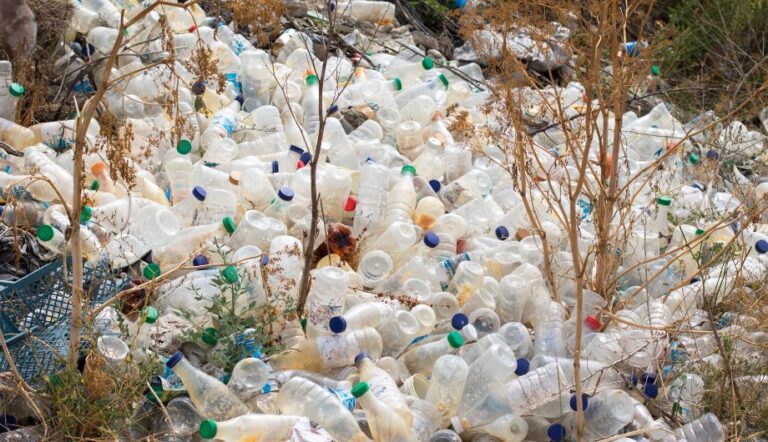
Health risks, pollution and fire – the deepening plastic waste crisis in Türkiye


We’re pleased to share this guest blog by our Turkish plastics pollution partner Umut Özşimşek, Editor of the platform Çukuravo.
On 21 September last year, a massive fire broke out at the Çetin Plastik facility in Küçükdikili, Adana, Türkiye – one of the most severe environmental disasters the city has faced in recent years.
What began as a blaze inside a so-called “recycling” facility quickly turned into a toxic inferno, fuelled by enormous piles of imported and non-recyclable plastic waste.
Thick black smoke spread far beyond Küçükdikili, covering neighbourhoods across Adana and exposing thousands of residents to hazardous fumes.

Fire at the Çetin Plastik facility, Adana
Despite the scale of the emergency, the fire could not be contained for 36 hours. The Adana Metropolitan Municipality deployed 40 fire trucks, while the Police Department supported the response with water cannons and a helicopter.
Yet even this large-scale intervention failed to prevent the city from being engulfed in suffocating smoke for days, weith residents reporting burning eyes, difficulty breathing and chemical odours filling their homes long after the flames subsided.
The disaster extended far beyond air pollution. Ash and microplastic particles dispersed across agricultural fields, irrigation channels, and residential areas. For communities whose livelihoods depend on farming, the contamination of soil and crops raised deep concerns about long-term health impacts and food safety.
Children, elderly residents and those with chronic illnesses were particularly vulnerable to the toxic exposure.
On 16 October 2025, the Adana Ecology Platform held a press conference in front of the Adana Courthouse, declaring that the Küçükdikili fire was not an accident but a direct consequence of Türkiye ’s plastic waste import policies.
In its statement, the Platform emphasised that huge quantities of imported plastic waste – much of it impossible to recycle – are allowed to accumulate in facilities across Adana. When recycling becomes unprofitable, these plastics are dumped, abandoned or deliberately burnt to reduce costs, placing the burden of toxic pollution on local communities.

Adana Ecology Platform’s press conference
Following the press statement, the Platform filed a criminal complaint with the Adana Chief Public Prosecutor’s Office, accusing the responsible parties of “deliberate environmental pollution”.
The Platform highlighted that nearly 200 fires at plastic recycling facilities have occurred in Türkiye over the past five years, with 15-20 of them happening in Adana alone.
Such frequency, they argued, points to a systemic pattern rather than isolated incidents. The continued lack of accountability, combined with the withholding of fire investigation reports, raises strong suspicions that these fires are being intentionally set for profit.
Community members voiced their anger and desperation as well, with one person statio9ng: “We are the ones breathing this toxic air. We are the ones living on this land. We refuse to pay the price for imported waste.”
The Platform echoed this sentiment, declaring: “This is not just a fire. This is the direct outcome of a plastic waste trade imposed on our city. Adana does not want to be known as a dumping ground for the world’s plastic.”
Adana has become one of the regions most heavily burdened by plastic waste in Türkiye.
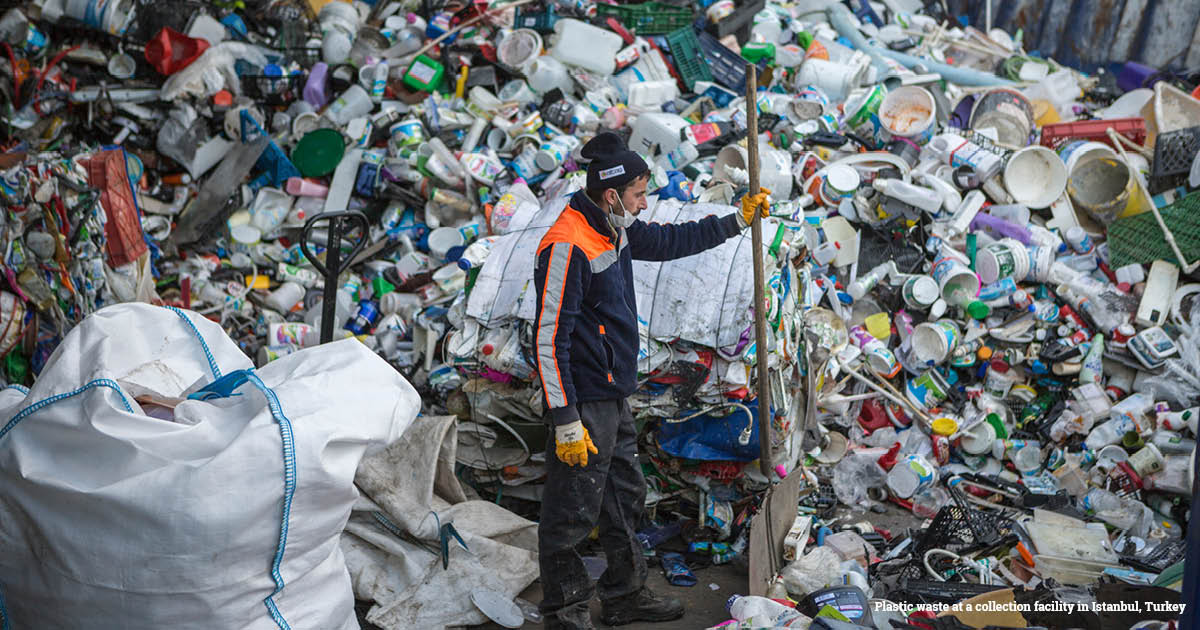
Following import restrictions in Asian countries starting in 2018, many European nations began redirecting low-quality, contaminated plastic waste to Türkiye under the label of “recycling.” A significant proportion of this waste is transported directly to Adana, where it is stored, sorted or – far too often – dumped or burnt in uncontrolled conditions.
Although these materials are supposedly imported for recycling, much of the plastic arriving in Adana is not truly recyclable. Mixed, dirty and contaminated plastics accumulate in large stockpiles within facilities. When businesses exceed their processing capacity or find recycling unprofitable, these piles are abandoned, illegally disposed of or openly burnt to reduce storage costs.
Such burning events have become a recurring environmental problem in rural districts around Adana, sending toxic smoke into residential areas.
Agricultural zones in Adana lie side-by-side with these dumping and burning sites. As a result, microplastics, heavy metals and toxic chemicals from plastic waste contaminate soil and water resources. Citrus orchards, crop fields and livestock areas are all at risk. Children, elderly residents and people with chronic illnesses are especially vulnerable to the polluted air and contaminated environment.
The burden placed on Adana is not merely an environmental challenge but a matter of social and environmental injustice. European countries, unable or unwilling to manage their own plastic waste, export it to regions with weaker regulatory frameworks. Local communities in Adana are being forced to bear the health and environmental risks of a crisis they did not create. This dynamic is increasingly described as a form of “ecological colonialism”.
In recent years, Adana has also experienced a notable rise in fires at plastic recycling facilities. These incidents often release hazardous pollutants such as dioxins, furans, Polycyclic Aromatic Hydrocarbons (PAHs) and heavy metals, chemicals known to contribute to cancer, respiratory diseases and long-term health impacts.
The recurring nature of such fires highlights deep structural issues in plastic waste management and oversight.
Ultimately, Adana’s deepening plastic waste crisis is far more than an industrial or technical issue. It is a public health emergency, an environmental threat and a profound question of human rights.
The crisis undermines community wellbeing, threatens livelihoods and compromises the ecological future of an entire region.
On 9 November 2025, residents of Küçükdikili in Adana came together with the DEM Party Adana Provincial Organisation and the Adana Ecology Platform to deliver a strong public statement against the ongoing plastic waste crisis. The community, long exposed to environmental destruction caused by imported plastic waste, called on the Ministry of Environment, Urbanisation and Climate Change to immediately and completely ban plastic waste imports into Türkiye.

Adana residents gather on 9 November 2025
During the gathering, speakers highlighted that Adana has effectively become “Europe’s dumping ground” and emphasised that countries such as the UK, Germany, and the Netherlands send hundreds of thousands of tonnes of plastic waste to Türkiye every year and that much of this waste is processed or illegally dumped directly in Adana.
Under the guise of recycling, plastic waste is being piled up across the region, while in reality it is poisoning the air, soil and water and is threatening the health and safety of local communities.
During the gathering, speakers emphasised that approximately 700,000 tonnes of plastic waste enter Türkiye each year, with an estimated 400,000 tonnes directed to Adana alone, turning the city into a dumping ground for imported waste.
Participants condemned this injustice with the words: “Dumping your waste into someone else’s home is immoral. Adana has become Europe’s dumping ground and those who allowed this should be ashamed.”
Community representatives also reminded the public of September’s plastic waste fire in Küçükdikili, which burned for two full days and exposed the city to toxic smoke. They stressed that such disasters are not isolated accidents, but a direct consequence of Türkiye’s plastic waste import policies.
The statement underscored the urgency of the situation with the words: “The poisons we breathe accumulate in our bodies. Enough is enough — we refuse to remain silent.”
Participants further argued that the narrative of “recycling” used to justify plastic imports is fundamentally misleading. Only a small fraction of imported plastic is actually recycled, while the majority is dumped, stockpiled or burnt.
They stated: “Recycling, when it comes to plastic, is a lie. Companies and governments are openly deceiving the public.”
The gathering also drew attention to pollution caused by the SASA petrochemical plant, noting that strong chemical odours, especially at night, have long disturbed nearby communities. Speakers called on the Ministry to launch a thorough inspection of the facility and its environmental impact.
The press statement concluded with a strong condemnation of the international waste trade: “What European countries are doing by sending their waste here is ecological colonialism.”
Participants demanded a complete ban on plastic waste imports, comprehensive health screenings for affected communities and strict enforcement against polluting industries in the region.