Climate, conflict and synthetic fertilisers are sowing the seeds of instability



As the latest rupture in an increasingly unstable geopolitical landscape, military strikes on Iran by the USA and Israel will likely increase pressure on the world’s ability to feed itself – and it begins with synthetic fertilisers.
It is barely more than century since the Haber-Bosch process was developed and the industrial production of ammonia (the starting point for almost all synthetic nitrogen fertilisers) began. Today about half of the world’s food production depends on synthetic nitrogen.
Almost 1.8 billion people a year are fed by food which relies on fertiliser imports or imports of the natural gas (methane) on which most ammonia production relies.
However, while fertilisers form a key pillar of our global food system, they also represent a significant structural weakness.
When Russia invaded Ukraine in 2022, fertiliser prices skyrocketed. The knock-on effects of the drastic and immediate price hike (up 60 per cent in just the first month following the invasion) led to inflation in food prices, something we are still feeling the effects of today.
Now, with an escalating conflict in the Middle East and the de facto closure of the Strait of Hormuz (through which as much as a third of the global trade in fertiliser raw materials passes), we can expect this crisis to deepen.
To the detriment of our food security and environmental health, agriculture in many regions of the world has become over-reliant on industrial ammonia and synthetic fertilisers.
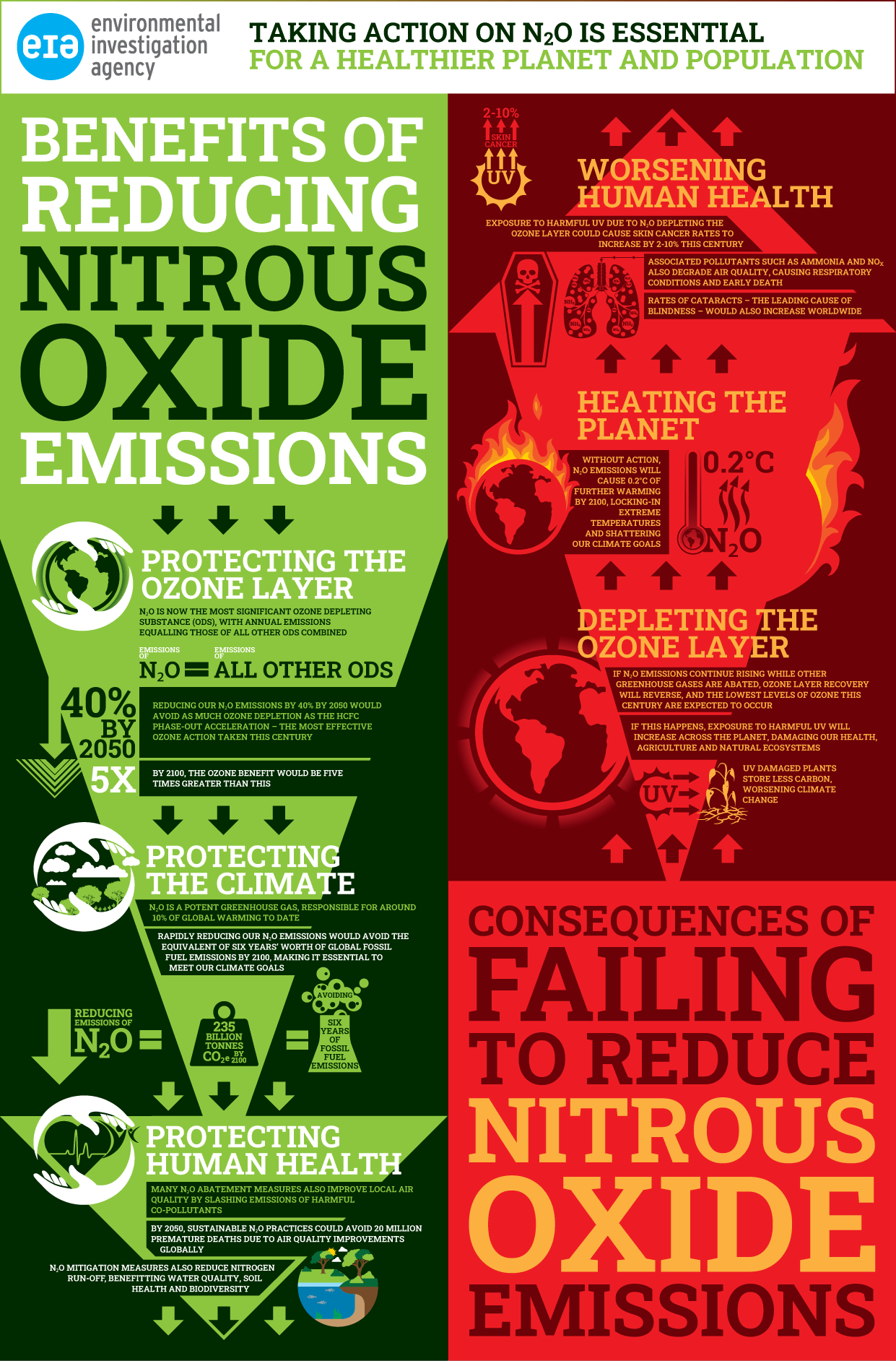
The production of these resources requires complex, multi-national fossil fuel supply chains, while their over-use drives climate-wrecking, ozone-depleting nitrous oxide (N2O) emissions.
In times of conflict, the supply chains that feed global fertiliser production are inevitably destabilised, disrupted or otherwise broken.
Russia and Iran are two of the world’s largest exporters of urea (the most widely used nitrogen fertiliser). We can view these recent conflicts and their impacts on global fertiliser prices as emblematic of the fragility in our current food system, a system already imperilled by rising global temperatures and extreme weather.
Far from providing a solid foundation for domestic food security, agricultural reliance on synthetic fertilisers leaves countries around the world vulnerable to price shocks, which are being driven by both complacency in climate action and by geopolitical conflicts over which we have very little control.
In short, a world with more conflict and less climate action is a worst-case scenario, leading to greater instability and further entrenching the cost-of-living crisis.
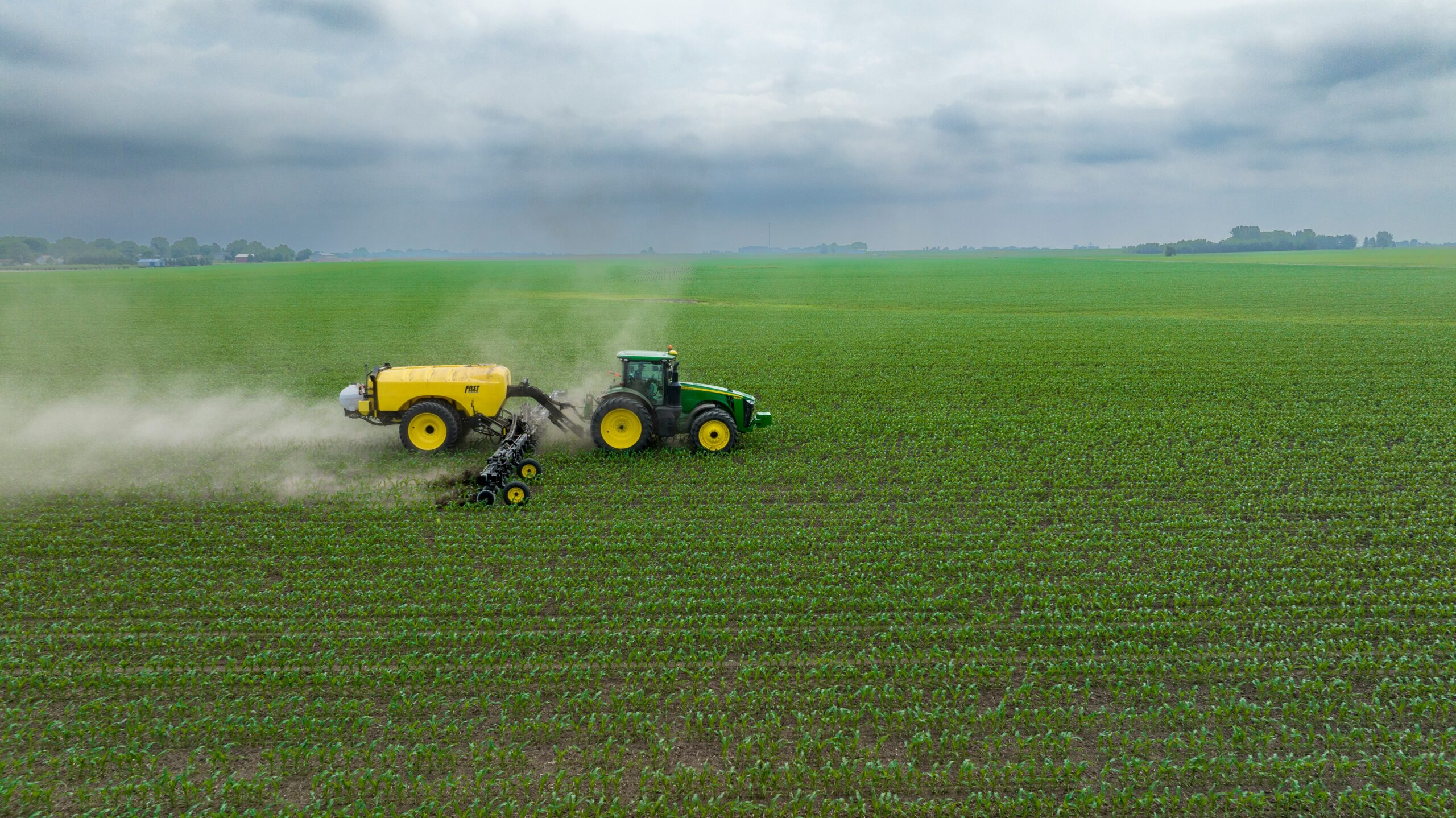
Nitrogen fertiliser spreading – image by James Baltz on Unsplash
The production of synthetic fertilisers is incredibly energy-intensive and a major source of climate-wrecking greenhouse gas emissions. The over-use of fertilisers, which has radically disrupted the natural nitrogen cycle, is also the most significant source of N2O emissions, driving both global warming and depletion of the ozone layer.
Taken together, the use of manure and synthetic fertilisers in farming emits more equivalent carbon per year than global aviation and shipping combined.
As the world’s climate crisis escalates, farming in many regions is already becoming increasingly difficult. Add to this the effects of increased ultraviolet radiation due to a depleted ozone layer and you have a recipe for agricultural disaster.
Continuing to farm as we do is simply unsustainable.
Moving towards an agricultural system which treats farmers fairly while also moving away from the over-reliance and over-use of synthetic fertilisers is both possible and desirable.
Many of the strategies which have been proposed to reduce N2O emissions in agriculture would not only safeguard food security but would, in fact, enhance the resilience of food production against environmental and geopolitical challenges (see the UNEP/FAO Global Nitrous Oxide Assessment).
Business as usual is no longer an option in agriculture.
In an era of increasing instability, environmentally sound farming is not just a climate imperative, it is a bulwark for national security.
The knock-on effects of conflicts, such as that currently unfolding in the Middle East, should serve as a stark reminder for governments around the world that sustainability and security should not be treated as trade-offs – they are often two sides of the same coin.