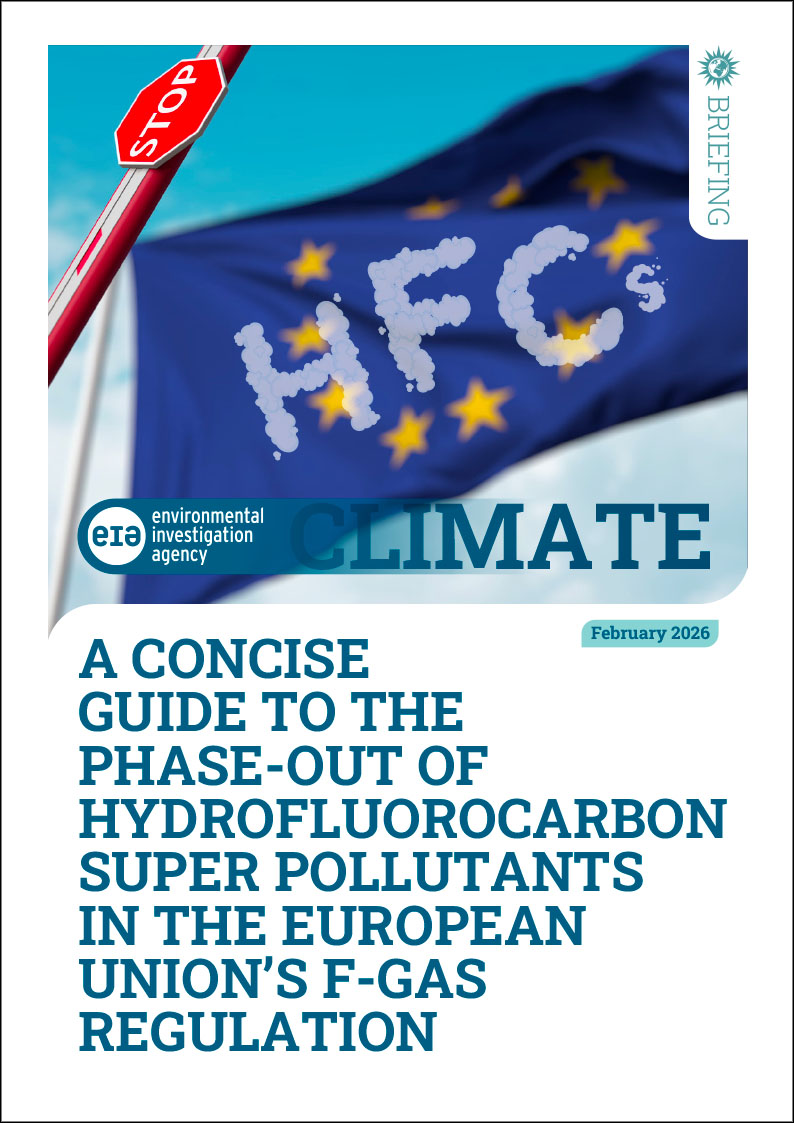
The EU’s F-Gas Regulation
This document outlines the key measures on HFCs in Regulation (EU) 2024/573 on Fluorinated Greenhouse Gases.

This document outlines the key measures on HFCs in Regulation (EU) 2024/573 on Fluorinated Greenhouse Gases.
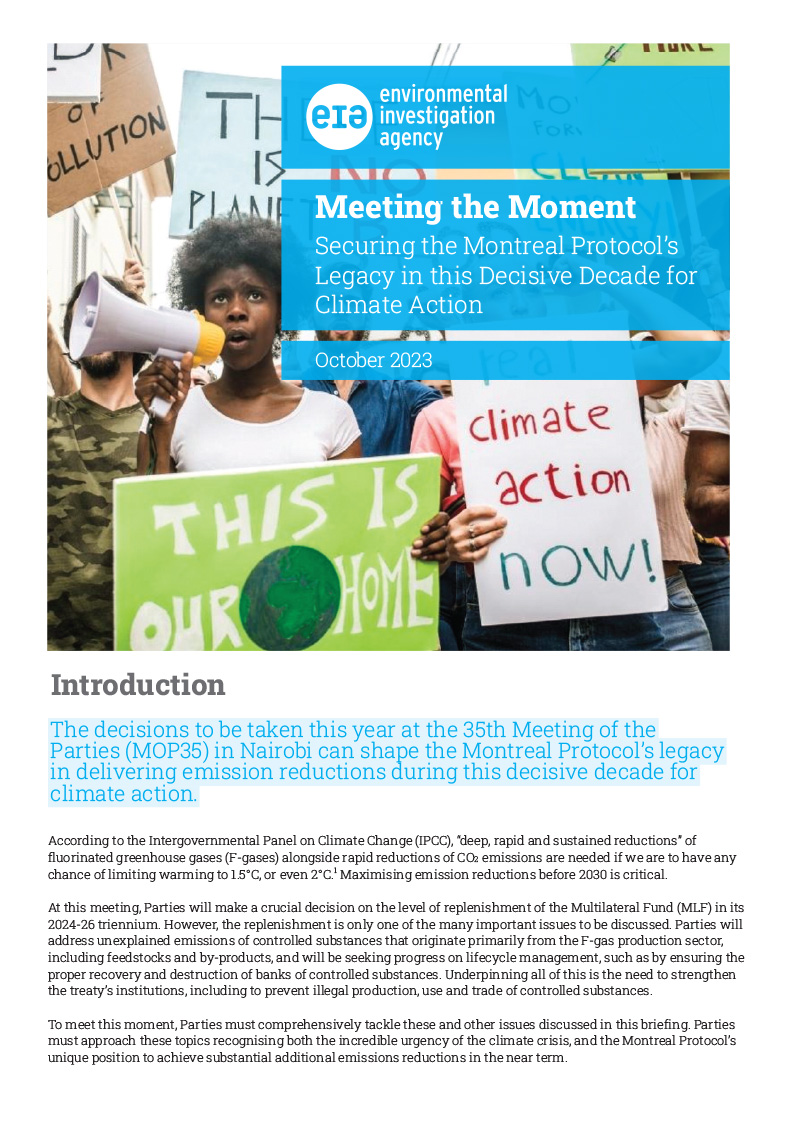
EIA is urging significant investment in the ozone treaty, which can secure substantial additional greenhouse gas emission reductions in the near future. A new briefing “Meeting the Moment: Securing the Montreal Protocol’s Legacy in this Decisive Decade for Climate Action” analyses and provides recommendations on a variety of issues on the agenda for MOP35.

This briefing provides a history and overview of the issue of the illegal trade of substances controlled under the Montreal Protocol including CFCs, HCFCs, and HFCs.
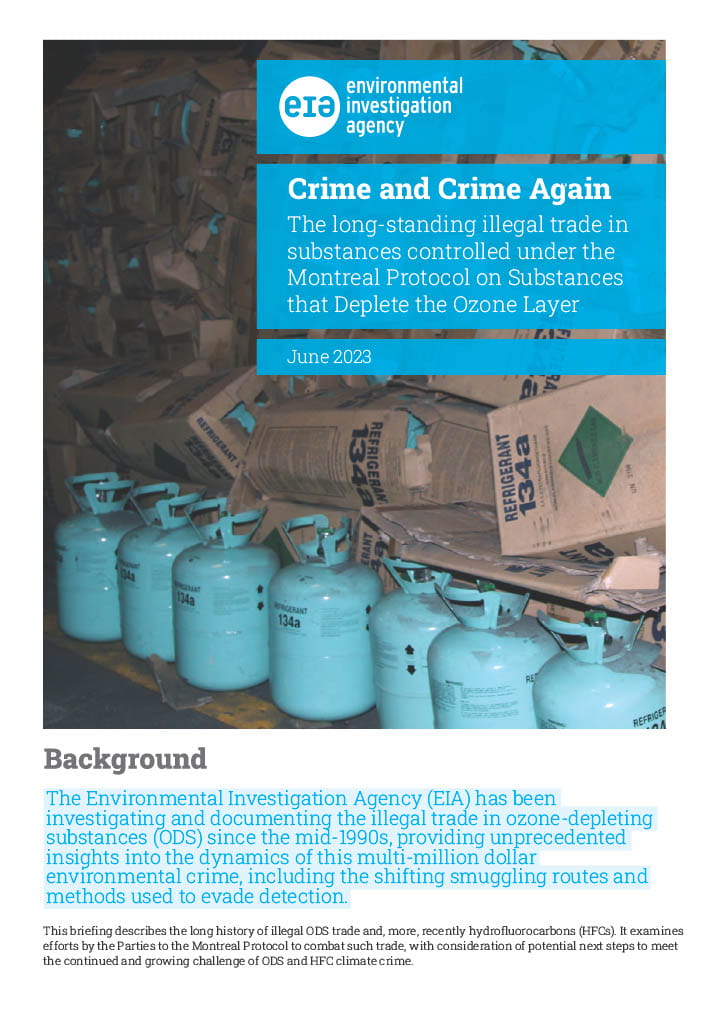
This briefing provides a history and overview of the issue of the illegal trade of substances controlled under the Montreal Protocol including CFCs, HCFCs, and HFCs.
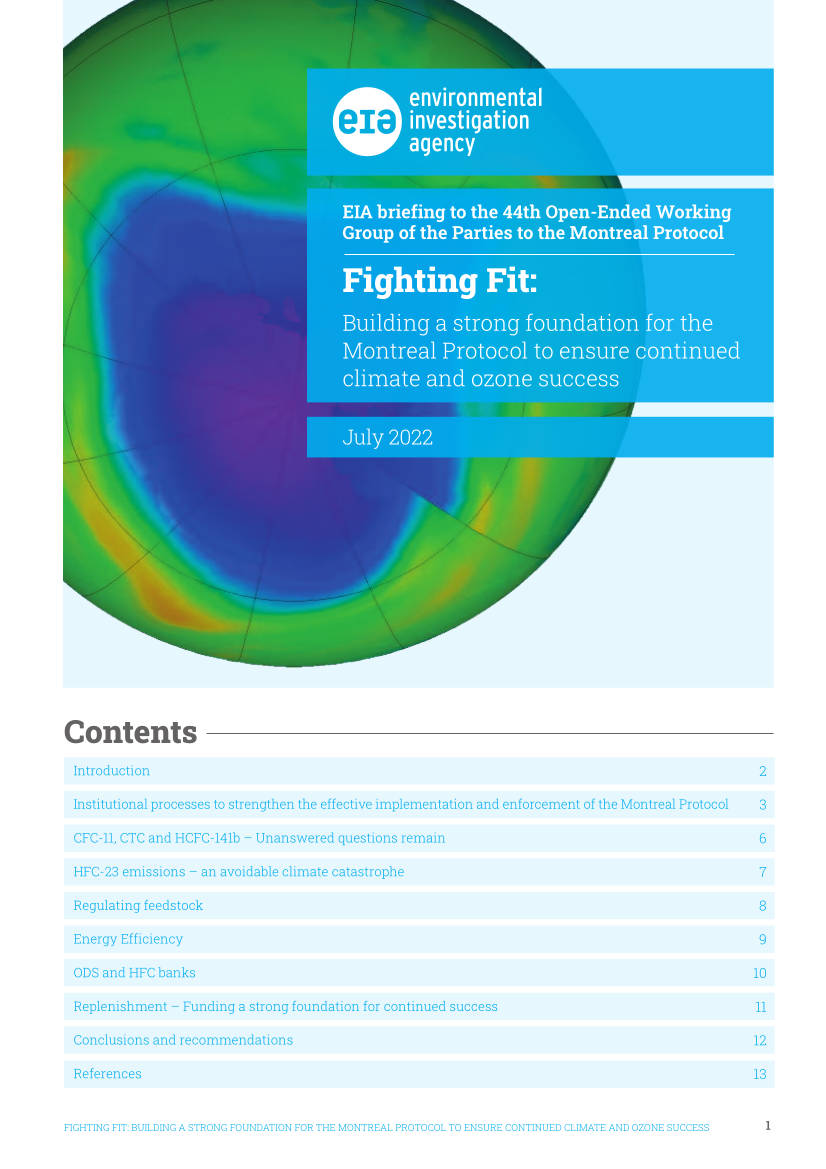
As Parties convene in person for the first time in more than two years, ensuring the continued successful implementation of the Montreal Protocol must include a modernisation of its institutions and increased investment in its future.
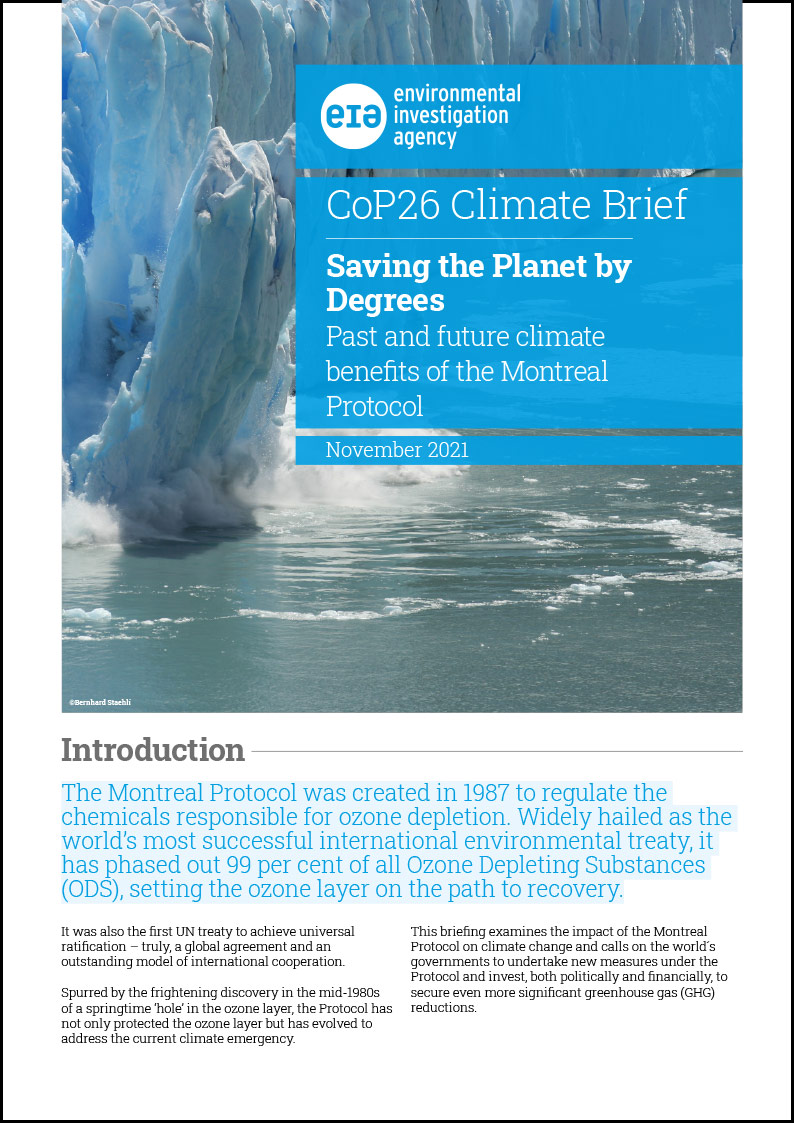
The Montreal Protocol was created in 1987 to regulate the chemicals responsible for ozone depletion. Widely hailed as the world’s most successful international environmental treaty, it has phased out 99 per cent of all Ozone Depleting Substances (ODS), setting the ozone layer on the path to recovery.