

DONATE

Tag: global-plastics-treaty

Report

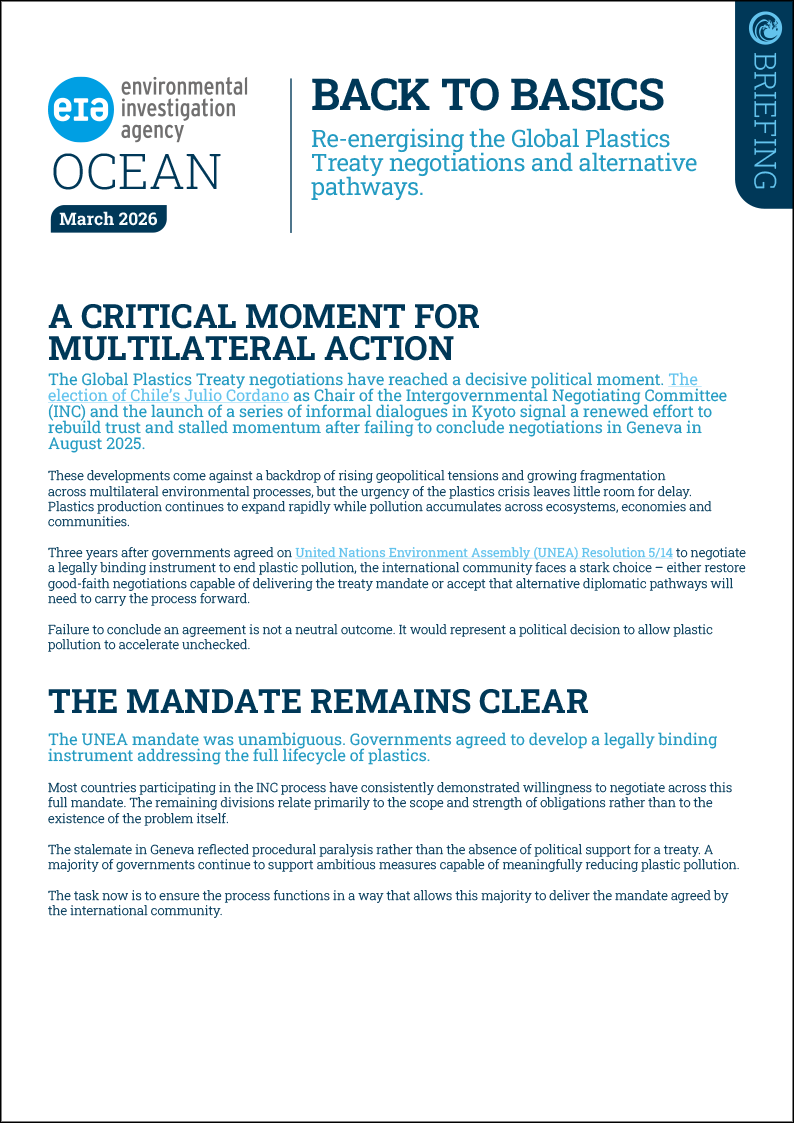
Back to Basics

The Global Plastics Treaty negotiations have reached a decisive political moment. The election of Chile’s Julio Cordano as Chair of the Intergovernmental Negotiating Committee (INC) and the launch of a series of informal dialogues in Kyoto signal a renewed effort to rebuild trust and stalled momentum after failing to conclude negotiations in Geneva in August 2025.
Report

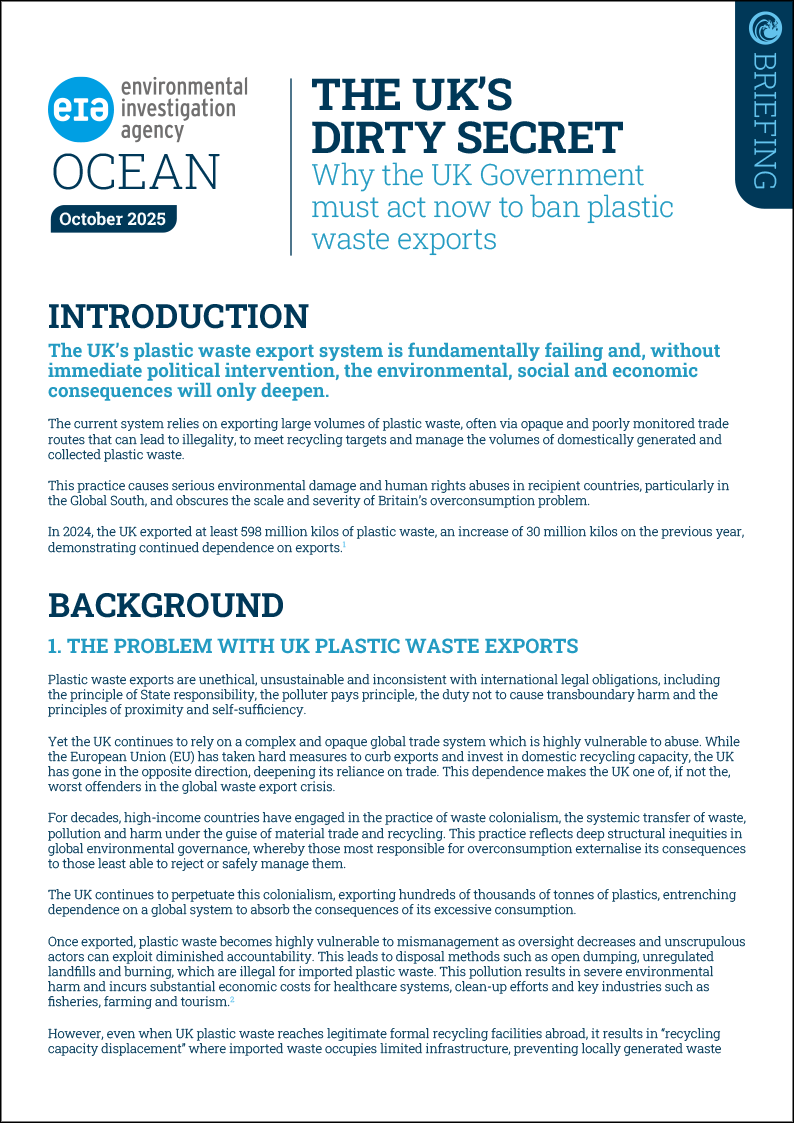
The UK’s Dirty Secret

The UK's plastic waste export system is fundamentally failing and, without immediate political intervention, the environmental, social and economic consequences will only deepen.

Report

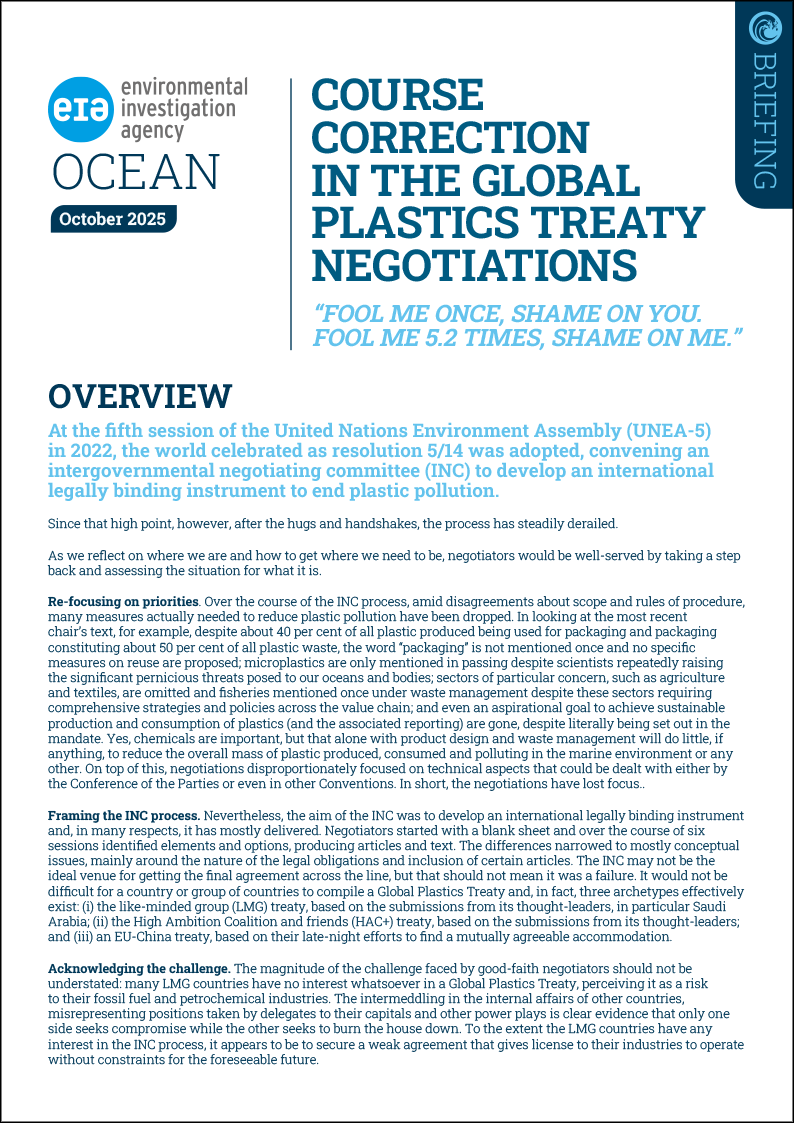
Course correction in the Global Plastics Treaty negotiations

At the fifth session of the United Nations Environment Assembly (UNEA-5) in 2022, the world celebrated as resolution 5/14 was adopted, convening an intergovernmental negotiating committee (INC) to develop an international legally binding instrument to end plastic pollution. Since that high point, however, the process has steadily derailed. As we reflect on where we are and how to get where we need to be, in this briefing EIA experts outline the essential conditions for a successful resolution of the negotiations and recommendations for urgent course correction.

Report

Plastic fishing and aquaculture gear in the Global Plastics Treaty

A distinct and harmful source of plastic pollution requiring dedicated language in the ILBI. The Global Plastics Treaty must include legally binding obligations on each Party to prevent, mitigate and remediate the impacts and occurrence of plastic abandoned, lost or otherwise discarded fishing and aquaculture gear (ALDFG) across its full lifecycle.

Report

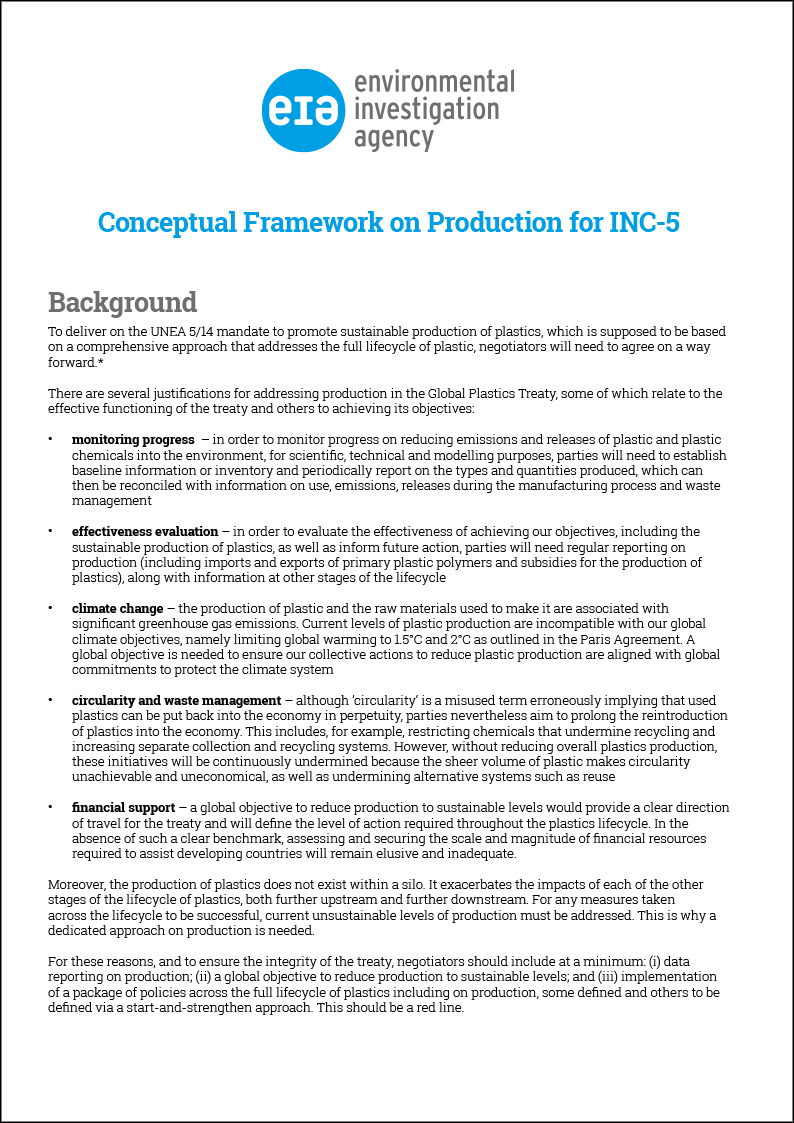
Conceptual Framework on Production for INC-5 – Briefing

To deliver on the UNEA 5/14 mandate to promote sustainable production of plastics, which is supposed to be based on a comprehensive approach that addresses the full lifecycle of plastic, negotiators will need to agree on a way forward. This briefing presents the justifications for addressing production and outlines the framework for implementation.