Forests, metals and markets
The London Metal Exchange’s role in the destruction of Indonesia’s rainforests and how it can help to stop it.
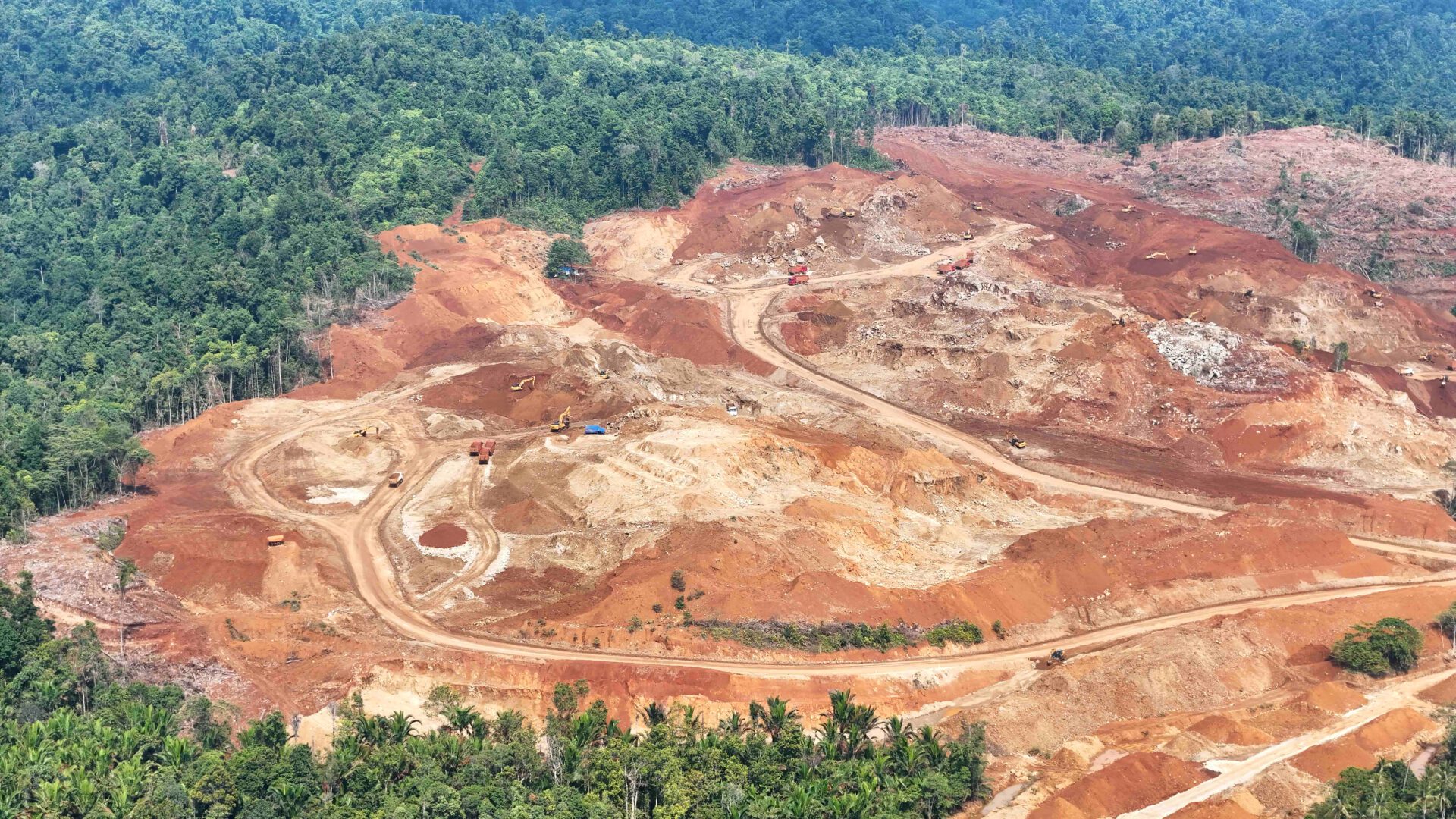
The growing global demand for nickel has driven a mining and smelting boom in Indonesia in recent years. Yet the Indonesian nickel industry has come at a heavy environmental cost, including the destruction of large areas of climate-critical and biodiverse rainforest.
EIA has investigated the role the London Metal Exchange (LME) , the world’s largest market for metals trading, could be playing in this deforestation.
We found that nickel brands approved for trading on the LME appear to be linked to mine sites where more than 7,000 hectares of rainforest have been destroyed, impacting Indigenous communities and biodiversity.
These findings raise serious questions about the effectiveness of the exchange’s sustainability requirements in addressing some of the most severe environmental impacts of mining. The report calls on the LME to expand the scope of its responsible sourcing requirements, develop a dedicated zero-deforestation standard through its LMEpassport platform and incorporate deforestation criteria into proposed plans for a Sustainable Metals Premium.