We urge UK Government to end ‘waste colonialism’ by banning plastic waste exports


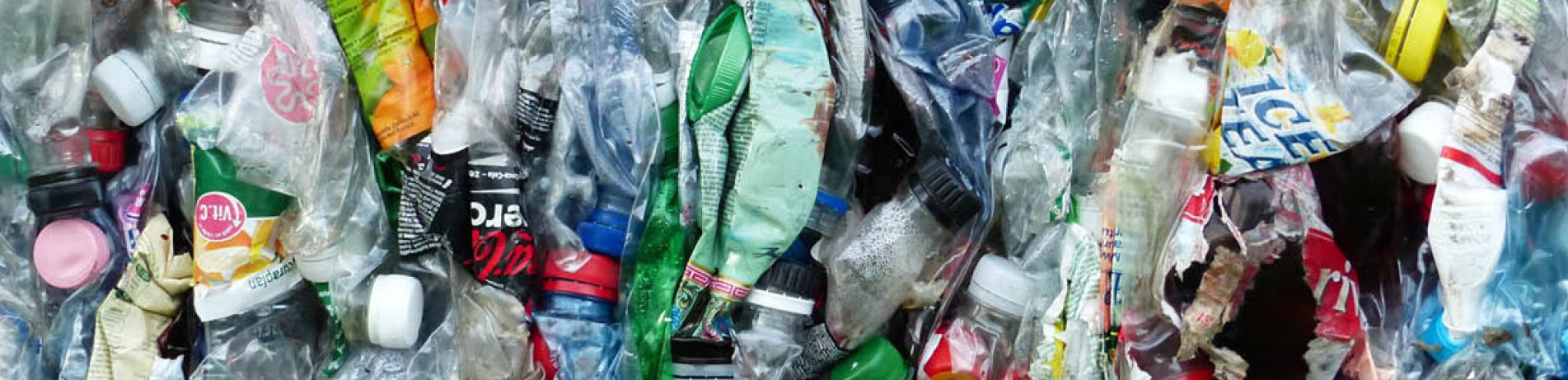
EIA and 53 environmental and civil society organisations from around the world have written to the UK Secretary of State for Environment, Food and Rural Affairs to urge the Government to commit to a full and immediate ban on all UK plastic waste exports.
The joint letter to Emma Reynolds MP – sent ahead of the launch of the Government’s new Circular Economy Strategy – warns that without decisive political action, the UK will continue to fuel environmental injustice, toxic pollution and waste crime in recipient countries.

Emma Reynolds MP
In 2024 alone, the UK exported a staggering 598 million kilos of plastic waste (equivalent to 60,000 refuse trucks), an increase of 30 million kilos from the previous year.
Much of this waste is mismanaged, dumped or burnt overseas, with devastating consequences for people and the environment. Türkiye, Malaysia and Indonesia remain major destinations where exported UK plastic has been linked to toxic contamination, severe health issues and deaths among recycling workers.
EIA Ocean Campaigner Andrea Dixon said: “The UK’s plastic waste export system is an environmental scandal hiding in plain sight.
“We’re shipping our plastic problem overseas and calling it recycling, while people in countries such as Türkiye and Malaysia are forced to live and work among toxic pollution. This is waste colonialism and it’s time the UK took responsibility for its own waste.”
The joint letter warns that exporting plastic waste allows the UK to meet its recycling targets on paper while masking the country’s over-consumption problem and undermining genuine domestic solutions – including the development of a viable UK recycling industry.
Recent reports reveal that 21 UK plastic recycling facilities have closed in the past two years while more than 600,000 tonnes of plastic waste continue to be shipped overseas each year. This loss of capacity is being driven in part by policy loopholes that make it cheaper and more desirable to export waste, alongside runaway cheap virgin plastic production undermining the recycling industry. Together, these failures are eroding the foundations of a circular economy and offshoring the UK’s plastic pollution problem.
The letter also highlights growing global momentum for reform. The EU has already adopted a ban on plastic waste exports to non-Organisation for Economic Co-operation and Development (OECD) countries, those which are generally lower- or middle-income and less equipped to manage imported waste, for two-and-a-half years from late 2026.
Thailand, Indonesia and Malaysia, all non-OECD countries, have also introduced national import bans or restrictions.
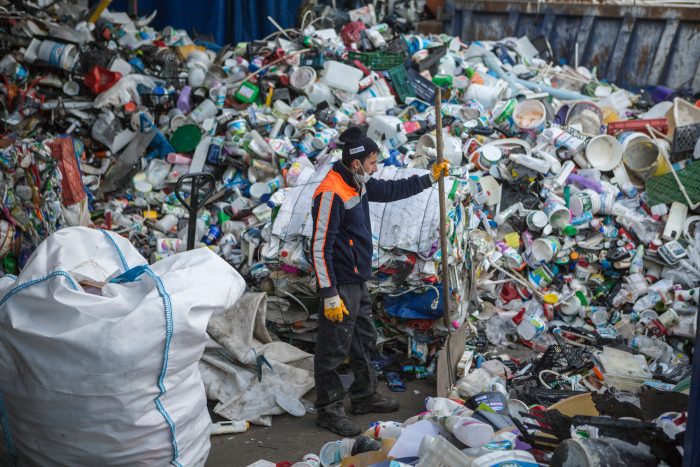
Plastic waste being sorted in Istanbul, Türkiye
Despite previous commitments, including a 2019 UK Government pledge to ban exports to non-OECD countries and a 2022 Parliamentary recommendation for a complete ban by 2027, the UK has yet to act.
The letter’s signatories urge the Government to include in its forthcoming Circular Economy Strategy a phased ban on all plastic waste exports to both OECD and non-OECD countries by 2028, alongside stronger enforcement and urgent investment in domestic waste reduction and recycling.
Dixon added: “This autumn is a defining moment. The Government’s Circular Economy Strategy must include a full export ban if it’s serious about tackling plastic pollution and showing global leadership.
“Anything less will keep the UK complicit in a dirty trade that harms people, the planet and our international credibility.”
Pui Yi Wong, a Malaysia-based researcher with the Basel Action Network added: “Following Thailand and Vietnam, Malaysia has tightened our regulations on plastic waste importation. This is a region-wide acknowledgment that imported plastic waste comes with chemical additives, microplastics and fractions that cannot be recycled and are thus abandoned or burnt. All these have caused widespread pollution in our countries, contaminated our food chains and badly affected the health of communities.
“Developed countries such as the UK need to face the true costs of dealing with plastic wastes, instead of shipping the problem to other countries.”