UK Government moves forward on long-delayed action to tackle imported deforestation
The UK Government has announced plans to finally move forward with long-delayed regulations aimed at preventing products linked to illegal deforestation from entering UK supply chains, marking a significant step towards reducing the UK’s global forest footprint.
EIA welcomes the Government’s announcement on 23 June, made during London Climate Action Week, confirming the recognition of the crucial role forests play in mitigating climate change.
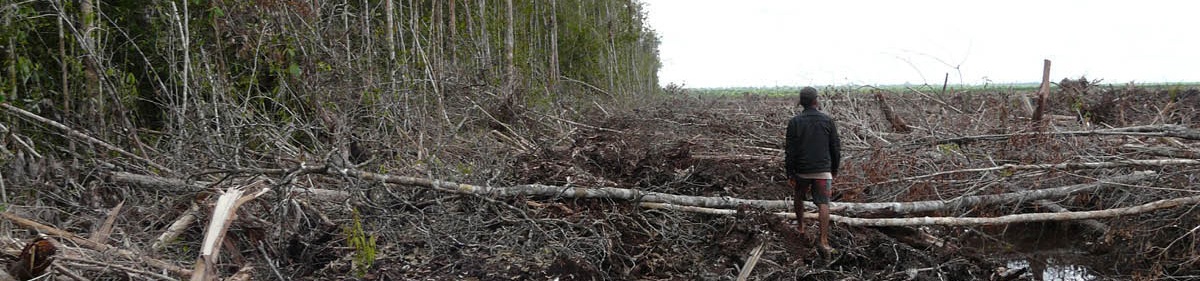
According to DEFRA, UK consumption of forest-risk commodities was linked to about 29,000 hectares of deforestation and 9.4 million tonnes of associated carbon emissions in 2023.
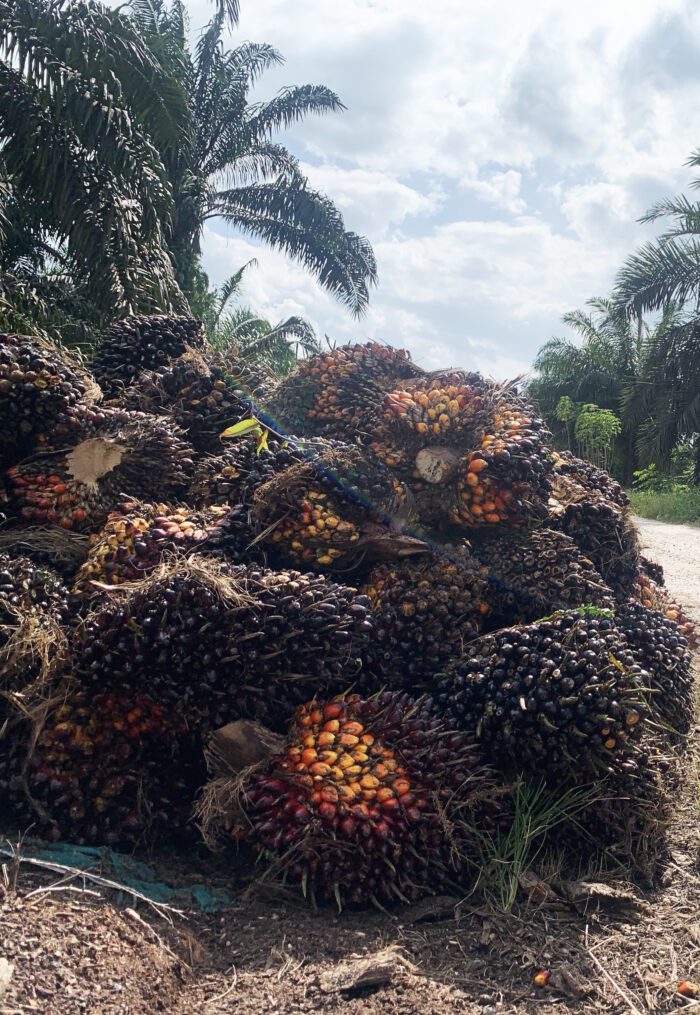
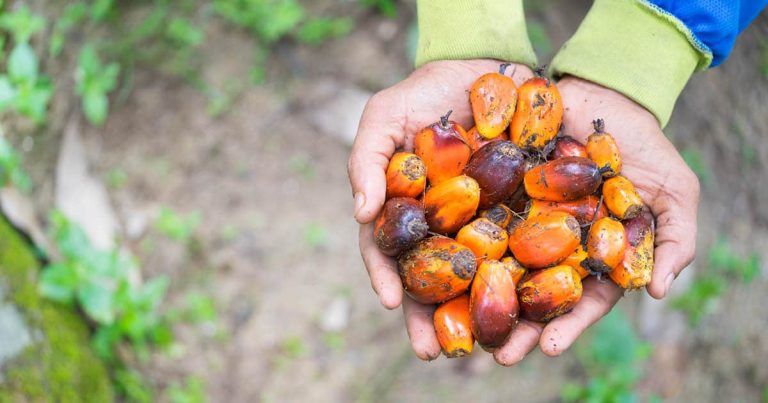
Palm oil fruits
A new public consultation will be launched on the details of mandatory due diligence requirements for businesses trading in forest-risk commodities, using powers under the Environment Act 2021 alongside reforms to the UK Timber Regulation (wood products have been regulated since 2013).
The Government confirmed that the EU Deforestation Regulation (EUDR) will apply in Northern Ireland from 30 December 2026 and indicated it intends to align Great Britain’s regime with key elements of the EUDR.
After years of campaigning, the Government has signalled a shift towards much broader commodity scope than the previous Government proposed more than five years ago. In alignment with EIA’s asks, products expected to be covered now include cattle, cocoa, coffee, palm oil, rubber and soy, as well as certain derived products such as chocolate.
Crucially, the UK has confirmed mandatory geolocation requirements, a particularly important development. EIA has long emphasised that without knowing where commodities are produced, it is impossible to effectively assess legality, deforestation risk or compliance.
It has also proposed a £1 million turnover threshold for companies in scope, a significant improvement on previous proposals of £50 million which would have left most relevant businesses outside scope,
The Government further indicated ambition to move beyond a legality-based approach and, over time, to transition towards a deforestation-free standard, as in the EUDR.
Members of the UK NGO Forest Coalition, including EIA, and MPs from the All-Party Parliamentary Group on Global Deforestation said the commitments represent important progress after years of delay and reflect several long-standing recommendations from civil society, businesses and investors.
EIA Forests Advocacy and Policy Campaign Lead Vanessa Richardson said: “The Government’s own national security assessment shows that deforestation is not just an environmental issue, but a direct threat to the UK’s economic stability and food security.
“After years of delay, this announcement is a welcome step. To match the scale of the risk, the UK now needs robust mandatory regulation, underpinned by full supply chain traceability and enforcement that is properly resourced to be effective.”
While the announcement marks significant progress, the focus must now be on moving commitments into law. After nearly five years of delay since the passage of the Environment Act 2021, the UK can no longer afford to wait.
The public consultation is expected later this year and EIA will be closely analysing the proposals and engaging to ensure the final regulations deliver meaningful reductions in the UK’s contribution to global deforestation and human rights abuses.
What is needed now is a robust law, brought into force as quickly as possible.