Whales and whaling around South Georgia and the Antarctic – a first-hand view!



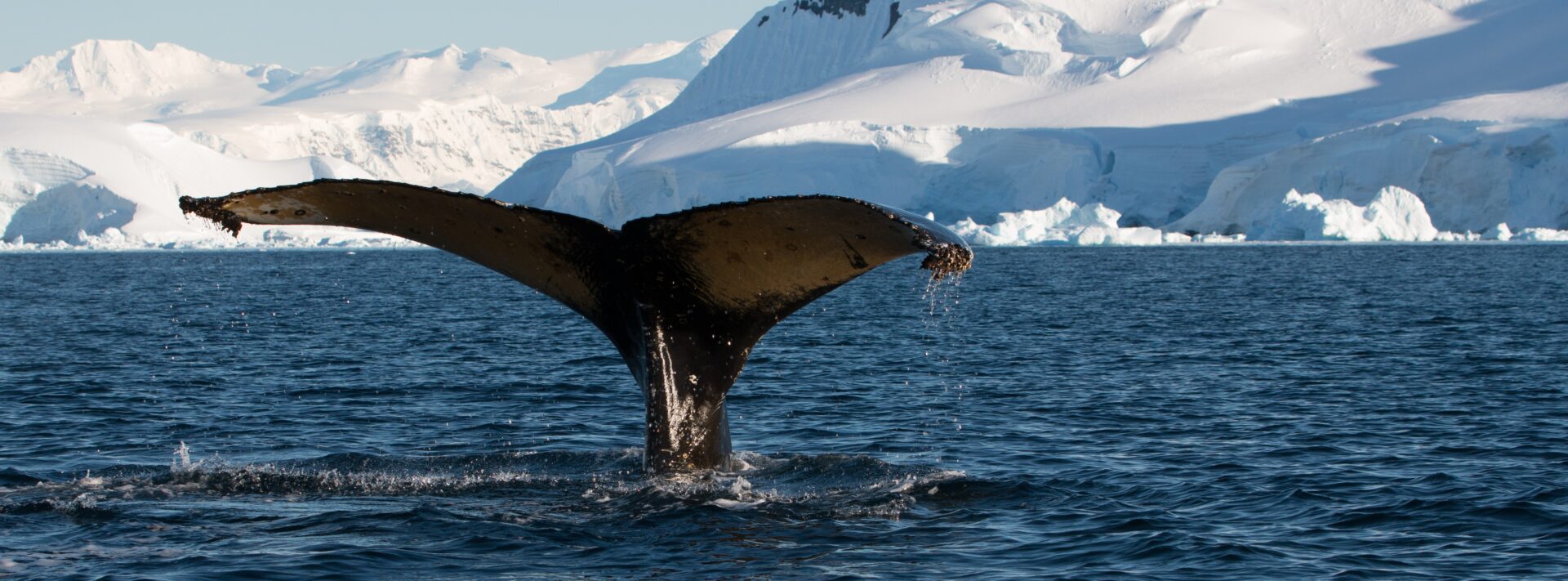
(c) Gary Bembridge
While many around the world were getting stuck into the annual Christmas festivities, EIA Senior Ocean Campaigner Sarah Dolman instead joined an expedition to survey the state of whale populations in the Antarctic. Here she shares a brief overview of her trip …
The rapid expansion, over-exploitation and subsequent decline in whale stocks in the northern hemisphere in the 20th century led to the search for new whaling grounds in the south, at which point attention turned to the Antarctic – and, specifically, to South Georgia.
Given the opportunity to survey the waters of South Georgia and the Antarctic Peninsula for large whales as a guest scientist for the charitable NGO ORCA onboard a cruise ship, I jumped at the chance!
It is a real privilege to be able to visit the Antarctic and see the incredible wildlife and its land and seascapes and to collect data to understand how large whale populations are faring since whaling ended and new threats have emerged. It’s poignant that we are visiting several of the old whaling stations on South Georgia.
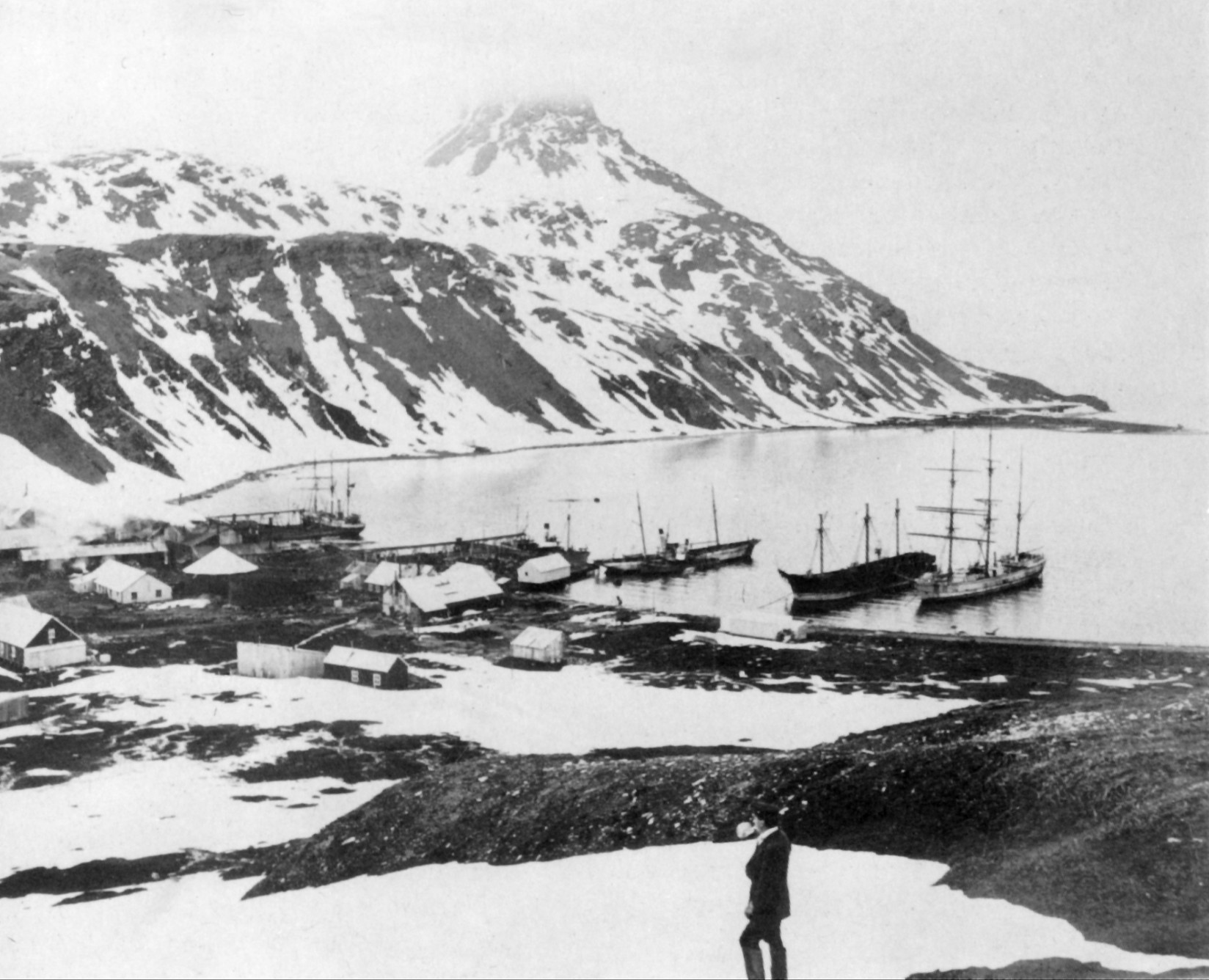
Photograph of Grytviken taken by Shackleton’s expedition in 1914
The first whale to be killed in South Georgia waters was a southern right whale, but few right whales were found during this early exploration and so whaling in this region quickly focused on baleen whales – first humpbacks and then larger blue and fin whales.
Carl Anton Larsen, a captain and a whaler, set up the first shore-based whaling station in Grytviken on South Georgia in 1904. Christen Christensen started modern whaling using a floating factory ship in 1905 in the Falkland Islands and South Shetland Islands. The Scottish whaling company, Salvesen Ltd, then set up and operated in Leith Harbour on South Georgia from 1910 onwards.
In total, seven shore-based whaling stations were operating on South Georgia by 1916-17 and the companies involved were Norwegian, Argentine, British and South African.
High catches meant high profits and factory ships became larger, more powerful – and more productive.
The reported number of whales killed in South Georgia reached 7,825 in 1925-26 season as whaling was expanding throughout Antarctic waters. Documented whales killed in Antarctic waters from 1909-10 to 1959-60 totaled approximately 150,000 by Argentina, Britain, Germany, the Netherlands, Norway, Japan, the Soviet Union and others.
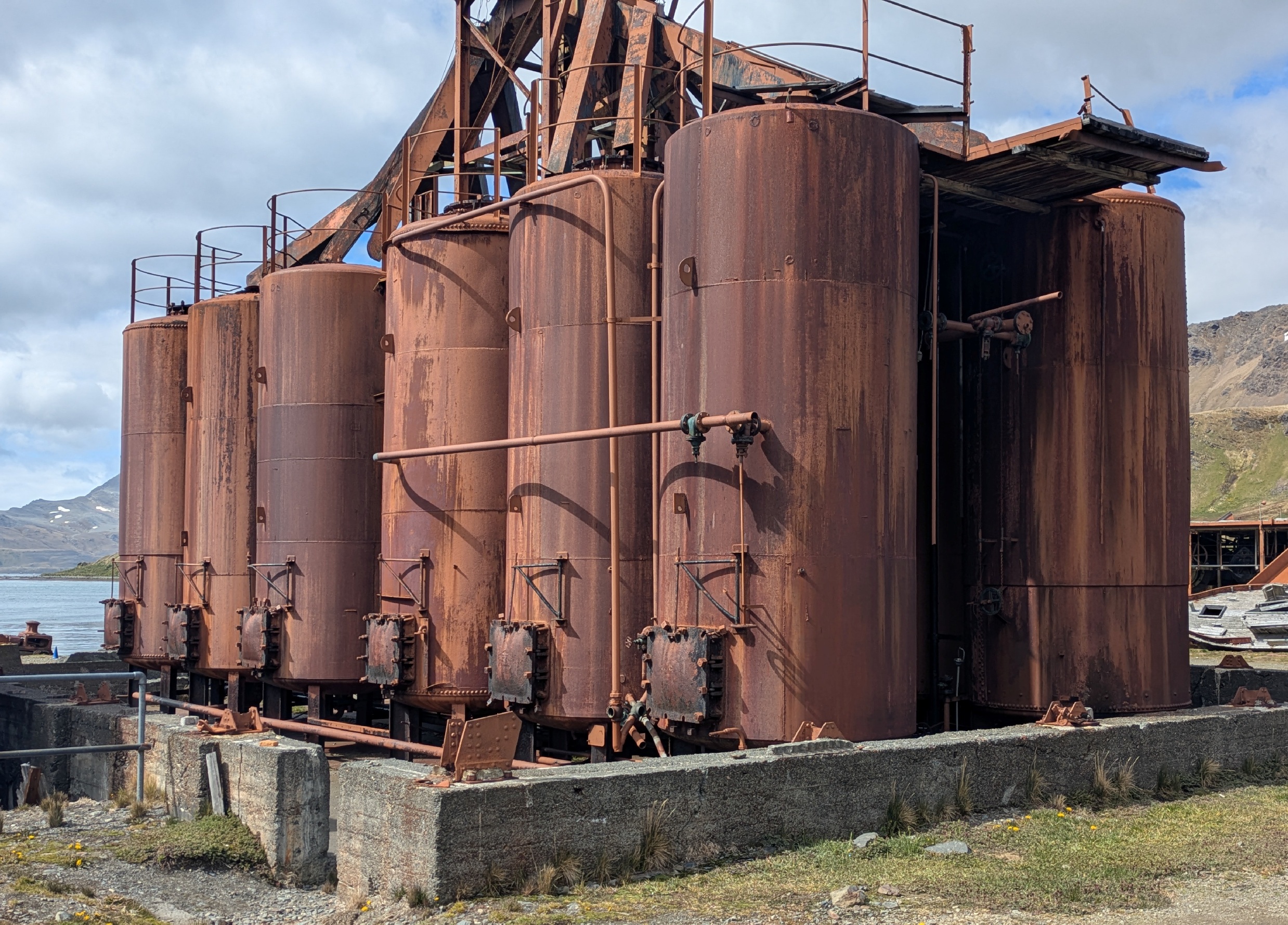
Blubber pots at Grytviken whaling station today © Sarah Dolman
There is evidence that many more whales than this were killed illegally and whaling devastated populations of large whales.
In their final few years, Grytviken and Leith whaling stations were leased to Japan in 1963, before they closed for good in 1964 and 1965 respectively. This is recent enough that it’s possible that some of the whales we observed on our survey were alive when whaling ended.
The global whaling moratorium was introduced in 1986, by which time many of the world’s large whale populations were on the brink of extinction. Antarctic blue whales remain critically endangered and are estimated to number fewer than 3,000.
Climate warming, krill fishing and increasing tourism are the modern day threats that cetaceans face in Antarctic waters. The data collected during this survey already contributes to necessary conservation measures.
Our adventure started from Punta Arenas in Chile, with striking Commerson’s dolphins. As we passed through the Falkland Islands, we had a magical encounter with a group of about 50 sei whales blowing and slowly passing by the ship.

Leith harbour whaling station, South Georgia © Sarah Dolman
In the deep waters between the Falklands and South Georgia we briefly encountered beaked whales and then once we started to see icebergs we also saw humpback whales.
On reaching South Georgia, where we currently are, we were lucky enough to spend some time with a pod of about 14 orcas, with a large eye patch and yellow hue to the cape behind their dorsal fins, including a couple of big males and young calves in King Haakon Bay in the south of the island. Then we encountered more than 25 humpback whales on our journey towards Grytviken.
Now we leave the backdrop of the wild and rugged snowy mountains of South Georgia and its rusting whaling stations behind and head for the cold and productive Antarctic Peninsula.
(Note: some historical information in this blog is taken from The Shore Whaling Stations at South Georgia by Bjørn Basberg)