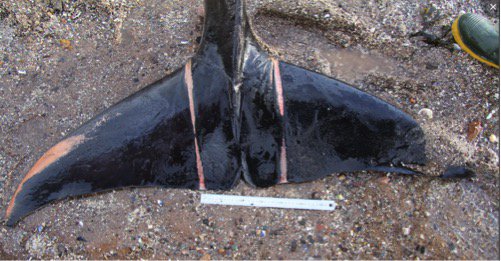
The suffering of whales, dolphins and marine mammals bycaught in fishing nets



Working on fisheries bycatch can be a pretty gruesome task.
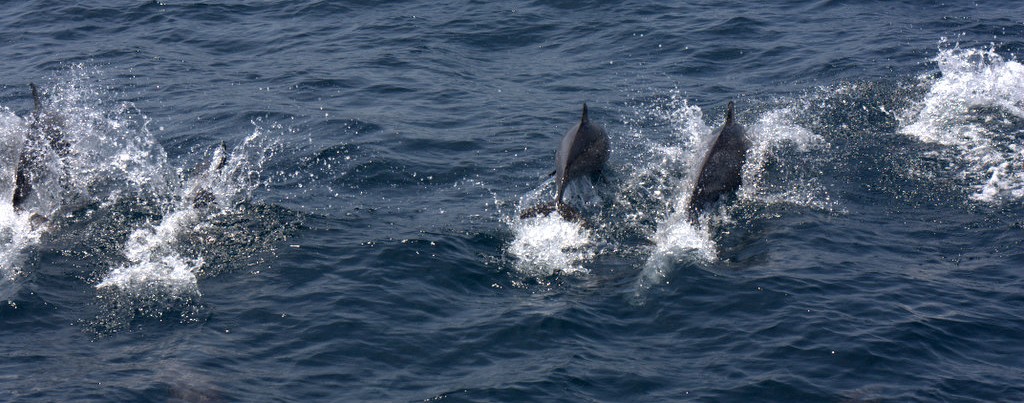
Bycatch is responsible for the deaths of hundreds of thousands of whales, dolphins and porpoises (collectively known as cetaceans) as well as countless other protected species every year – and entanglement in fishing gear is deeply traumatic for every individual experiencing it.
Once an animal has become entrapped, two scenarios are possible – either death following a lack of oxygen/asphyxiation (dry-drowning) or release/escape with a return to the surface to breathe.
Both of these have significant welfare impacts on the individual and although death may be regarded as the greatest impact, injuries and other pathologies (such as hypoxic brain injury) may lead to long-term welfare issues should the animal survive.
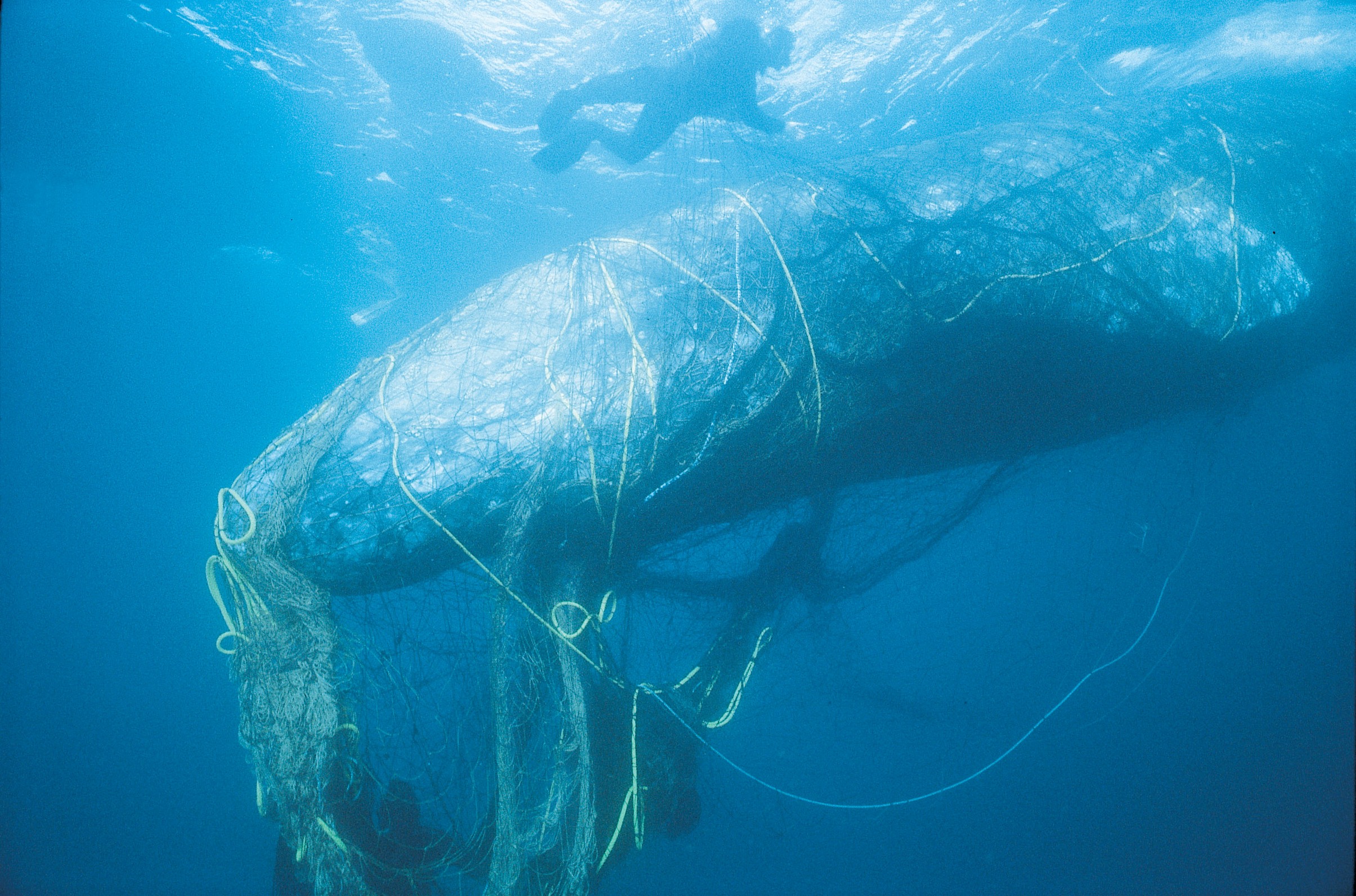
Gray whale entangled in netting (c) BobTalbot, via Monofilament Recovery & Recycling Program
Death can be slow. Without a doubt, it is frightening and painful. And, although intuitively we know it to be true, recent research is starting to demonstrate that the impacts extend beyond those who become entrapped and die to include their family and pod members, who also suffer.
Understanding the welfare impacts resulting from fisheries bycatch is important. When we think about preventing bycatch, we often think about the population-level impacts because these are what we perceive to be necessary for management.
However, if we understood a little more about the suffering caused to individuals that become entangled, we might think a little differently.
I have recently been working with two veterinarians who have much experience of diagnosing marine mammal bycatch and am really pleased that we have just published this review of The impacts of peracute underwater entrapment in fishing nets on marine mammal behaviour and welfare.
Peracute underwater entrapment (PUE) is the process of acute entanglement and forced submersion that occurs following interaction with fishing gear in which an individual is unable to break free from the gear or to reach the water’s surface to breathe.
PUE results in a number of negative welfare impacts, including asphyxiation, injuries, stress response, social disruption and, ultimately, death.
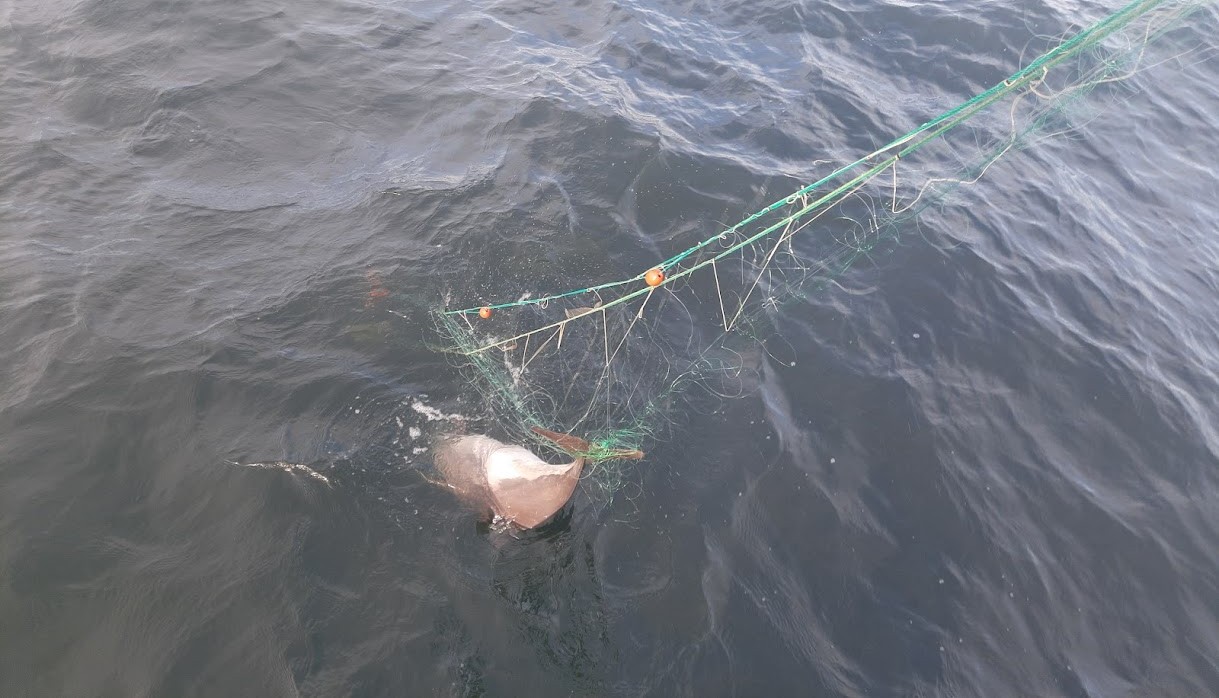
Bycaught harbour porpoise (c) Dimitar Popov, Green Balkans
Very little information is available on the behavioural responses associated with PUE. However, occasional events have been described in recent years that provide some insight to the experiences of marine mammals suffering PUE and that of their family members close by.
Most recently, a pair of harbour porpoises were recorded acoustically around a fishing net in the North Sea. One of them became entangled in the net, immediately resulting in a change in acoustic behaviour from buzzes to communication calls. While entangled and alive, the net was displaced upwards by about seven metres over several minutes before the porpoise asphyxiated and the net returned to its original position.
After the bycaught porpoise died, the non-entangled porpoise produced only communication calls for a period of time and then continued to click and call towards the net for at least 59 minutes and possibly for several hours following the death of the entangled porpoise.
At 1.15m, the small, entangled porpoise was likely a sub-adult, so the pair were possibly mother and calf and the bycatch event indicated a stress-mediated social response.
This case, recorded by scientists at St Andrew’s University, may be the first known acoustic recording of a surviving porpoise staying at the scene of entrapment and calling repeatedly at the loss of their companion.
Individually and collectively, the welfare implications of bycatch events are severe and raise significant concerns. Necropsy data collected from stranded individuals or those collected from fishing vessels help provide a greater understanding of the events – and the suffering – surrounding PUE.
In our review, we identify further research needed to improve our understanding of the welfare implications for individuals and populations of marine mammals. While not a pleasant read, I hope this synthesis of knowledge broadens the understanding of the welfare impacts that result from bycatch and enable us to change the scope of the conversation and management beyond population-level impacts alone.
Perhaps most importantly of all, the paper identifies that the implementation of measures to prevent bycatch are warranted on animal welfare as well as conservation grounds.