Remembering Valmik Thapar, a compassionate, towering giant in the field of tiger conservation



With Global Tiger Day (29 July) upon us, I want to take a moment to pay tribute to the late Valmik Thapar, an immense figure in the battle to save the wild tiger.
Valmik sadly passed away in Delhi on the 31 May this year after a courageous battle with cancer. He was surrounded by his beloved family and immersed in the tiger art, images and artefacts that decorated his home.
In the days following his passing, there were so many eloquent articles celebrating his life and work as the tiger’s champion, warrior, guardian, angel, ambassador. The voice and roar of the tiger. A legend, a force of nature and towering figure in the world of tiger conservation, renowned for speaking truth to power; authentic, fearless and committed.

Valmik Thapar
To me, he was all those things, but also a mentor and counsellor. He was inspirational and, I thought, invincible.
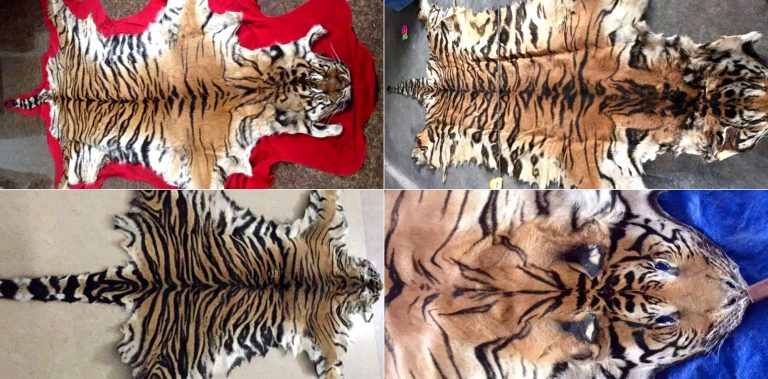
Around the world, he was perhaps best known as an author, naturalist and a keen student of tiger behaviour, especially of the tigers of Ranthambore, the heart of his tiger world. His books and films, particularly those made in partnership with filmmaker Mike Birkhead, brought the trials and challenges of tiger life and death to global attention, from the majesty of wild tigers in their natural habitat to the grim reality of tiger poaching and trafficking.
His intuition, of tigers and people, was integral to his engagement with forest staff, communities, NGOs, government officials and politicians. Whether that was his work with the Ranthambore Foundation, introducing measures in the 1980s to support coexistence between tigers and the villagers living around Ranthambore, or his role on various Government boards and the Supreme Court’s Central Empowered Committee for Forests where he injecting his knowledge and insights into decision-making.
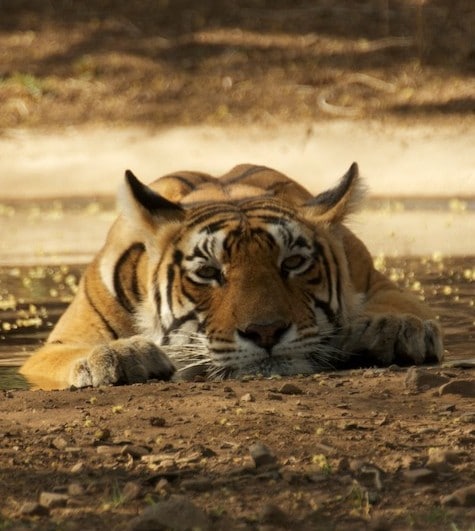
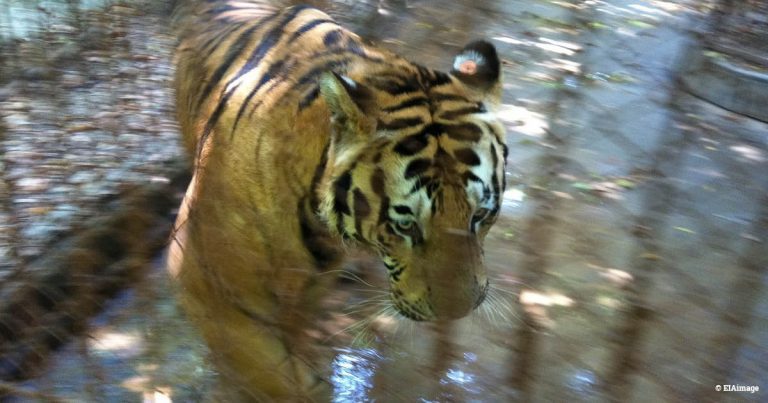
Male tiger in Ranthambore Tiger Reserve, India (c) Debbie Banks
I first met Valmik when I was studying for my MSc in Conservation in London in the early 1990s. He gave a presentation at the Zoological Society of London (ZSL) that blew us all away.
The audience was enthralled as he softly and slowly introduced us to the natural history of the tigers of Ranthambore, the dynamics and relationships between individual tigers, tiger families and the wildlife and people they shared their landscape with.
Then, boom!, his tone and rhythm switched with slide after slide of the horrors of tiger poaching and its impact, not just on Ranthambore’s population but also on the people who live with tigers and those on the frontline protecting them – all to satisfy demand for tiger parts outside the country.
He raged. We were silent. And at the end you could hear a pin drop. I knew at that moment I would commit my life to contributing, in whatever small way I could, to the survival of the tiger.
In 1996, I again met with Valmik, and other leading conservationists, in India to learn more about the ground realities and politics of conservation. At about the same time, EIA Co-Founder Dave Currey and Campaigner Craig Bennett were conducting research to shape a prospective new Tiger Campaign, consulting with Valmik and others in India to ensure that whatever EIA did, it would add value.
I joined EIA just before the launch of the campaign and ever since Valmik has been generous with his time, interrogating our findings after trips to tiger trade hotspots or illegal mine sites and offering his guidance on next steps. Always, always reminding me that for every nightmare we uncovered, we should make the time to see tigers in the wild and reenergise ourselves.
That was most poignant when I called him from China in 2005. As part of the EIA and Wildlife Protection Society of India team (including my other tiger guru, Belinda Wright), documenting the trade in tiger and leopard skins in China. I was devastated, knowing I’d seen more dead tigers and leopards than I’d ever see alive. I felt like we, all of us in conservation, had failed. The rest of the team had returned home, but I had gone on to film in another location and then straight into the lions’ den, to a Convention on International Trade in Endangered Species (CITES) enforcement seminar to present our findings to authorities from China and other tiger range countries. It had all been a fairly traumatising experience, but Valmik was on the other end of a phone offering encouragement and the strength to keep battling on.
He had extraordinary magnetism and convening power. I remember on one occasion sitting in his Delhi office, in awe of the great names in tiger conservation that were around his table. He held audiences in the palm of his hand with his powerful and passionate calls to action; inspiring and influencing decision-makers and elevating the tiger on the global agenda.
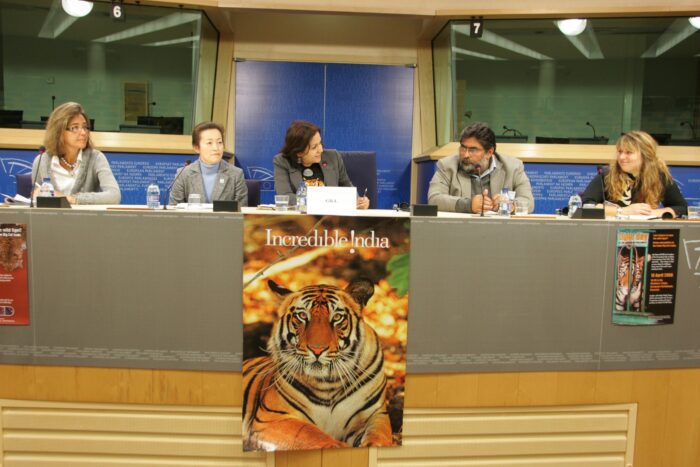
Valmik and Debbie, right, share a panel on tigers
Many of us in tiger conservation will recall the CITES meeting in the Hague in 2007, where the decision to end tiger farming and trade in parts and derivatives of captive tigers was adopted.
Valmik was a guest speaker at a reception organised by the International Tiger Coalition and among a bold contingent of Indian conservationists who successfully challenged those who proposed tiger farming as a conservation solution. Whether it was a room full of MEPs in Brussels, art aficionados at Asia House in London, customs and police officers at an INTERPOL meeting in Bangkok, I watched as they were mesmerised and mobilised.
Everything he did and said came from a place of honest commitment to doing right by the tiger – and people listened and acted.
When the tiger crisis emerged in 1993, conservationists around the globe feared the tiger might be extinct in the wild by the turn of the 21st century. Valmik’s immeasurable contribution has moved us away from that dire situation. There is no room for complacency, however, and the work must go on.
In closing, I’m recalling one of his life notes. There is no such thing as an expert, he would often say. We are always learning. He was, every day. Every time he was in the jungle, he learned something new about his beloved tigers.
Thank-you, Valmik ji, for sharing your time, knowledge and words of wisdom.
• If you have access to BBC iPlayer, you can learn more of Valmik’s life through his final film with Mike Birkhead, My Tiger Family or watch his presentation to the Remembering Tigers event at the Royal Geographical Society in October 2024.