Good news from CITES (CoP20) for almost all the species EIA focuses on. Here’s the detail …




The 20th Meeting of the Conference of the Parties (CoP20) to the Convention on International Trade in Endangered Species (CITES) has drawn to a close. The meeting which took place in Samarkand, Uzbekistan from 24 November to 5 December was bookended by the 79th and 80th meetings of the CITES Standing Committee (SC79 and SC80).
With the exception of the outcome for saiga, CITES CoP20 delivered positive outcomes for EIA’s focal species, which mostly involved preventing any backwards slide in the level of protection afforded by CITES. There was sometimes a lack of urgency reflected in the decisions adopted, despite the crisis some species are in. Some parties exhibited resistance to reporting and insisted on qualifying language, for example, about their capacity to report on matters such as stockpiles of wildlife parts and derivatives.
Our team was spread out across the two Committees; Committee I where species uplisting and downlisting proposals are debated and Committee II where CITES implementation and compliance matters are discussed. In between briefing parties and other delegates on key issues and listening to their concerns, following discussions on the floor, and drafting interventions with our NGO colleagues, we followed a hectic side event schedule. EIA held three side events on leopards, pangolins and securing criminal justice in Nigeria, and participated in two others, on NGO and law enforcement collaboration and on the fish maw trade. The latter was a troubling insight into the devastation wrought by the escalating and diversifying demand for swim bladders of many croaker species, on target and by-catch species and on fishing communities.
Beyond our primary species and countries of concern, the outcomes of the meeting were shadowed with warnings of pressures on the CITES Secretariat’s resources and capacity and the need for efficiency and prioritisation. There was some uplifting and encouraging deliberations and news though. For example, the range States of endemic species (animals, plants and fungi that are exclusive to a specific geographic area), were vocal in holding other parties to account for theft of their wildlife, calling for better due diligence when allowing wildlife imports and proposing the listing of endemic species on the CITES appendices. Meanwhile, conservationists in Central Asia reported on the return of big cats, with news of prey species recovery efforts, the first phase of the return of tigers to Kazakhstan, successful engagement of communities living with snow leopards in Kyrgyzstan and plans for cheetah recovery in Uzbekistan.
Read on for the outcome of SC79 and CITES CoP20 as it relates to EIA’s priority issues.
For SC79, Laos made a concerted effort to have CITES trade suspensions lifted, in particular to allow exports of long-tailed macaques (Macaca fascicularis) from farms in the country. In the run up to the meeting, the CITES representatives variously claimed that “Western” NGOs were misleading the public and using trade prohibitions as “means of accumulating ill-gotten gains”; that Laos would be forced to use the dispute resolution mechanism under the Convention to demand that Standing Committee members compensate it for $67 million of economic loss; and that it had fully or substantially implemented all of the Standing Committee’s recommendations to it. Further, it claimed that rhino horn seizures reported by the Singapore authorities as being intercepted en route to Laos had caused significant reputational harm to the country in the lead up to SC79 and information about the seizures had not been shared with it. This forced a response from Singapore clarifying that information about the seizures had been shared with Laos bilaterally as well as through other means.
During the meeting, Laos reiterated its claims of having substantially complied with all the Standing Committee’s recommendations and insisted that reports about organized and open wildlife crime in the country by GITOC, Mongabay and EIA were not verified, lack transparency and should not be taken into account unlike the independent investigation reports by the Lao government. The CITES Secretariat responded to Laos’s interventions to reiterate that while progress had been made on paper by Laos, measurable impact on the ground remains to be seen. The Secretariat also pointed out that trade suspensions had not been adopted lightly in Laos’s case – compliance proceedings had begun in relation to the country in 2016, trade suspensions were adopted only in 2022 and in 2024, they had already been lifted to allow trade in flora where exports quotas were established on the basis of a non-detriment finding study.
The Standing Committee eventually recommended continued suspension of commercial CITES trade with Laos along with a number of other recommendations. EIA and other organizations have repeatedly exposed the organized and open nature of the illegal trade of wildlife in Laos. This includes the open display and sale of tiger bone wine, ivory, and rhino horn and bear-bile products in retail premises in Vientiane and Luang Prabang. One of the companies in question produces rhino horn and bear bile products which it claims to be licensed by the Lao government. The CITES Secretariat reported that the Ministry of Health in Laos had confirmed they accepted rhino horn as an ingredient in medicinal products, illustrating the lack of a joined-up government approach to countering wildlife crime. Tiger farms continue to persist in Laos and feed illegal trade of tigers in the region. Remarkably, one of the companies that the Lao government is pushing the Standing Committee to allow to trade macaques has been reported to be involved in ivory and rhino horn trafficking and also owns a tiger farm and is affiliated to a second. The government of Laos should be asked to demonstrate prosecution and conviction of the individuals and companies known to be involved in this illegal trade before the CITES Standing Committee agrees to lift any trade sanctions which are currently in place.
In a major win for elephants, the majority of parties rejected a proposal by Namibia to restart international ivory trade, recognising that trade would stimulate poaching and demand and undo decades of conservation and policy gains. Worryingly though, China and Japan were among the parties who spoke in favour of trade.
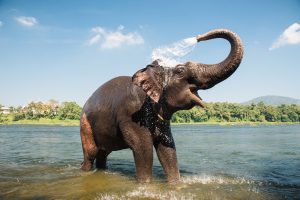
Asian Elephant
Parties agreed to renew key decisions to maintain focus on trade in Asian elephants. Originally, only a call to investigate illegal trade was set for renewal, with no mechanism to track progress. Thanks to strong interventions by Senegal, Nigeria, the UK, Benin, Kenya, Niger, Mali, Comoros and the US, essential reporting pathways were also retained. This means parties are now required to not only investigate illegal trade, but must now also submit information to the CITES Secretariat for analysis and discussion by parties. This was exactly the outcome EIA pushed for. Our research shows illegal trade in Asian elephant parts, especially skin, is widespread. With the reporting channel now secured, EIA will continue researching and sharing findings to map the threats facing Asian elephants.
Momentum continued around the Review of the National Ivory Action Plan (NIAP) process, which EIA advocated for at CoP19 in 2022. At CoP20, parties adopted amendments to the NIAP Guidelines, including proposals from the UAE -the most recent country to join the NIAP in 2025 and Vietnam, which has been in the process for a decade.
A new Decision was adopted at CoP calling for further long-term recommendations to be considered at CoP21, with the aim of strengthening the NIAP process.
Speaking on behalf of 13 NGOs, EIA raised concerns about the timeline for implementing these changes and urged progress reporting at the Standing Committee’s 82nd meeting (SC82) which was unfortunately not factored into the final decision. Nonetheless, we will continue working with partners to keep up momentum and support the NIAP Review.
Parties renewed key Decisions on ivory stockpiles, preserving much-needed oversight of the 890 tonnes of stockpiled ivory declared in 2024- despite major gaps in reporting and likely unreported stockpiles. At the same time, CoP20 adopted a new definition of “stockpiles” that exempts specimens under enforcement procedures and privately held collections. In an intervention delivered by EIA on behalf of 12 NGOs, we flagged that this exemption would weaken monitoring and increase the risk of leakage into illegal trade. Many African parties highlighted the same issue.
On domestic ivory markets, African range states pushed for decisive action, including directing Japan to close its domestic ivory market which is one of the last in the world— but Japan and pro-trade allies blocked these proposals. Nonetheless, parties agreed to renew Decisions requiring countries with domestic ivory markets to report on how they are preventing poaching and illegal trade. Progress was mixed, but continued scrutiny and renewed reporting obligations keep essential pressure on lagging parties, and EIA will keep working to strengthen safeguards and close loopholes.
In a victory for rhinos, parties voted overwhelmingly to reject proposals submitted by Namibia to overturn the ban on international commercial trade in rhino horn.
Namibia submitted two proposals which, if adopted, would have allowed international trade in its stockpiles of white rhino horn and black rhino horn – a move that would drive increased demand for these products and potentially unleash a new wave of poaching and illegal trade.
Parties engaged in intense discussions with Kenya, Senegal, and Niger, along with the EU, UK and US voicing concerns for the impacts that rhino horn trade would have on wild rhino populations. Meanwhile Japan, China, Botswana and Tanzania were among those who supported Namibia’s proposals.
EIA intervened on the white rhino proposal to support the views expressed by Kenya and others, urging parties to oppose the proposal given the destructive impacts its adoption would have on wild rhino populations. We also highlighted that allowing trade to resume would effectively reverse decades of demand-reduction and enforcement progress.
A suite of decisions on rhino issues directed to parties were also adopted, including requesting parties to report on implementation of the proposed strategies and actions that were agreed at the CITES Rhinoceros Enforcement Task Force meeting held in Pretoria, South Africa, in May of this year, as well as a decision directing Indonesia to strengthen measures to protect its Javan rhinos. Only one population of an estimated 50 Critically Endangered Javan rhinos is left on earth in Indonesia’s Ujung Kulon National Park. This rhino population was left depleted after organized poaching networks killed as many as 26 of the animals, and a recent botched Javan rhino translocation further exacerbated the challenges facing this threatened species.
The United States proposed establishing an intersessional working group to evaluate the latest information from the IUCN rhino specialist groups and TRAFFIC on the conservation status of rhinos, illegal trade data, and information on rhino horn stockpile volumes and management, and to make recommendations to the Standing Committee. The US proposal was supported by Kenya and EIA; however, frustratingly China, the UAE, and Malaysia objected to the working group and successfully quashed the proposal.
EIA hosted a side event presenting findings of our latest report, A View from the Courts: The illegal trade of pangolins in China. Based on the analysis of a decade of Chinese court cases, we highlighted key pangolin trafficking routes and methods, along the organised nature of illegal trade and regulatory issues linking to the legal domestic market for pangolin scales in China. The event was well attended and included dialogue with delegates from parties including China.

Most smuggled animal in the world, the pangolin.
Going into the conference, we were disappointed that the Secretariat had not proposed time-bound, measurable recommendations to address illegal trade in pangolins as requested by the Standing Committee at SC78 earlier this year. We were keen to see that the comprehensive report on pangolin trade produced by the Secretariat in partnership with the IUCN was acted upon. At the conference, a working group, in which EIA participated, proposed strengthened decisions to address illegal trade in pangolins. These decisions refer to the countries affected by illegal pangolin trade mentioned in the Secretariat’s report and request the Secretariat to suggest time-bound, measurable recommendations as appropriate for consideration of the Standing Committee at its 82nd meeting.
Pangolins are severely threatened by trade in their parts and the majority of pangolin species are either endangered or critically endangered. The delay in developing time-bound, measurable actions for countries to implement is therefore far from ideal. However, to the extent that the decisions adopted by the Conference acknowledge the need for these to be developed in the near future, it is a positive outcome for pangolins.
Following discussions between India, Nepal, China, the UK, US, EU and others, there were positive outcomes for Asian big cats at CITES CoP20. New Decisions were adopted which will further efforts to phase out tiger farms, while the critical Decision 14.69, which states that tigers should not be bred for trade in their parts and derivatives, was retained. It was reassuring to see that no Party took the floor to support the deletion of Decision 14.69 which had been proposed by the Secretariat.

Asian Big Cats
We were pleased to hear China state that captive tigers should only be used for conservation or educational objectives. We hope that this reflects a change of the government’s position over many years and is accompanied by further measures at the national level to phase out tiger farms and completely prohibit trade of tiger parts and derivatives from captive sources.
There was also considerable concern expressed by parties and NGOs for the status of leopards in Asia, which led to the retention of a Decision requiring parties to report on measures to address leopard trade. In order to ensure that future meetings of the Conference of Parties to CITES makes well-informed recommendations on all Asian big cats, there was agreement to enable a more robust reporting mechanism if funding is available. EIA collaborated with Go Insight, WWF and several other NGOs to produce a report on Asian big cat trade, illustrating the kind of analysis that is possible with the wealth of information available.
Overall, if implemented, all of these recommendations will help secure a future for Asia’s big cats. EIA and the Wildlife Conservation Society delivered two interventions on behalf of more than 20 organisations supporting these outcomes.
Decisions on totoabas were strengthened by amendments proposed by Mexico and the United States of America. However, Mexico has until the 81st Standing Committee meeting in 2026 – which is after another totoaba fishing season – to fully implement the Compliance Action Plan (CAP) to prevent the extinction of critically endangered vaquitas. Delays to full enforcement of the CAP zero tolerance policy on the use of gillnets in vaquita habitat continues to threaten their future.
EIA participated in a successful fish maw (swim bladder) side event that raised the profile of unregulated transnational fish maw trade. Presenting evidence of ongoing totoaba social media advertisements on Chinese platforms, we made recommendations to social media companies and governments impacted by transnational totoaba trade, that would contribute to shutting down this illegal industry.
Sadly, lessons have not been learned from the impact of the totoaba fishery on vaquita and fellow panellists presented on the staggering volume of trade in other croaker species, targeted for their swim bladders catering to demand for use in cosmetics, the aeronautics and plastics industry, as well as for medicine and food. This increasing trade has negative implications for the croakers involved, non-target species, including cetaceans and sharks, that are bycaught in the nets used to fish for maws, and for the fishing communities exploited and caught in the “market trap”.
Thanks to strict conservation measures, the saiga population of Kazakhstan has made a full recovery from only approximately 20 thousand animals to more than three million today. However, saiga populations in Mongolia, Uzbekistan, and Russia remain small with only a few hundred to a few thousand in each country, and organized wildlife trafficking networks that supply poached saiga horn to the illegal market in China remain major threats to these smaller populations.

Saiga antelope
EIA opposed Kazakhstan’s proposal at CoP20 to allow international trade in saiga horn from the saiga population in Kazakhstan because of the risks trade would present to these smaller, still threatened saiga populations – and because major consumer countries like China have refused to share information on the number, volume, and provenance of saiga horn stockpiles. Without transparency from consumer countries on the sourcing and management of their saiga horn stockpiles, there is a very real risk that legal trade will facilitate laundering of illegal horn onto the market, to say nothing of the potential impacts that the expected increased demand will have on wild saiga.
Before the saiga proposal came up for discussion, Kazakhstan announced that it had reached a compromise to amend the proposal after discussions with the EU, UK, and US. According to the revised proposal, Kazakhstan agreed to an export quota of 30 tonnes of saiga horn between now and CoP21, at which point the potential for future trade would be reconsidered. In effect, this is a “one-off sale” of 30 tonnes of saiga horn, spread over three years. The CITES Standing Committee was also given the authority to cease the trade “in the event of non-compliance by exporting or importing countries, or in the case of proven detrimental impacts of the trade on the saiga population.”
Ultimately, parties voted to adopt Kazakhstan’s revised proposal.
While better than the original, the revised proposal with its “safeguards” still does not address the serious concerns about unintended impacts of trade due to the lack of transparency of saiga stockpile management and use in consumer countries. Mongolia bravely spoke out about these concerns, including how it feared that trade would undo all the progress the country has made toward recovering its endangered saiga subspecies.
During a separate discussion on saiga horn stockpiles, the EU and Uzbekistan proposed adoption of a decision to request that saiga range and consumer countries provide information on the volumes and sources of their saiga horn stockpiles. Saiga range states including Kazakhstan supported this, but China refused to accept a decision that requested it to provide this information. China eventually agreed to slightly watered-down language that “urged” instead of requested parties to provide this information on saiga horn stockpiles. Still, the adoption of this critical decision will put more onus on saiga horn consumer countries to provide essential information about their stockpiles.

