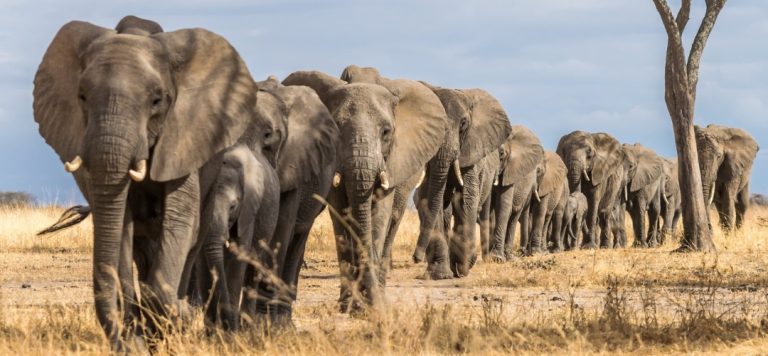
EIA campaigners intervene on behalf of elephants at CITES Standing Committee in Geneva

The second day of the 81st meeting of the CITES Standing Committee (SC81) was an important one for the discussion of issues relating to trade in elephant specimens, on which EIA has been an active and leading voice since 1989.
EIA UK was given the floor four times to express our concerns and recommendations on key elephant documents and we also signed on to two more interventions delivered by partner organisations.
In total, EIA worked with 14 civil society organisations across these six interventions, with EIA US also joining a key technical sub-group meeting as an observer.
EIA Elephants Campaign Lead Rachel Mackenna, intervened advocating for parties to conduct forensic analyses of ivory from large-scale seizures and government-held stockpiles, highlighting how forensic analyses can inform traceability, enforcement and judicial action.
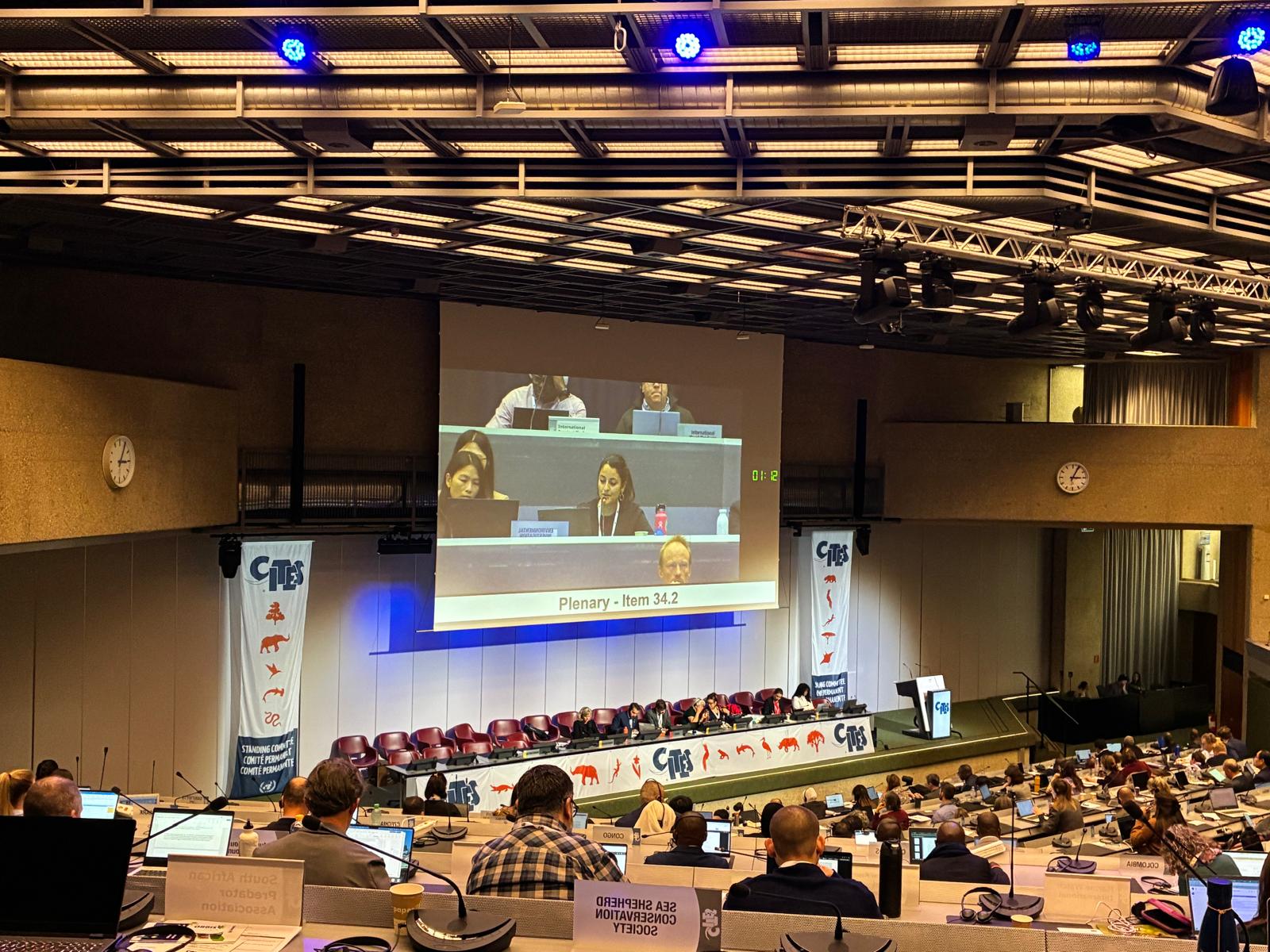
Rachel Mackenna makes an intervention at SC81 (c) EIA
Thanks to strong support from Germany, EIA was invited to suggest specific wording and our proposal was subsequently agreed without any objection by the parties. EIA also welcomed strong leadership by Kenya which resulted in the specific call for enhanced ivory stockpile reporting (for more information, read our Why manage Ivory Stockpiles? briefing).
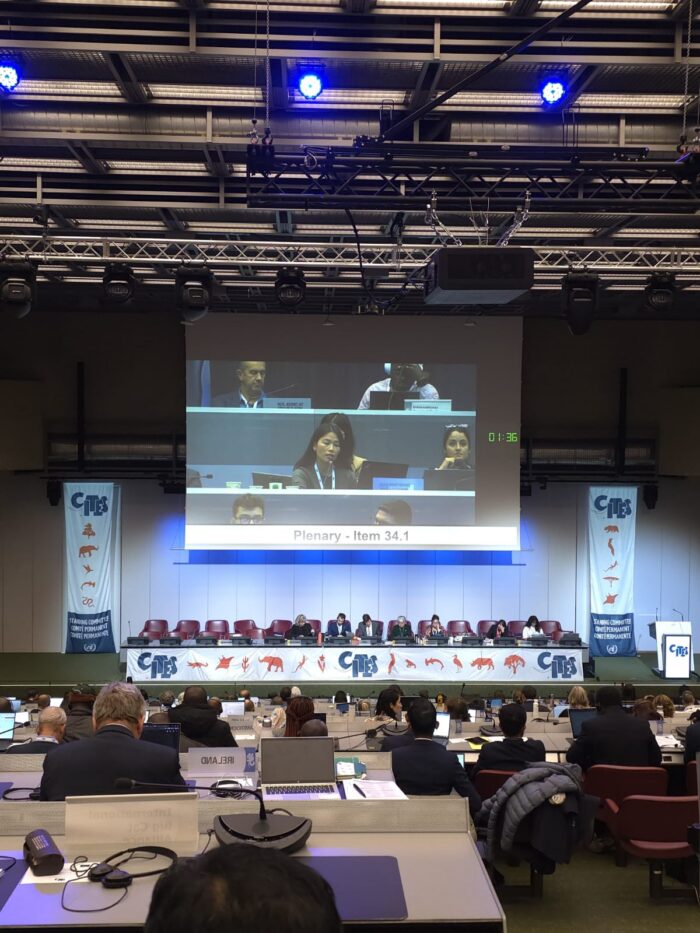
Linh Nguyen makes an intervention at SC81
On the National Ivory Action Plan (NIAP) process, Senior Wildlife Campaigner (Elephants) Linh Nguyen took the mic’ twice. She called for better consistency in how non-reporting of ivory seizure data should be treated and for Angola to revise its NIAP to a National Ivory and Rhino Action Plan (NIRAP) to better tackle the evolving and interconnected threats of ivory and rhino horn trafficking (for more, read EIA’s Recommendations on National Ivory Action Plan).
We welcome the Standing Committee’s decision to include the MIKE ETIS Technical Advisory Group (TAG) in the process of developing of progress indicators and appreciate Germany and Kenya reminding the Secretariat that the MIKE ETIS TAG brings necessary and valuable scientific expertise and their analysis and objectivity is a key component in the NIAP process. We regret that the participatory approach in NIAP revision to parties and on the topic of means of verification, not indicators of progress despite indicators and verification, are tightly connected.
EIA was disappointed that Asian elephants were not discussed at all by the parties. We will renew our efforts to draw attention to the issue again ahead of SC82, when important reporting provisions come into effect.