EIA is at CITES Standing Committee in Geneva to press for action on key endangered species

The 81st meeting of the CITES Standing Committee (SC81) will take place next week (2-6 November) in Geneva, Switzerland.
CITES Parties will have a packed agenda to work through as they consider the implementation of hundreds of decisions adopted at the 20th meeting of the CITES Conference of the Parties (CoP20) last year, in addition to numerous compliance and administrative matters.
EIA campaigners will be on the ground in Geneva to actively engage on a range of issues relating to the protection of Asian big cats, elephants, rhinos and vaquita porpoises, among other key CITES implementation and illegal wildlife trade enforcement issues.
A brief summary of EIA’s SC81 priorities can be found below and you can also read our detailed comments and recommendations to CITES Parties.
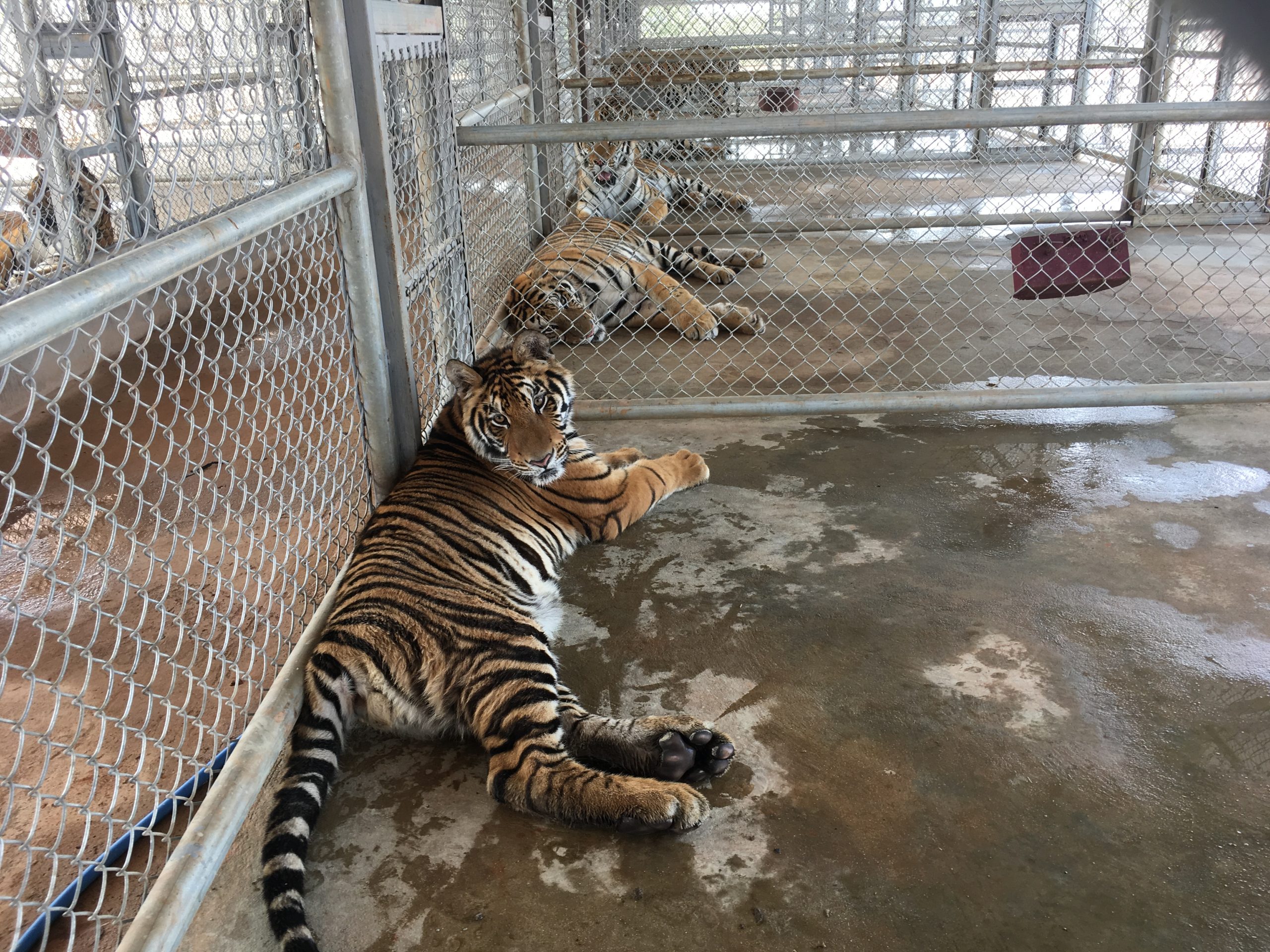
Tiger facility in Laos (c) EIA
While EIA notes that some progress has occurred in Laos in the form of enforcement action against some of the large retail outlets selling illegal wildlife to Chinese tour groups, we believe it is premature to withdraw the recommendation to suspend commercial CITES trade with Laos.
Laos’ CITES compliance issues are extensive and include the open and ostensibly licensed sale of pills stated to contain rhino horn, the illegal trade of tigers from tiger farms including to neighbouring countries and the continued sale of tigers, pangolins and other CITES Appendix-I listed species online and in retail outlets. Where enforcement action against retail outlets has occurred, there is no information to show that the actual businesses and owners of these outlets have been targeted.
The CITES Secretariat has reported that Laos has not provided sufficient information to show investigation of the organised and transboundary wildlife crime networks operating in the country and that the recommendations on tiger farms have not been fully implemented. EIA believes it would be prudent to wait until there is evidence of investigation into the supply chains, the financial flows and punitive measures against the businesses involved in illegal trade in the country before withdrawing trade suspensions.

Captive tigers, China (c) EIA
The trade in parts and products of captive-bred tigers continues to pose a threat to wild tigers, undermining enforcement, demand-reduction efforts and putting at risk progress in wild tiger conservation.
Parties with captive tiger facilities of concern, often referred to as ‘tiger farms’, have been urged for almost two decades to take appropriate action to phase out such operations. Investigations by governments and NGOs have documented how criminal enterprises and networks have profited from trade in the skins, bones, teeth and claws from farmed tigers, converging in online trade chains with parts and derivatives of wild tigers and other big cats.
Following CITES Missions to countries with facilities of concern in 2023 and 2024, the Standing Committee adopted country-specific recommendations to China, Thailand, Laos, Vietnam, South Africa, the USA and Czechia which were to be reported on and reviewed at this meeting.
In addition, following CITES CoP20, Decision 20.189 was adopted to encourage all Parties to adopt a methodical approach to ensure tigers were kept or bred only for primarily conservation purposes and to report on progress towards this goal. The CITES Secretariat has noted that responses received for this meeting were inadequate. Given the long-term nature of the recommendations in Decision 20.189, the Secretariat has proposed that the Standing Committee instructs it to prepare a document to be considered by the CoP to incorporate these recommendations in Resolution 12.5 on Asian big cats.
The Secretariat has also proposed that the Standing Committee request China, Thailand, Vietnam, South Africa and the USA to report on implementation of all outstanding country-specific recommendations directed to them at the next Standing Committee meeting. EIA supports the Secretariat’s recommendations on this issue and suggests further specific information be requested from China and South Africa to assess if CITES recommendations on captive tigers are being implemented.
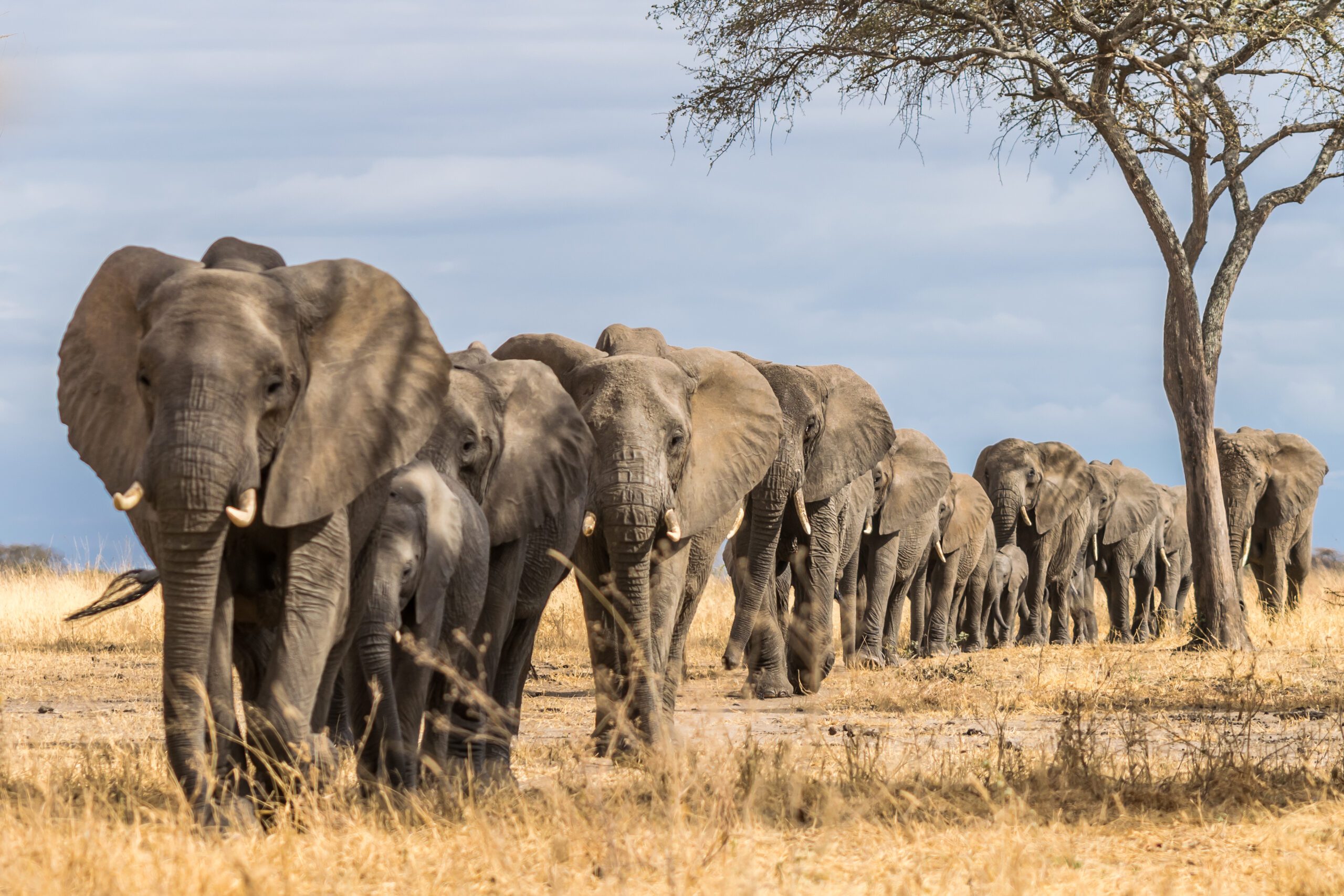
Elephant herd in Tanzania
Ivory trafficking continues to threaten elephant populations. EIA’s data suggests that between 2023 and October 2026, more than 21 tonnes of ivory have been confiscated in 15 large-scale seizures worldwide.
However, data and reporting gaps at CITES leave us with an incomplete understanding of the dynamics of this ongoing trade – including the source of the ivory appearing in recent seizures. At SC81, EIA will therefore emphasise the need for better and more frequent reporting, safeguards for data quality and the need for more objective assessments of progress.
National Ivory Action Plan (NIAP) process
The NIAP process was established to support those countries most affected by ivory trafficking. While EIA welcomes the continued commitment by countries in the process, concerns remain as to how progress is being assessed. To help address this, we will be advocating for indicators and means of verification to be developed, as well as the establishment of an independent advisory body, so that progress can be assessed more objectively. We believe this will lead to more measurable outcomes stemming from the NIAP process, including successful investigations, prosecutions and convictions.
EIA also believes that participation in the NIAP process must keep pace with changing trafficking trends. Recent evidence suggests that Angola and Laos are increasingly linked to both ivory and rhino horn trafficking. To reflect these evolving risks, EIA recommends that both countries expand their existing plans into National Ivory and Rhino Action Plans (NIRAPs), helping ensure that efforts to tackle wildlife crime address both threats together.
This would not be the first time – Vietnam and Mozambique were previously requested to update their NIAPs to NIRAPs to reflect increasing rhino horn trafficking threats.
Elephant Trade Information System (ETIS)
ETIS is the primary source of data on global ivory trafficking trends drawn upon by the CITES community to make important decisions about elephants.
EIA welcomes recent improvements to the revised ETIS Data Validation Protocol but remains concerned about loopholes which would allow seizure data to be excluded from analyses without sufficient justification. A priority for EIA at SC81 will therefore be to safeguard the integrity and independence of ETIS analyses. We are doing this by encouraging Parties to adopt safeguards so that any country requesting the exclusion of data will need to provide legitimate, verifiable evidence in support of their request.
At SC81, EIA will also continue to draw attention to the need for timely, complete and accurate reporting by Parties to ETIS. We are calling for Parties to ramp up reporting of critical information, including trade routes, seizure dates and other identifiable information. Currently, the frequency and quality of reporting to ETIS is inconsistent and this undermines stakeholders’ ability to identify and assess emerging trafficking trends and threats to elephant populations.
Resolution Conf. 10.10 on Trade in Elephant Specimens
Recent data suggests that elephant poaching levels may be declining in parts of Africa. However, major ivory seizures continue to expose the scale, persistence and sophistication of organised criminal networks driving the illegal trade. EIA therefore believes that seizure data should be considered alongside poaching and other indicators when assessing trends in illegal ivory trade and threats to elephant populations.
In addition, EIA is concerned that two of the most important programmes, the Monitoring the Illegal Killing of Elephants (MIKE) and ETIS, continue to rely heavily on short-term funding. This undermines efforts to monitor poaching and other threats to elephants and limits the availability of robust information to guide conservation action. EIA is therefore calling on donors and funding partners to provide sustained, long-term support for these programmes, particularly in Asia, where significant information gaps continue to hamper understanding the scale of illegal trade affecting Asian elephants.
Efforts to combat ivory trafficking are also undermined by the continued existence of legal domestic ivory markets. EIA maintains that all remaining legal markets, including Japan’s, perpetuate demand for ivory and create opportunities for illegal ivory to enter trade. EIA therefore continues to urge countries to close domestic ivory markets that contribute to poaching or illegal trade without further delay.
Finally, EIA will call for stronger reporting requirements, greater transparency and more robust oversight of government ivory stockpiles to reduce the risk of leakage into illegal trade. Persistent gaps and inconsistencies in ivory stockpile reporting, including forensic testing, make it more difficult to understand the potential link between stockpiles and illegal ivory trade. Strengthening stockpile reporting and management is important to prevent ivory from leaking back into illicit markets and to help inform enforcement and investigations.

White rhino with young, Kenya
The main rhino issue up for discussion at SC81 will be the implementation of actions and strategies decided at the CITES Rhinoceros Enforcement Task Force meeting held in Pretoria, South Africa, in spring 2025.
The Task Force developed a suite of actions which countries affected by rhino poaching and rhino horn trafficking should take to address these crimes, ranging from internal and international law enforcement collaboration to demand reduction.
Unfortunately, very few CITES Parties provided information on their implementation of the Task Force outcomes. Only six Parties provided details on their work to put the Task Force outcomes into practice and several of those responses contained little to no relevant information.
To allow CITES Parties the opportunity to consider the best available information on rhino poaching, trafficking, trade and enforcement, and to develop recommendations that will have meaningful impacts, EIA is recommending the Standing Committee to establishe an intersessional working group to develop targeted recommended actions to the next meetings of the CITES Standing Committee and Conference of the Parties.

Vaquita (c) Chris Johnson
Mexico’s totoaba Compliance Action Plan (CAP) was approved by CITES’ Standing Committee in April 2023 but, despite progress, Mexico has not met the goals within it. Many of the provisions in the CAP — including gillnet bans, embarkation site regulation and gear transition — were already established under the 2020 Regulation.
Six years later, key provisions remain unenforced on the ground and illegal fishing which that has led to the near-extinction of vaquita porpoise continues in their habitat. It is the worlds’ rarest marine mammal and only about 10 of them remain.
China and the US both made large seizures of totoaba maws (swim bladders) this year, demonstrating the ongoing and relentless transnational trade responsible for the demise of vaquitas.
There is no time left to save vaquitas. EIA is calling on Parties to implement trade suspension with immediate effect at SC81 until Mexico fully complies with the totoaba Compliance Action Plan (CAP). Further, we encourage the Standing Committee not to accept the application by Mexico to register the captive-breeding operation which would allow breeding of totoabas.