

DONATE

Tag: climate-change

Front cover of the EIA: 25 years commemorative booklet
Report

EIA: 25 Years

A special commemorative booklet celebrating EIA’s 25th anniversary. As well as offering a selection of campaign highlights from the past two-and-a-half decades, it also looks in some detail at the activities of the primary campaign areas of Climate, Elephant, Forests, Oceans and Tigers

Report

Chilling Facts

Supermarket refrigeration is making a worrying contribution to climate change. The main cooling gases used by supermarkets – hydrofluorocarbons (HFCs) are many thousands of times more powerful than carbon dioxide in terms of their global warming impact. Our conclusion? It’s time for the supermarkets to take action

Report

Environmental Crime

A report showing the scale and impacts of environmental crime and calling for strong political will to tackle it as a matter of urgency. Environmental crimes broadly include: illegal trade in wildlife, smuggling of ozone- depleting substances, illicit trade in hazardous waste, illegal fishing and illegal logging

Report

Facing the F-Gas Challenge: The Need for a Global Phase-Out of HFCs

A report highlighting the importance of controlling the impact of man-made fluorinated gases on the climate. We argue there is an enormous opportunity here – but also a risk that substitute technologies will focus on hydrofluorocarbons (HFCs) which, could have an equally negative impact on climate change

Report

ODS Tracking

This report presents a feasibility study for developing systems for monitoring transboundary movements of controlled ozone-depleting substances (ODS) between the Parties to the Montreal Protocol. it includes a series of in-depth interviews with government officials and industry personnel
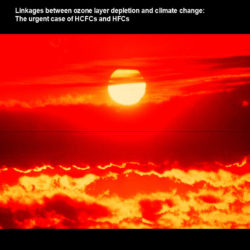
Front cover of our report entitled Turning Up the Heat: Linkages between ozone layer depletion and climate change: The urgent case of HCFCs and HFCs
Report

Turning Up the Heat

A report on the linkages between ozone layer depletion and climate change, and the urgent need to address HCFCs and HFCs These two issues have generally been treated as separate problems with separate solutions, resulting in outdated and uncoordinated policy responses