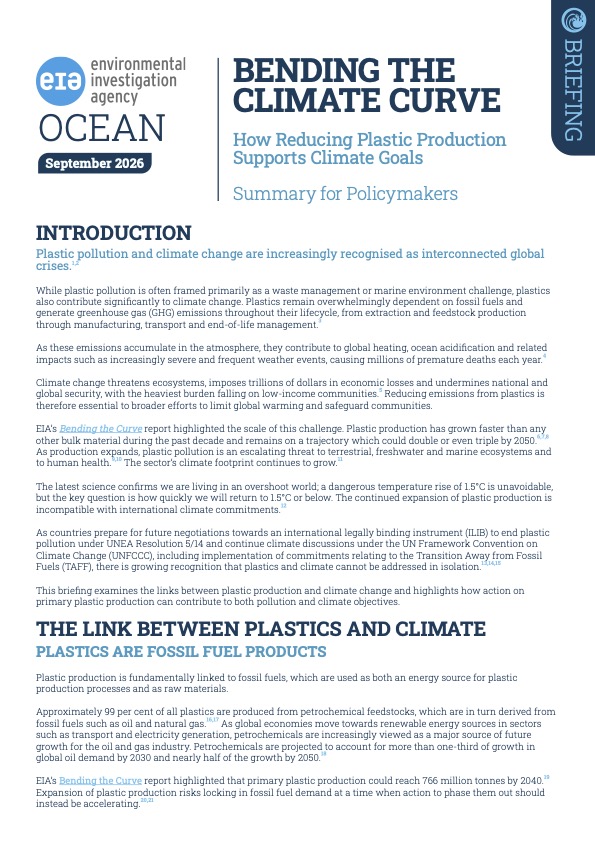
Bending the Climate Curve
How reducing plastic production supports climate goals. Summary for Policymakers. Plastic pollution and climate change are increasingly recognised as interconnected global crises.
- Areas of work:
- Campaigns:


How reducing plastic production supports climate goals. Summary for Policymakers. Plastic pollution and climate change are increasingly recognised as interconnected global crises.
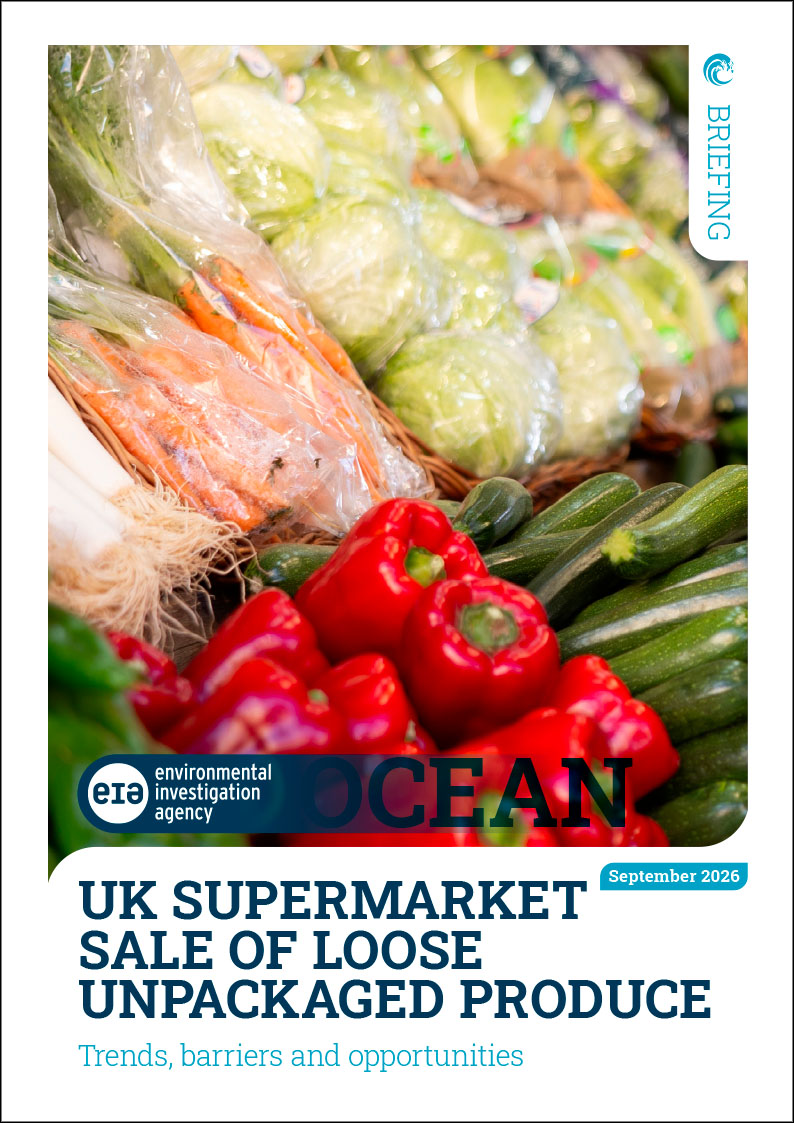
UK supermarkets have made limited progress in reducing plastic packaging for fresh fruit and vegetables and transparency on loose produce sales has worsened since EIA’s last comparable dataset in 2021. While many grocery retailers have signed up to the UK Plastics Pact’s voluntary commitment to sell at least 30 per cent of uncut fresh produce […]
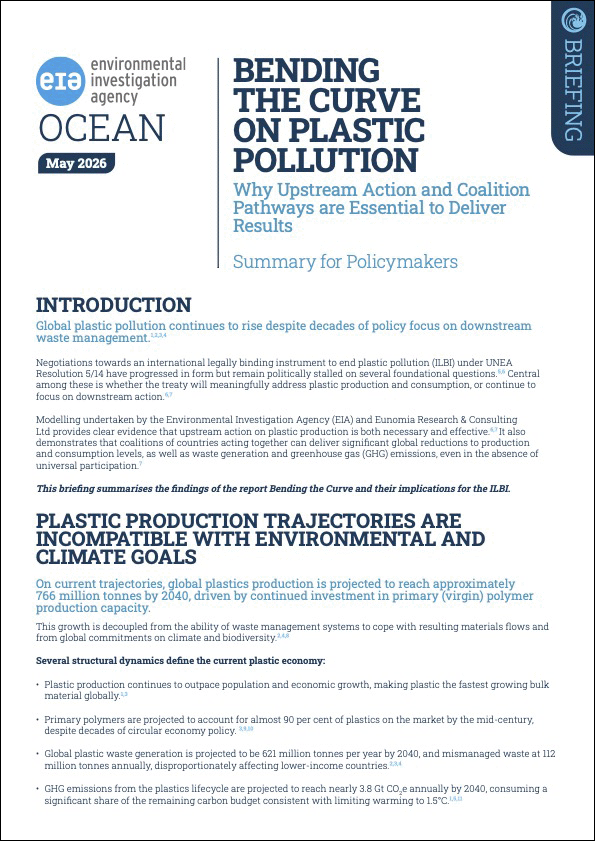
Why upstream action and coalition pathways are essential to deliver results Global plastic pollution continues to rise despite decades of policy focus on downstream waste management. Negotiations towards an international legally binding instrument to end plastic pollution (ILBI) under UNEA Resolution 5/14 have progressed in form but remain politically stalled on several foundational questions. Central […]
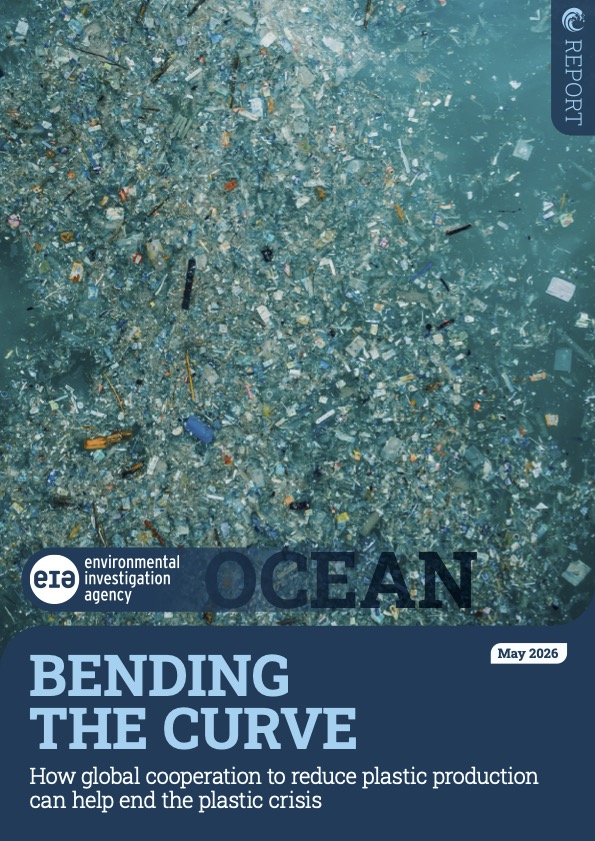
How global cooperation to reduce plastic production can help end the plastic crisis Global plastics negotiations may be stalled, but Bending the Curve shows countries do not need full consensus to act. New EIA modelling finds that coalitions of ambitious nations can significantly cut plastic production, pollution and emissions without universal agreement. If current trends […]
This briefing, developed with the support of more than 70 civil society organisations ahead of OEWG-15 to the Basel Convention, outlines why textile waste has become a major governance gap in the global waste trade system. It highlights serious concerns for environmentally sound management and calls on Parties to the Basel Convention to close this loophole by subjecting textiles to stronger international oversight.
What happened to effectiveness evaluation and science-based assessment in the plastic treaty negotiations? UNEA Resolution 5/14 established the mandate for a legally binding instrument to end plastic pollution, grounded in a comprehensive approach based on the full lifecycle of plastic. It also explicitly called for periodic assessment of the “effectiveness of the instrument in achieving […]