UN summit takes a big step towards tackling crimes affecting the environment

The international community today (23 October) took a giant leap towards a more effective response to tackling the scourge of organised, transnational crimes that affect the environment.
Several countries at the 13th Session of the Conference of the Parties (COP) to the United Nations Convention against Transnational Organized Crime (UNTOC) proposed a Resolution to negotiate an additional Protocol to UNTOC on Crimes that Affect the Environment (CaE).
A week of negotiations took place at the UN complex in Vienna, with the intention of reaching an agreement. Voting on such matters is almost unheard of at UNTOC, but took place after it became clear consensus would not be possible.
 The USA put forward three amendments to the original proposal, which were roundly rejected. The original Resolution was then passed, with 83 Parties voting for it and only 12 against.
Having first raised the serious, organised nature of environmental crime almost 20 years ago, EIA has continued to be instrumental in the ongoing discussions on a Protocol, including through support for the Intergovernmental Expert Group on CaE.
As part of the Coalition for Multilateral Action against Crimes that Affect the Environment led by Brazil, EIA was in the room when the historic vote was held.
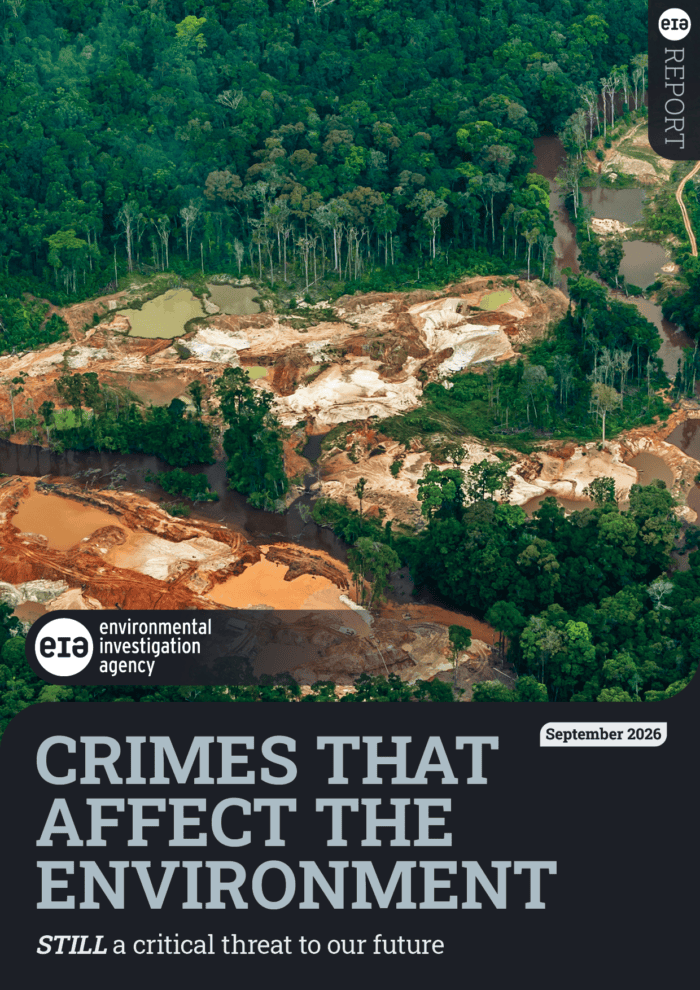
Negotiations will now take place on the additional Protocol which aims to address illicit trafficking in wild fauna and flora, including timber and timber products, the illegal mining of and illicit trafficking in minerals and precious metals as well as illicit trafficking in waste.
Such a Protocol will help to harmonise national laws, support extradition of suspected offenders and ultimately treat CaE as serious and organised crimes, making them predicate offences to financial crimes such as money laundering.
After the meeting agreed the Resolution, EIA Securing Criminal Justice Programme Lead Justin Gosling said: “We must acknowledge the incredible effort by colleagues across several civil society organisations which have worked tirelessly to keep this issue on the international agenda, coordinating discussions with States and maintaining the momentum that has led to this point.
“The negotiations to come will not be easy. There are several issues that continue to be controversial, including defining which crimes will ultimately be addressed under the Protocol – critical issues including illegal fishing, the trafficking of climate-damaging HFC gasses and clearing forests to produce commodities such as palm oil, in violation of the rights of Indigenous Peoples and local communities, are not explicitly mentioned, despite the devastating harm these acts cause to the climate and biodiversity.
“The outcome of the negotiations, which will take place over two years, will determine what happens next – but we don’t have time to wait. EIA will continue to work to improve the global response to serious and organised environmental crime, calling upon countries to ensure effective investigations that gather evidence of illicit finances and support robust criminal justice responses that prevent the devastating harm of environmental crime in the long term.”
The Resolution was proposed by Bolivia (Plurinational State of), Brazil, Colombia, Costa Rica, Democratic Republic of the Congo, Ecuador, Mauritania, Panama, Peru, Sao Tome and Principe and Uruguay.