European Chemical Agency supports EU-wide restriction on ‘forever chemicals’
The European Chemical Agency (ECHA) has published its expert opinions in support of EU-wide restrictions on per- and polyfluoroalkyl substances (PFAS, also known as ‘forever chemicals’), including fluorinated gases.
The long-awaited opinions were drawn up by its Risk Assessment Committee (RAC) and Socio-Economic Analysis Committee (SEAC) on the proposed EU universal PFAS restriction.
The proposal to put restrictions on the production, placing on the market and use of PFAS was submitted by Germany, the Netherlands, Sweden, Norway and Denmark in 2023.

The European Chemicals Agency HQ in Helsinki (c) Vadelmavene
During the initial consultation, ECHA received more than 5,600 comments, an overwhelming response demonstrating the level of interest in this proposal.
In June 2025, ECHA published a 290-page updated background document to the proposal and now, after a detailed review, its expert committees have released their opinions.
The RAC final opinion concluded that PFAS pose a risk to human health and the environment, while both committees agreed that an EU wide, group-based PFAS restriction is the most appropriate way to address this risk.
The draft SEAC opinion concluded that, with some time-limited derogations, such a restriction is implementable, manageable and enforceable. A further consultation on the draft opinion is open until 25 May.
So, what did these chemical expert bodies say about fluorinated gases (more commonly called F-gases)?
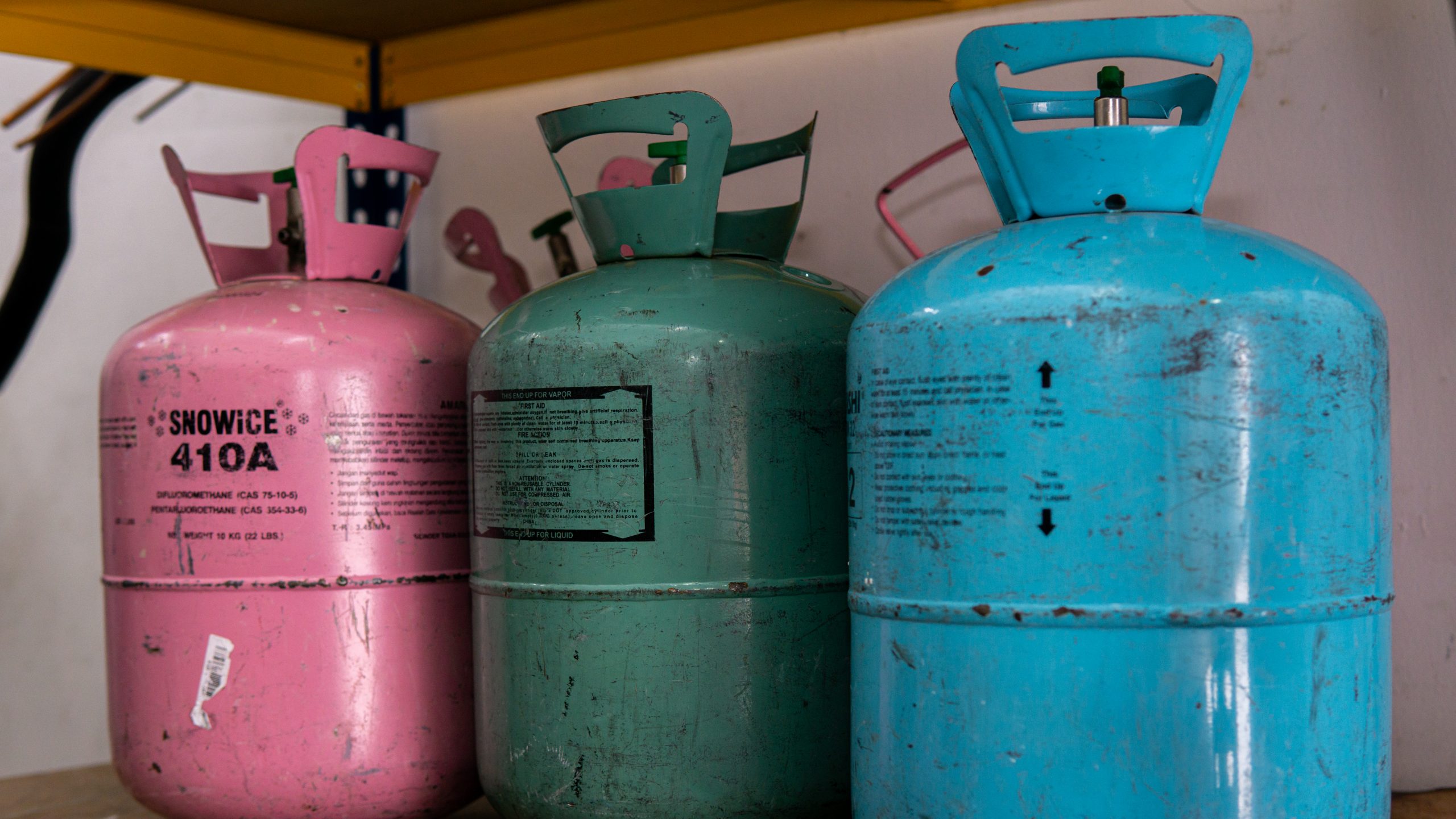
EIA is tackling the growing problem of climate-damaging refrigerant F-gases
Despite the best efforts of the fluorochemical industry, which has been arguing that F-gases should be treated separately, both committees agreed that a PFAS restriction including F-gases is the most appropriate measure to manage the ongoing risk:
EIA Climate Programme Leader Clare Perry said: “ECHA’s expert opinions are a wake-up call – F-gases are not just a climate threat, they’re part of the PFAS crisis.
“As we celebrate the tenth anniversary of the adoption of the Kigali Amendment to phase down HFCs under the Montreal Protocol, the world’s most effective environmental treaty needs to face this reality head on before we trade one global disaster for another.”
The public consultation on the draft SEAC opinion is now open until 25 May. The information will contribute to the adoption of a final opinion by SEAC, expected by the end of 2026. At that point, the opinions will be formally submitted to the European Commission, which will propose a restriction for discussion and vote in the REACH Committee.
EIA encourages all companies that have pioneered non-fluorinated alternatives to F-gases, including natural refrigerant alternatives in the cooling sector, to submit any additional evidence of these sustainable, future-proof alternatives to the consultation.
The ECHA opinions provide valuable insights for the international community. The EU F-gas Regulation is the most ambitious in the world, but even so it allows for an unnecessary transition to PFAS substances in many cases.
The expert opinions demonstrate that not only is it necessary to address the PFAS risks of F-gases alongside the climate risks, but that it is possible to do so. Policy-makers in other parts of the world should learn from this and prioritise a transition to non-fluorinated alternatives as they phase down HFCs, so that a climate problem is not swapped for a PFAS problem.
Meanwhile, at the international level, the Montreal Protocol is yet to properly address the issue of PFAS.
In light of the conclusions from ECHA, it is clear that it is time for this to change and the forthcoming quadrennial assessments, due at the end of 2026, are an obvious starting point for this evaluation.
For a handy overview of the EU F-gas Regulation, read our concise guide.