EIA responds to the calls from Spanish retail group to delay the F-gas phase-out


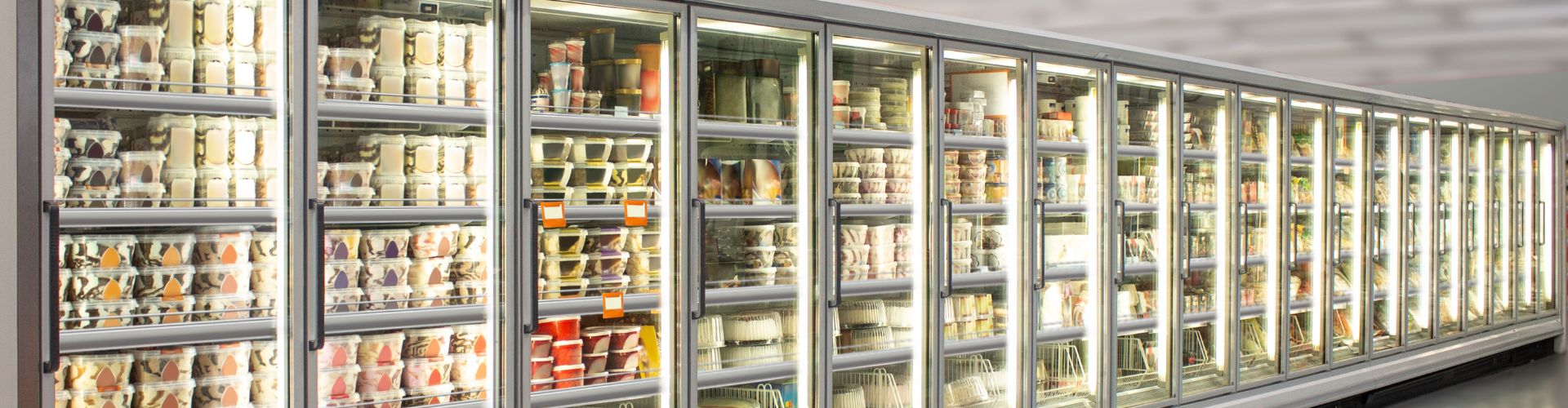
Due to the damage done to our climate, the EU is phasing out the use of what are known as F-gases – commonly used in air-conditioning units and the refrigerators and cooling cabinets in supermarkets – to replace them with low-emissions refrigerants by 2030.
But today (23 July), a major industry group in Spain representing the grocery trade has issued a called for a delay the phase-down of F-gases in retail settings.
Members of the Spanish Association of Distributors, Self Service and Supermarkets (ASEDAS), which account for more than 70 per cent of the country’s total food distribution sector, claims the regulations have not taken into account the cooling needs in countries with high ambient temperatures, the shortage of trained technicians to carry out the transition to sustainable refrigerants and the scarcity of ‘transition gases’.
However, according to the most recent reporting by ATMO, “the global market accelerator with a mission to clean up cooling”, natural refrigerants are in plentiful supply in Europe and 34 per cent of all food retail stores in Europe are using CO2 systems, including in countries that experience high temperatures. These numbers are increasing year-on-year.
Analysis by EIA shows that cooling is a major part of food retailer climate impacts, accounting for as much as 69 per cent of Scope 1 and 2 emissions. As well as removing F-gas emissions, natural refrigerant systems can also be more energy efficient, resulting in additional savings in some cases up to €27m a year, with retailers reporting pay back periods of four to 10 years.
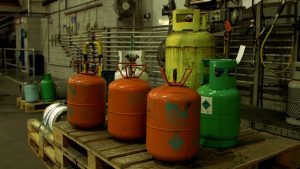
Illegal HFC cannisters ©️ EIA
Supermarket chains such as Carrefour and Jerónimo Martins, which have stores in countries that experience extreme heat such as France, Portugal and Colombia, are among these retailers. EIA’s engagement with another retailer, METRO AG, noted that stores with CO2 systems are more resilient to the heat, dealing with temperatures above 40°C.
Other existing mechanisms to phase down F-gases are already in place in Spain. EIA senior climate campaigner, Fionnuala Walaravens, said: “These calls from ASEDAS risk crippling the very retailers they claim to protect. Supermarkets tend to use the most polluting types of F-gases which are already heavily taxed in Spain, making F-gases a costly choice. Ongoing use of F-gases by supermarkets is linked to widespread illegal and contaminated refrigerants.
“Leading retailers themselves are reporting huge operational savings that come from switching to natural refrigerants, why undermine this?”
Spain is leading Europe in its efforts to accelerate its training schemes for certified technicians, with data from the Air Conditioning and Refrigeration European Association revealing that about 85 per cent of certified installers are already trained to work with natural refrigerants.
ECODES Project Manager María Carrasco, said: “The concerns raised by the sector must be addressed, but not by weakening or delaying the F-gas Regulation. Spain and the EU should instead accelerate training, certification and investment, turning the transition into an opportunity to create skilled, local and non-offshorable jobs.”