EIA at major conference to push for action on crimes that affect the environment


EIA campaigners will be at the 13th Session of the Conference of the Parties to the UN Convention against Transnational Organized Crime (UNTOC), taking place in Vienna next week (19-23 October).
While there they will be engaging with governments, UN agencies and civil society across the full range of environmental issues that EIA has addressed since 1984, spanning our work on climate, forests, oceans and wildlife, from illegal trade in climate-damaging gases and timber to wildlife trafficking, waste crime and illegal fishing.
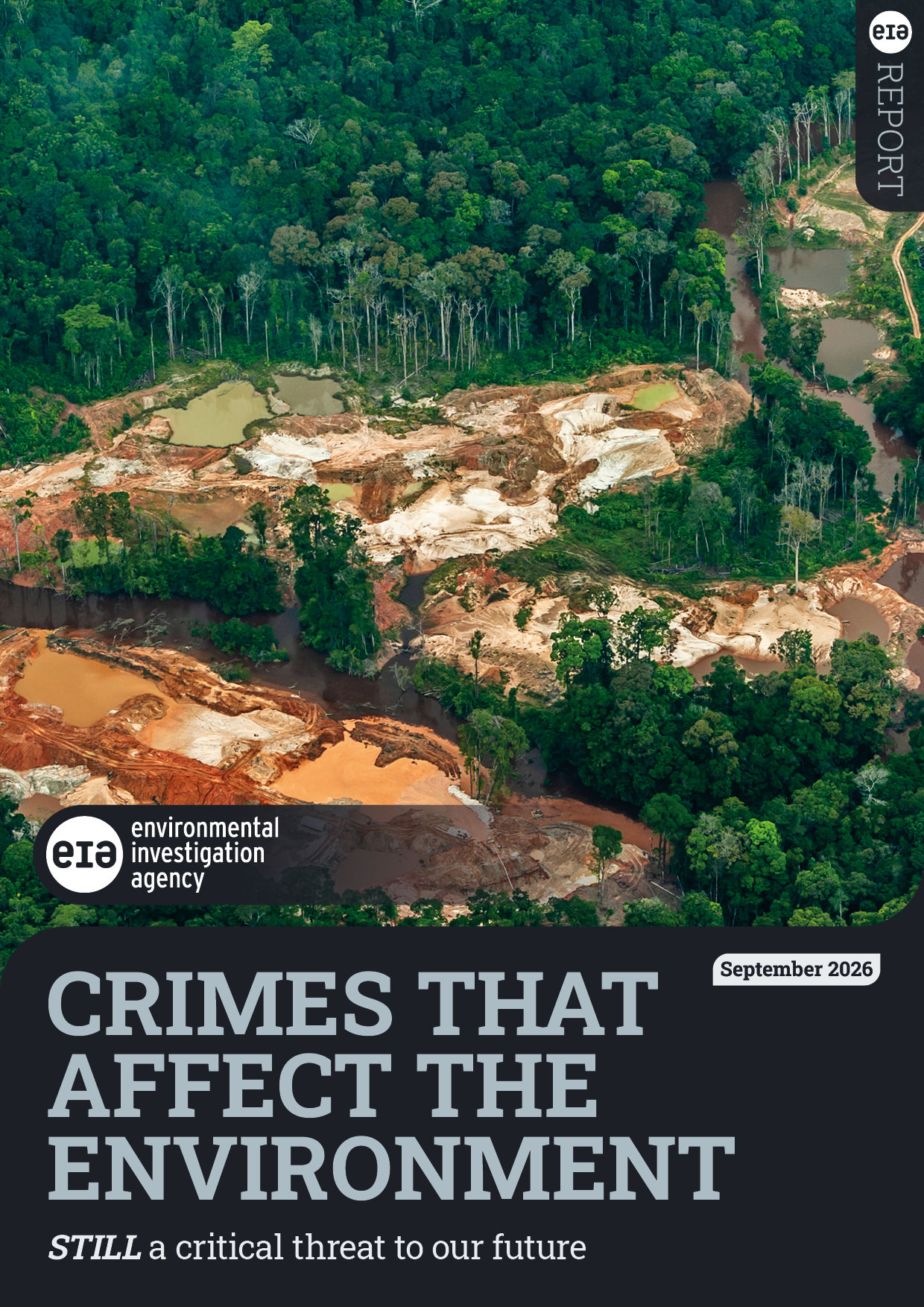 Our recent report, Crimes that Affect the Environment – STILL a critical threat to our future, finds that measures we called for almost 20 years ago have gone largely unheeded.
Instead, crimes that affect the environment (CAE) have grown more sophisticated, more lucrative and more damaging. They are driven by profit, enabled by corruption and carried out by organised criminal networks operating across source, transit and destination countries.
The failure is not one of available tools. UNTOC already obliges Parties to criminalise organised criminal activity, cooperate on extradition and mutual legal assistance and confiscate criminal proceeds. What has been missing is political will, resourcing and coordination.
EIA Securing Criminal Justice Programme Lead Justin Gosling said: “Crimes that affect the environment are serious, organised crimes. It is time the Convention built to fight organised crime treated them that way.”
At CoP13 we will urge Parties to act on the recommendations in our report:
Parties to the Conference will debate a Resolution which proposes the establishment of a committee to discuss a new Protocol on some forms of environmental crime. Such a Protocol could improve international cross-border cooperation, joint investigations and asset recovery, address corruption and money laundering and support harmonised offences and penalties.
We urge Parties to call for the inclusion of a breadth of crimes driving climate change, biodiversity loss and pollution, noting that defining the precise scope will take time to negotiate.
The case for a protocol is strong, and the conditions for its success must be built in from the outset. We therefore urge States to support the Resolution, opening the door for continued discussions and negotiations.
EIA campaigners in Vienna are available to the media for comment and briefings: