Bear bile and rhino horn products openly on sale in Laos despite international bans
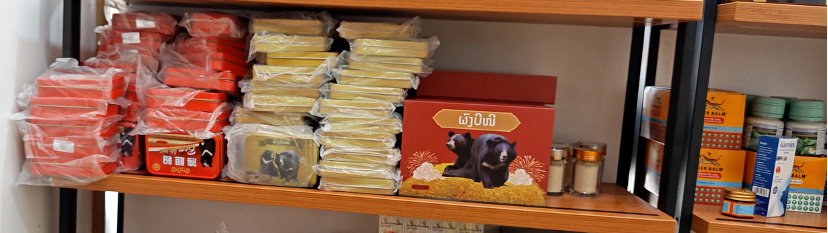
Shops in Laos are openly selling illegal wildlife products containing rhino horn and bear bile in defiance of domestic laws and internationally agreed commitments, an undercover investigation by EIA has revealed.
The products – on display in shop windows and, in some cases, advertised on massive posters on the sides of nearby buildings – make a mockery of the Laotian Government’s promises to implement edicts from the Convention on International Trade in Endangered Species of Wild Fauna and Flora (CITES) to ban such products.
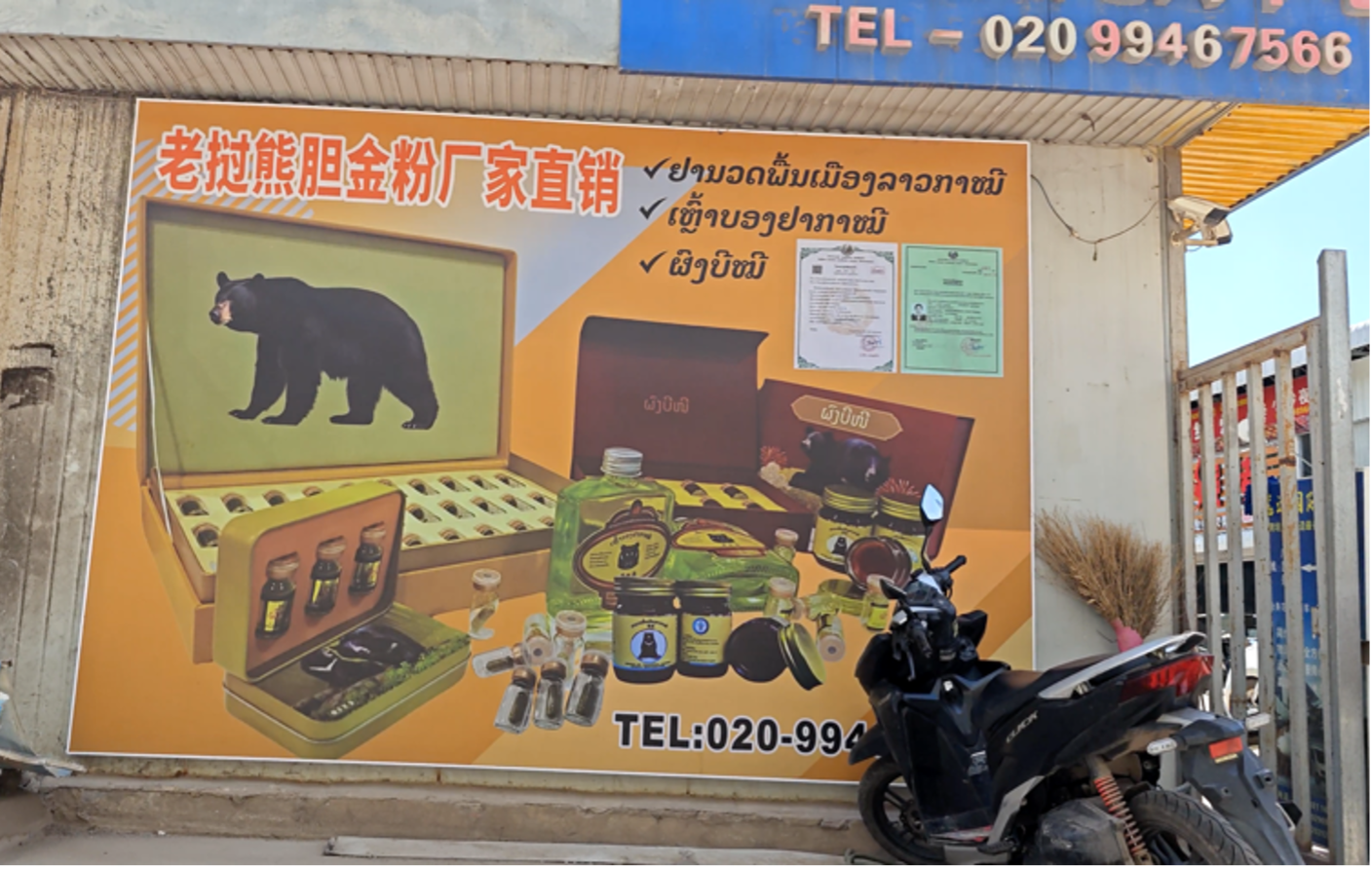
Laos XP openly advertises its locally made bear bile medicine in Laotian and Chinese on a street poster on the side of building next to its shop in Sanjiang (c) EIA
EIA investigators visited several retail outlets in the Sanjiang area of the capital Vientiane, favoured by Chinese tourists and residents.
One business, Laos XP, promoted its own brand of traditional Chinese medicine pill Angong Niuhuang Wan by claiming it contains rhino horn and its own make of two types of bear bile medicines.
EIA Wildlife Campaign Leader Debbie Banks said: “We were shocked by what was offered for sale over the counter and what was displayed on shelves, given it is supposed to be against the law.”
Incredibly, Laos XP appears to have been licensed by the Laos Government to make bear and rhino horn products.
In May 2025, the owner celebrated on the company’s WeChat account after securing permits from the Ministry of Health. He posted certificates from the Lao Food and Drug Department stating the products met appropriate standards and further confirmed bear bile and rhino horn in the ingredients.
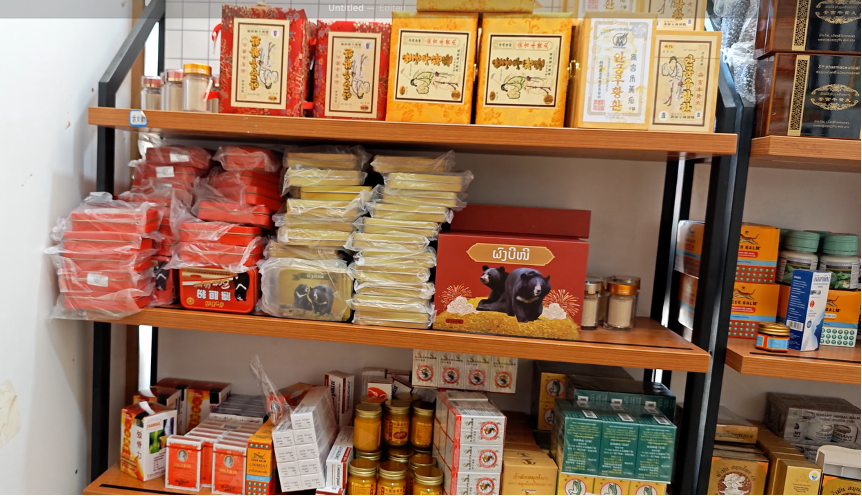
On the top shelf in the shop are three North Korean rhino horn products, with the brown and black box of the locally produced product visible on the right. On the second shelf, on the far left is another Laotian brand of bear bile product alongside the two bear bile products produced by this company (c) EIA
Banks added: “Laos is currently under trade sanction by CITES for non-compliance with its directives and is not allowed to import or export any CITES-listed species for commercial purposes.
“Openly selling illegal wildlife products is yet another egregious example of CITES non-compliance in Laos. There’s a long way to go before members of CITES should consider lifting the current trade suspensions. Evidence of effective enforcement is urgently required.”
Alongside Laos XP’s own brand products is a North Korean brand of Angong Niuhuang Wan, previously documented by EIA for sale in Sanjiang and online, along with another Laotian brand of bear bile medicine.
Laos has no rhino population, meaning that if the licenses issued for the rhino products are genuine, then the Government has effectively sanctioned commercial trade of a wildlife product which CITES does not allow it to import for commercial purposes.
The company’s WeChat account also openly documents the promotion of its rhino and bear products to China, posting from industry expos in the Chinese cities of Kunming and Nanning in June and September 2025 respectively, with the product packaging in plain view. International trade in rhino horn products is prohibited by CITES.
In October 2025, the company presented Laos Prime Minister Sonexay Siphandone with a gift basket in which a bear bile product was visible.
Also offered for sale on the company WeChat account is a powder claimed to be made with ground pangolin scales. It is not known if this product has been licensed and certified.
As parties to CITES gather for the 79th Meeting of the CITES Standing Committee (CITES SC79) on 23 November in Samarkand, Uzbekistan, immediately prior to the 20th Conference of the Parties (CITES CoP20), the matter of Laos’ non-compliance of CITES will be under the spotlight.