
Don’t let the EU tear down nature protection.
The European Commission wants to roll back vital environmental protections – and they’re asking for your opinion. We have 10 days to speak up before it’s too late.
Across Europe, nature is already struggling. Forests are thinning, rivers are drying, wildlife is vanishing. We’re losing clean air, safe water, and the green spaces we rely on. And now, the Commission wants to weaken the very laws meant to protect nature and people.
Some decision-makers call it “simplification” or “cutting red tape”, when in truth it’s dismantling our key environmental protections, one by one. What’s actually being simplified is the path for those who want to profit from the destruction of nature at everyone’s expense.
And they are doing it quietly, when most people are away. In the middle of the summer, the European Commission launched a so-called ‘Call for Evidence’, asking companies, organisations and citizens whether EU environmental laws should be weakened.
A couple years ago, the EU Deforestation Regulation (EUDR) was passed to halt global deforestation. The EUDR keeps deforestation out of your coffee, chocolate and furniture. Forests protect us from climate chaos, let’s keep EU environmental laws strong to protect them
This is your chance to speak up.
Update
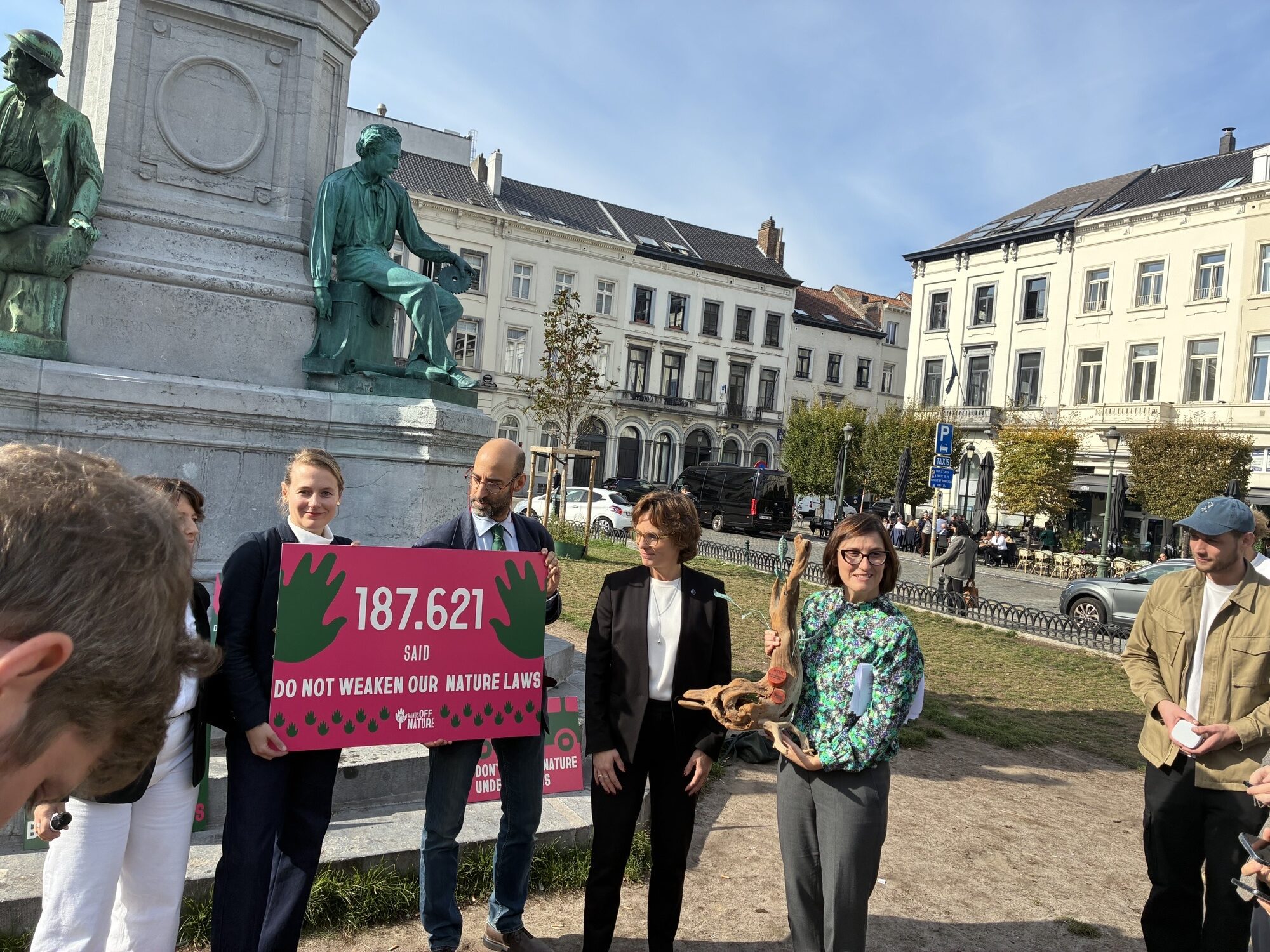
We joined campaigners to hand over the 187,000-strong petition to EU Environment Commissioner
Our Forests team was in Brussels yesterday (1 October) with other NGOs as part of the collective #handsoffnature campaign to hand over almost 200k signatures to EU Environment Commissioner Jessika Roswall.
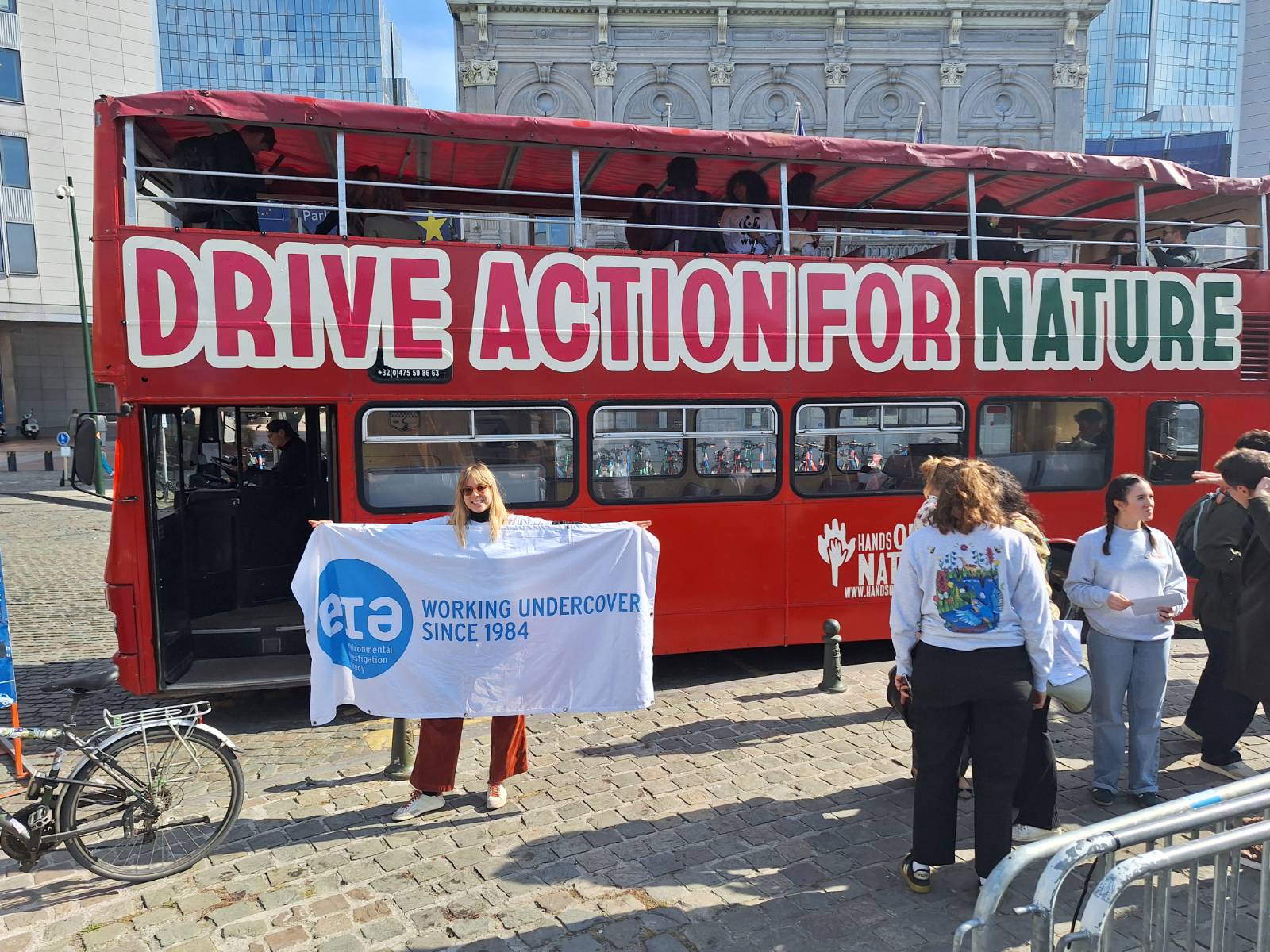
We joined a bus ride around Brussels with fellow campaigners, MEPs and journalists to remind policy-makers that the EU needs to protect its laws safeguarding nature and not dismantle or dilute them.
The European Commission has proposed new measures – widely referred to as its fourth simplification Omnibus – which it claims will save EU companies €400 million in annual administrative costs by easing compliance obligations and freeing up resources for growth and investment.
But we are deeply concerned that in practice, ‘simplification’ will effectively mean watering down and weakening hard-won legislation.