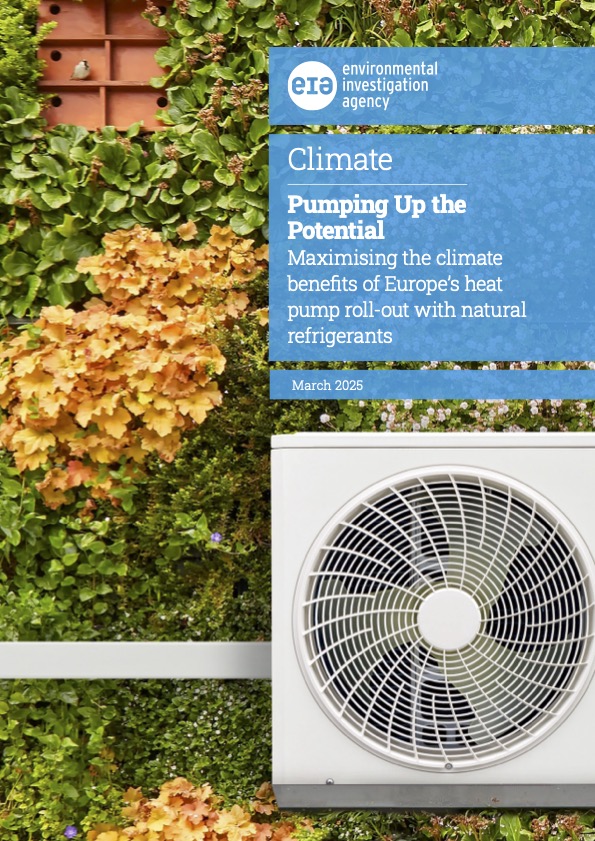
Pumping Up the Potential
How to maximise the climate benefits of Europe’s heat pump roll-out with natural refrigerants.
- Areas of work:
- Campaigns:

How to maximise the climate benefits of Europe’s heat pump roll-out with natural refrigerants.
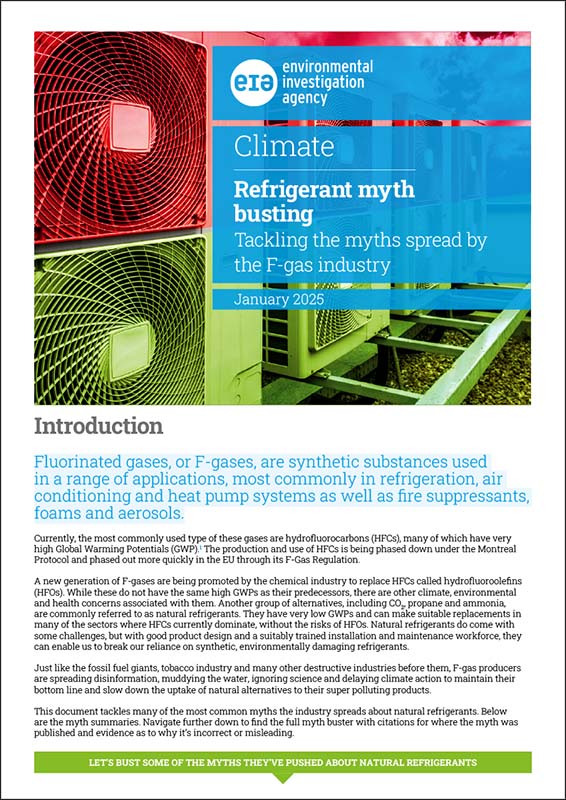
This new briefing busts some of the myths being pushed about the viability of alternative natural refrigerants.
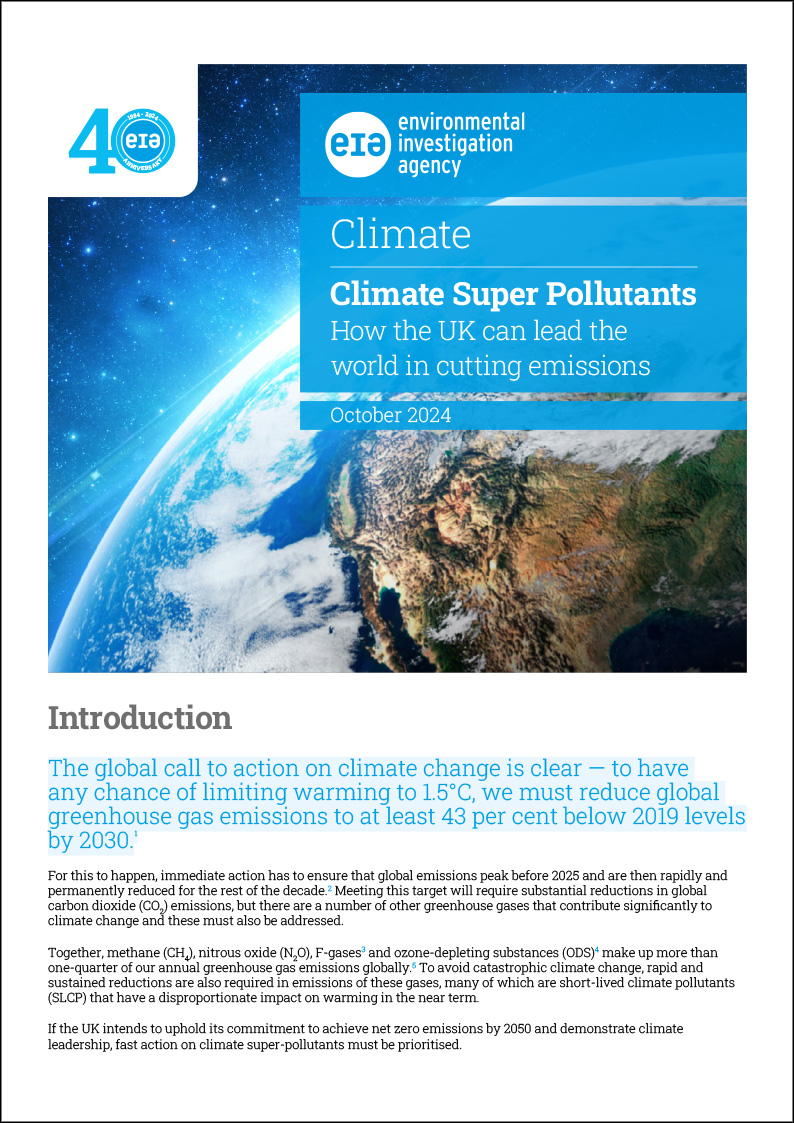
If the UK intends to uphold its commitment to achieve net zero emissions by 2050 and demonstrate climate leadership, fast action on climate super-pollutants must be prioritised.
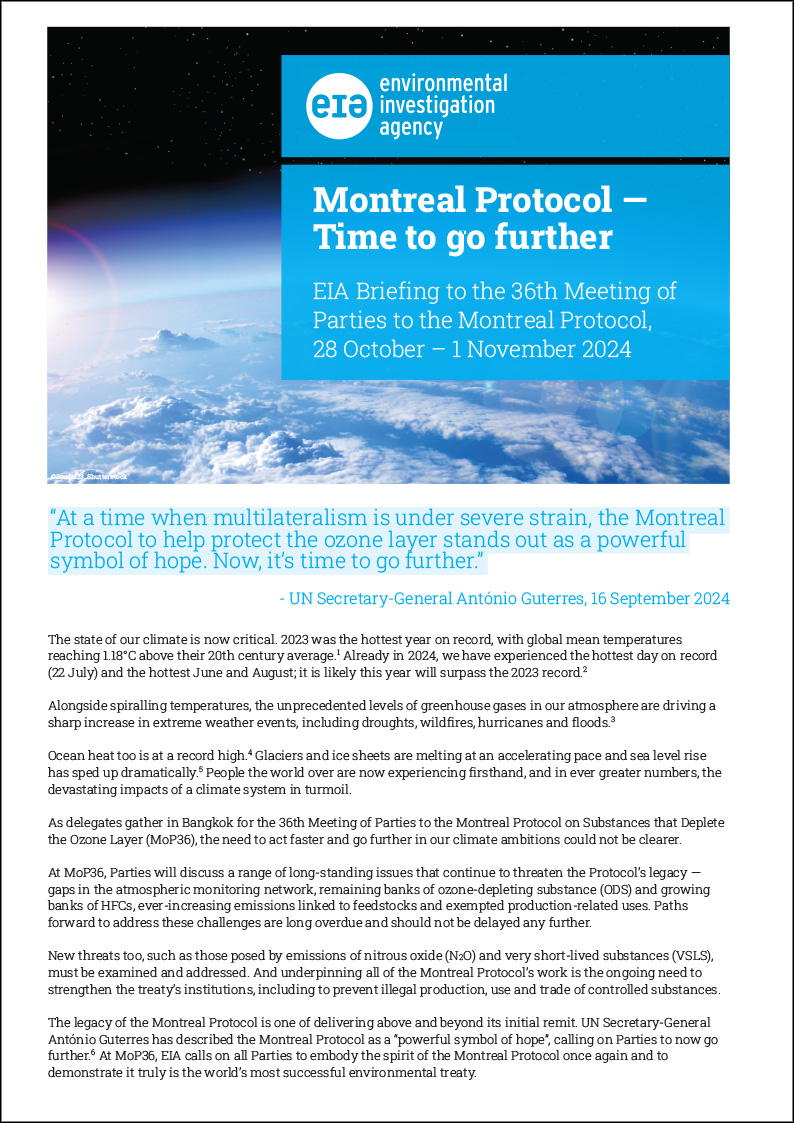
The legacy of the Montreal Protocol is one of delivering above and beyond its initial remit. UN Secretary-General António Guterres has described the Montreal Protocol as a “powerful symbol of hope”, calling on Parties to now go further. At MoP36, EIA calls on all Parties to embody the spirit of the Montreal Protocol once again and to demonstrate it truly is the world’s most successful environmental treaty.
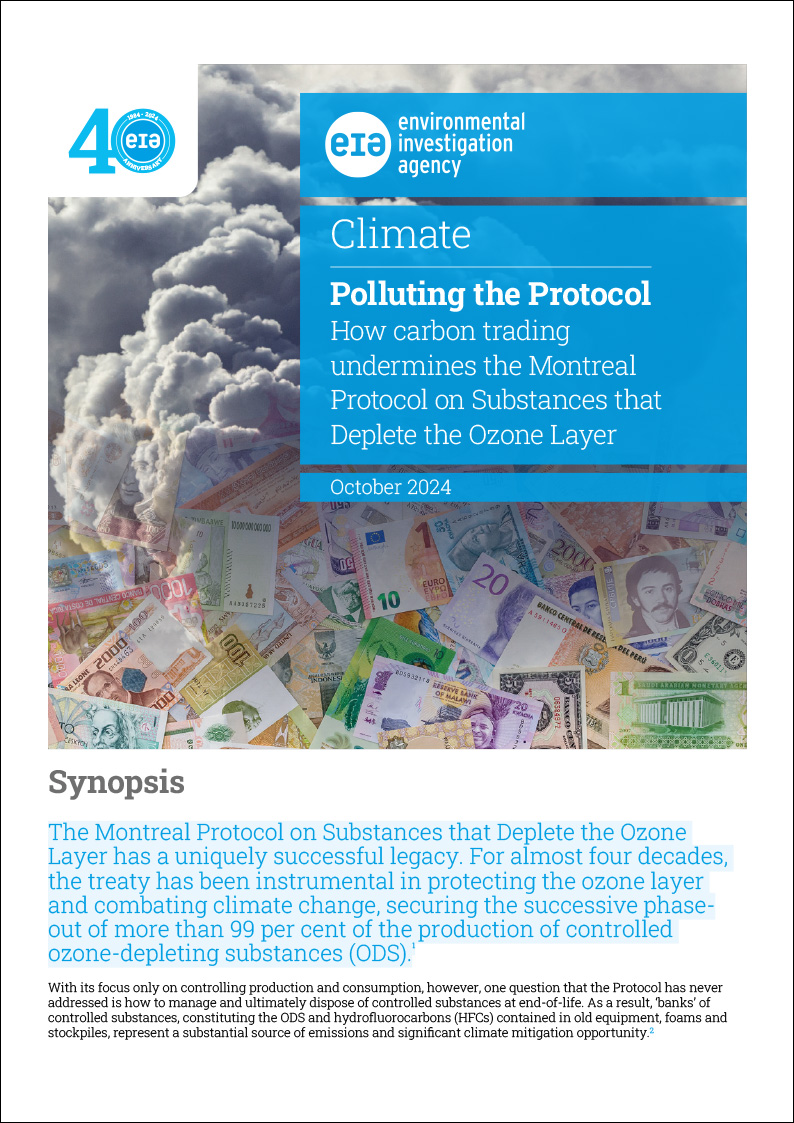
The Montreal Protocol on Substances that Deplete the Ozone Layer has a uniquely successful legacy. For almost four decades, the treaty has been instrumental in protecting the ozone layer and combating climate change, securing the successive phaseout of more than 99 per cent of the production of controlled ozone-depleting substances (ODS).
This briefing outlines EIA’s concerns over carbon trading and the sale of carbon offset credits to fund activities related to the management and destruction of ozone depleting substances (ODS) and hydrofluorocarbons (HFCs).