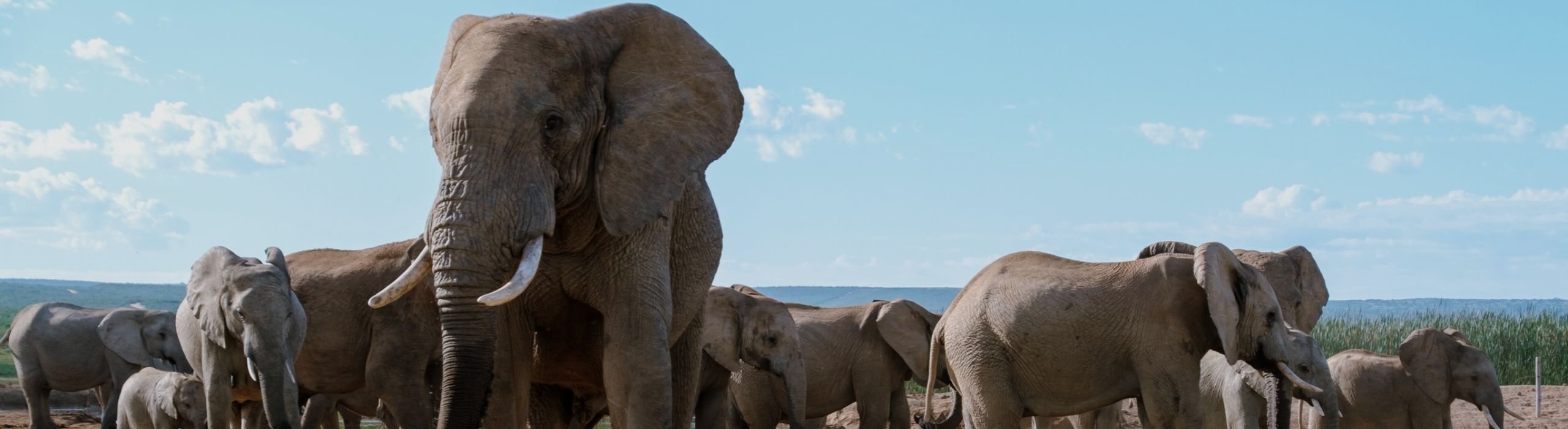
Appeal: Help us Tackle Wildlife Crime
Beyond Africa: a global problem
Our latest report, ‘Beyond Africa’, investigates the illegal wildlife trade centred around West and Central Africa. In this region, Nigeria has become a key trafficking hub due to corruption, weak law enforcement, and its advanced air and sea transport links.
Elephant ivory and pangolin scales are sourced from across Cameroon, the Democratic Republic of the Congo, the Central African Republic, Gabon, Chad and the Republic of the Congo, before being smuggled into Nigeria for export.
But the problem goes far beyond Africa and even beyond wildlife. Trafficking networks operate seamlessly across borders, killing Africa’s wildlife to satisfy demand in Asian markets.
We’re also seeing increasing links between wildlife crime, the drugs trade and money laundering. To tackle this complex web of organised crime, national and international organisations must also cooperate and share information across borders.
We can’t afford to lose a single endangered animal. Every elephant and every pangolin is valuable. Please support us now as we campaign for a united, international multi-agency approach to dismantle the criminal networks that profit from the illegal wildlife trade.
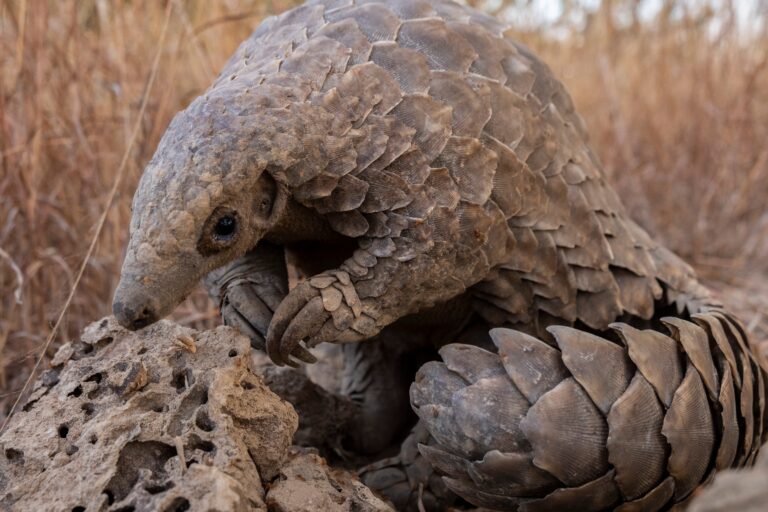
Pangolins at risk
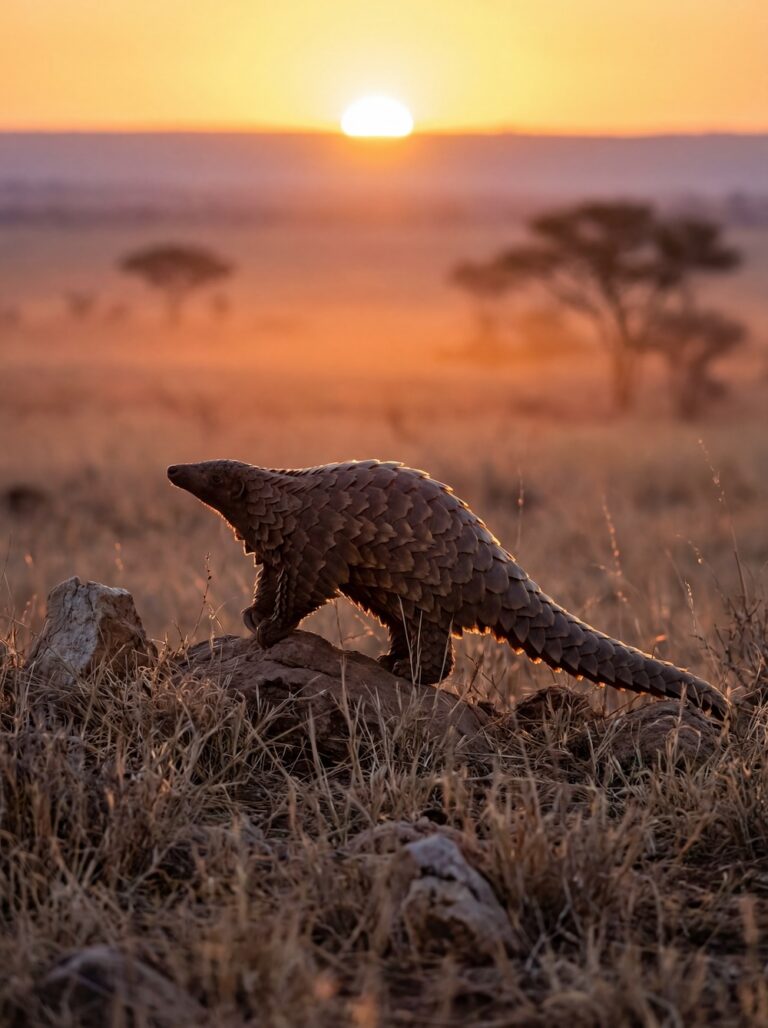
Pangolins are among the most trafficked mammals on the planet. African pangolins are increasingly threatened by demand from consumer markets in Asia, where their scales are used in traditional medicine.
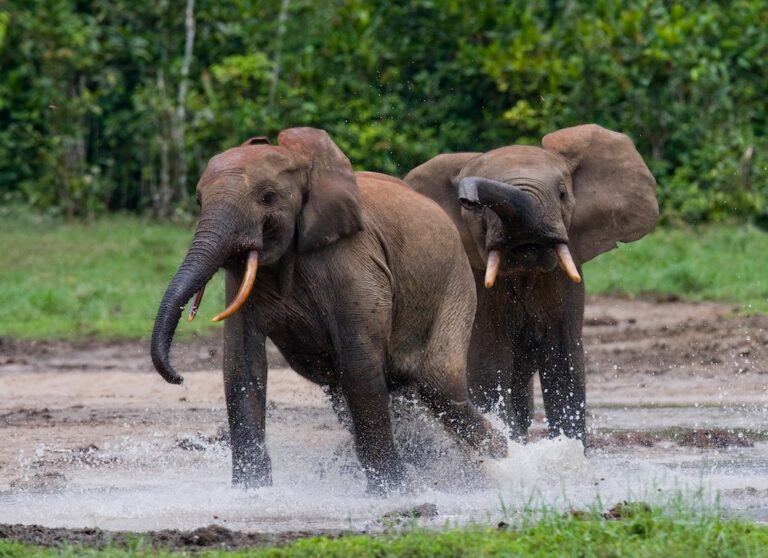
Elephants under threat
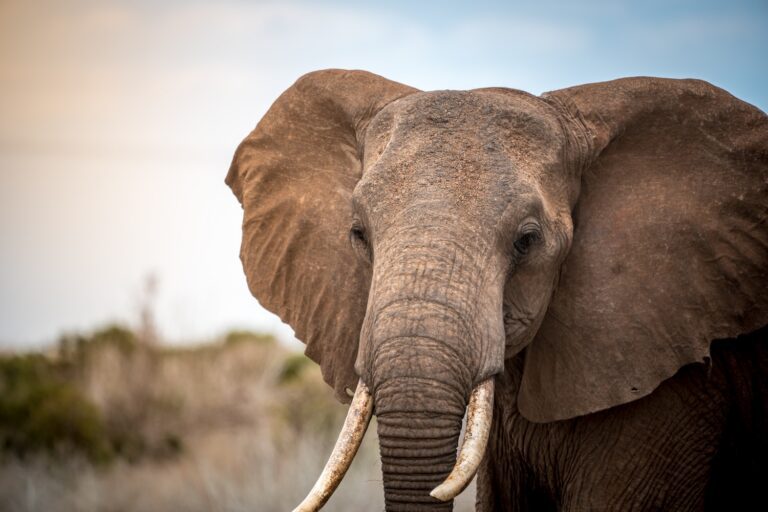
The forest elephants of West and Central Africa are in danger of being poached to near-extinction, partly due to the distinctive pink tinge of their ivory. Forest elephant populations have fallen by an estimated 80 per cent over the past three generations.
Six years undercover: what we found
‘Beyond Africa’ reveals our findings from six years of undercover investigations. It shows how the illegal wildlife trade in West and Central Africa is changing and the deadly impact it’s having on endangered wildlife.
For criminal networks, the illegal wildlife trade is a low-risk, high-profit business that generates billions of pounds every year. For people involved in this trade, animals, biodiversity and the planet simply don’t count.
Bribery and corruption are commonplace and embedded into the supply chain. Shockingly, we’ve heard of corrupt officials selling confiscated products straight back to traders.
Even when traffickers are arrested, conviction rates are pitifully low, at 16%. And most of the time, it’s ground-level people who are prosecuted, not the criminal masterminds who direct operations, often from overseas.
Shifty business
Although there has been some progress, our report discovered that traffickers in Nigeria are consistently finding new ways to beat the system.
As enforcement efforts have focused on Lagos, some traders have relocated operations to areas with weaker law enforcement, such as Enugu and Port Harcourt.
Traders often conceal illegal wildlife products among moringa seeds, cashew nuts, cow horns and ginger. EIA investigations revealed traders packing pangolin scales in two layers of jute sacks for extra padding.
Scales and ivory hidden with timber
In the past two years, we’ve seen more use of bank transfers, including bribe payments to corrupt officials. Criminals are also using underground banking systems to launder illicit proceeds.
Convicted trafficker out of prison in days
Our investigation unearthed extraordinary details of the arrest, conviction and release of a wildlife trafficker.
From his market stall in Lagos, Mr X sold carved ivory products and developed links with Asian buyers, particularly Chinese clients. Soon, he was sourcing large quantities of pangolin scales and elephant ivory from Cameroon, Gabon and the Central African Republic.
In February 2022, he was arrested for unlawful possession of nearly 900kg of pangolin scales and 145kg of elephant ivory. He was convicted in May 2023 and sentenced to two years’ imprisonment.
But our intelligence found that Mr X was free within days, having paid a bribe during court proceedings.
This is a common pattern in many of the affected countries, and demonstrates how corruption continues to undermine efforts to crack down on wildlife crime.

Why we’re cautiously optimistic
Some countries in West and Central Africa, including Nigeria, have made good progress on tackling wildlife crime in recent years. Life is much more difficult for traffickers today than it used to be, partly due to EIA’s ongoing investigations.
We do have reasons to be optimistic. We’ve been instrumental in developing Nigeria’s new Endangered Species law, which could fundamentally alter the criminal justice response to wildlife crime.
The move towards traders using digital financial transactions gives us new opportunities to ‘follow the money’ and track down the criminals behind the trade.
And as wildlife crime converges with the drugs trade and money laundering, it opens the door to more co-ordinated multi-agency responses.
What needs to happen next
We want to see law enforcement agencies:
- investigate wider criminal networks
- conduct financial investigations
- tackle corruption.
We want international partners to invest in financial investigations and support prosecutions, not just enforcement. And we want to see countries working more closely with international bodies such as INTERPOL and the World Customs Organization to carry out joint investigations.
How you can help
By donating to EIA today, you’ll be supporting our work to bring wildlife criminals to justice. You can help us to:
- Expose criminal networks: Help us carry out undercover investigations and identify criminals who kill elephants and pangolins for profit.
- Strengthen legal action: Help us work with prosecutors and judges to put wildlife criminals behind bars.
- Drive systemic change: Support our efforts to increase cooperation and intelligence sharing across agencies and borders to protect wildlife.