Outcomes for Asian big cats, elephants, rhinos, vaquita and more at CITES meeting


EIA campaigners had a busy week at the 81st meeting of the CITES Standing Committee (SC81) in Geneva, Switzerland.
On the ground and in the room last week (2-6 November), they actively engaged on a variety of issues concerning Asian big cats, elephants, rhinos and vaquita porpoises, among other key CITES implementation and illegal wildlife trade enforcement issues.
Here’s a break-down of the key outcomes at SC81.

Captive tiger, China (c) EIA
SC81 discussed the keeping and breeding of tigers in captivity under agenda item 58 and the countries taking the floor to speak on tigers included South Africa, China, Czechia, Thailand and Vietnam, all of which have specific recommendations directed to them to ensure their captive tiger populations are supportive only to conserving wild tigers and that tigers are not bred for trade in their parts and derivatives.
There was strong support for the CITES Secretariat’s recommendations on the issue, which were adopted as is by the Standing Committee. EIA and partner NGOs were eager to hear from South Africa, which had not provided a written report before the meeting and is a known source of tiger parts and products from captive sources. South Africa stated that work is continuing to address legislative gaps to protect non-native species such as tigers.
The Standing Committee encouraged relevant Parties to report on their implementation of the methodological approach set out in Decision 20.189 to ensure that any facilities keeping or breeding tigers in their jurisdiction are doing so primarily for conservation purposes. The Committee also asked countries with specific recommendations directed to them to fully implement these and report back to the next Standing Committee meeting in November 2027.
Significantly, the Committee asked the Secretariat to prepare a document which could serve as a basis for incorporating the methodological approach in Decision 20.189 in the CITES Asian big cat resolution at the next CITES CoP. This would give a level of permanence to the instructions in Decision 20.189, which are of an ongoing nature and would serve as a basis to prevent the trade of tiger parts from captive facilities.
WWF intervened, on behalf of EIA and 15 other NGOs, to support the recommendations at this meeting and appealed to Parties to provide financial assistance to the Secretariat to prepare a substantive report for CoP21, scheduled to take place in 2028 in Panama, on implementation of the main Resolution on Asian Big Cats and all associated Decisions.

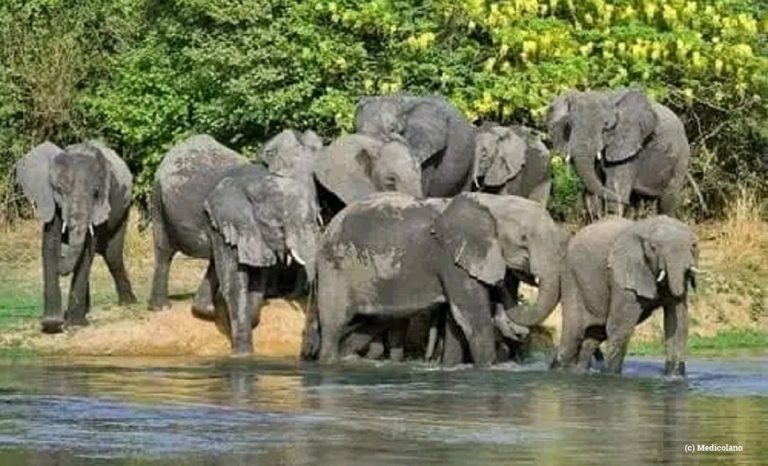
Elephants in the Selous, Tanzania (c) EIA
For elephants, SC81 reinforced the importance of implementation, accountability and evidence-based action, with EIA helping to secure important progress in the fight against ivory trafficking.
EIA successfully advocated for an explicit reminder that Parties should conduct forensic analysis of large-scale ivory seizures and government-held ivory stockpiles, a requirement already in place under CITES but inconsistently implemented. With more than 23 tonnes of ivory confiscated in large-scale seizures globally in the past three years alone, wider use of forensic testing could generate vital intelligence on trafficking routes and criminal networks.
EIA also championed stronger implementation of National Ivory Action Plans (NIAPs), including recognition that countries affected by both ivory and rhino horn trafficking should revise their plans into National Ivory and Rhino Action Plans (NIRAPs).
We welcomed the decision to involve the MIKE (Monitoring the Illegal Killing of Elephants) and ETIS (Elephant Trade Information System) Technical Advisory Group in developing NIAP progress indicators, helping ensure assessments are grounded in independent scientific expertise. Strong support from an array of Parties, including Germany, Kenya, Japan, Zimbabwe and others, also reinforced the importance of stockpile reporting, data integrity and safeguarding the financial future of these two key elephant monitoring systems.
While it was disappointing that Parties failed to discuss Asian elephants at SC81, EIA will renew its efforts ahead of SC82 next year when Parties will be required to report on Asian elephants.

Vaquitas (c) Paula Olson – NOAA
The Standing Committee again discussed the totoaba Compliance Action Plan (CAP), for which the deadline for full implementation was this meeting.
While Mexico made progress with its CAP implementation, given the precarious status of vaquita porpoises – with only about 10 of these critically endangered porpoises remaining in the world, the ongoing illegal transnational totoaba trade and the outstanding actions documented by the Secretariat, it was perhaps surprising that Parties did not provide stronger and more critical feedback on those areas that Mexico has failed to achieve. For example, progress towards fishers switching to the use of alternative gear that would not kill vaquitas remain stalled. Mexico remains subject to compliance proceedings and will report back on progress at SC82.
The SC also discussed and supported the registration of a second captive breeding facility for totoaba fish in Mexico. EIA and NGO colleagues remain concerned that there is no meaningful conservation benefit to such facilities and the risk of transnational swim-bladder trade from the facilities remains, especially given the ongoing, active trade in wild totoabas.

Captive tigers in Laos (c) EIA
The Standing Committee agreed to lift CITES trade suspensions on Laos. Most members of the Committee felt that sufficient process had been made against recommendations relating to legislative and institutional reform and that initial enforcement efforts over the past 12 months was indicative of commitment to improve investigation, cooperation and prosecution.
Only the EU and several NGOs, including EIA, felt it was premature for trade suspensions to be lifted at this time. Born Free, on behalf of EIA and several other organisations, intervened to draw attention to the lack of evidence of meaningful enforcement, including in relation to tiger farms and the ongoing domestic sale of ivory, pangolin, rhino and tiger parts and products.
Concerns regarding the need for evidence of measures to prevent wild-caught macaques being laundered through macaque farms were also raised. While the suspensions were lifted on fauna at this meeting, Laos has not exited the non-compliance process and has to provide evidence of effective investigation, prosecution and international enforcement cooperation to the next Standing Committee in 2027. With thanks to additional language from Germany, on behalf of the EU, which included evidence of targeting the organisers and financiers of wildlife crime.
Tiger farms and trade in captive-bred tiger parts and derivatives will continue to be under scrutiny too, with evidence required of action to more effectively monitor the captive population, prevent trade and phase out operations.

Rhino and young (c) EIA
SC81 highlighted the low response rate by Parties to a request from the Secretariat for information on the implementation of strategies and actions to address rhino poaching and trafficking that arose from the CITES Rhinoceros Enforcement Task Force meeting last year.
The dearth of information supplied by Parties in advance of the meeting was sadly an accurate predictor of the dispassionate energy that characterised the discussion of the rhino agenda item at SC81.
An attempt by France to strengthen the draft recommendations proposed by the CITES Secretariat and secure the adoption of targeted decisions at countries deemed “most affected” by rhino horn trafficking was widely panned by Parties, save for Kenya and Germany which voiced their support.
The result was an agreement to a watered-down version of France’s original proposed recommendations encouraging Parties currently in the National Ivory and Rhino Action Plan process to include information on the targeting of high-level offenders in future reports.