Illegal textile waste shipments exposed as talks advance for stronger controls
Enforcement action in Europe to prevent the export of more than 4,000 tonnes of textile waste underpins EIA’s long-standing warnings that this global trade often results in waste being dumped in other countries.
The European Anti-Fraud Office (OLAF) uncovered and prevented the illegal shipment from Italy to Türkiye, revealing once more the scale of misdeclared textile flows moving across international borders and raising fresh questions about the adequacy of current global controls.
According to OLAF, the shipments were falsely labelled as reusable textiles but contained significant quantities of waste destined for disposal or low-grade treatment.
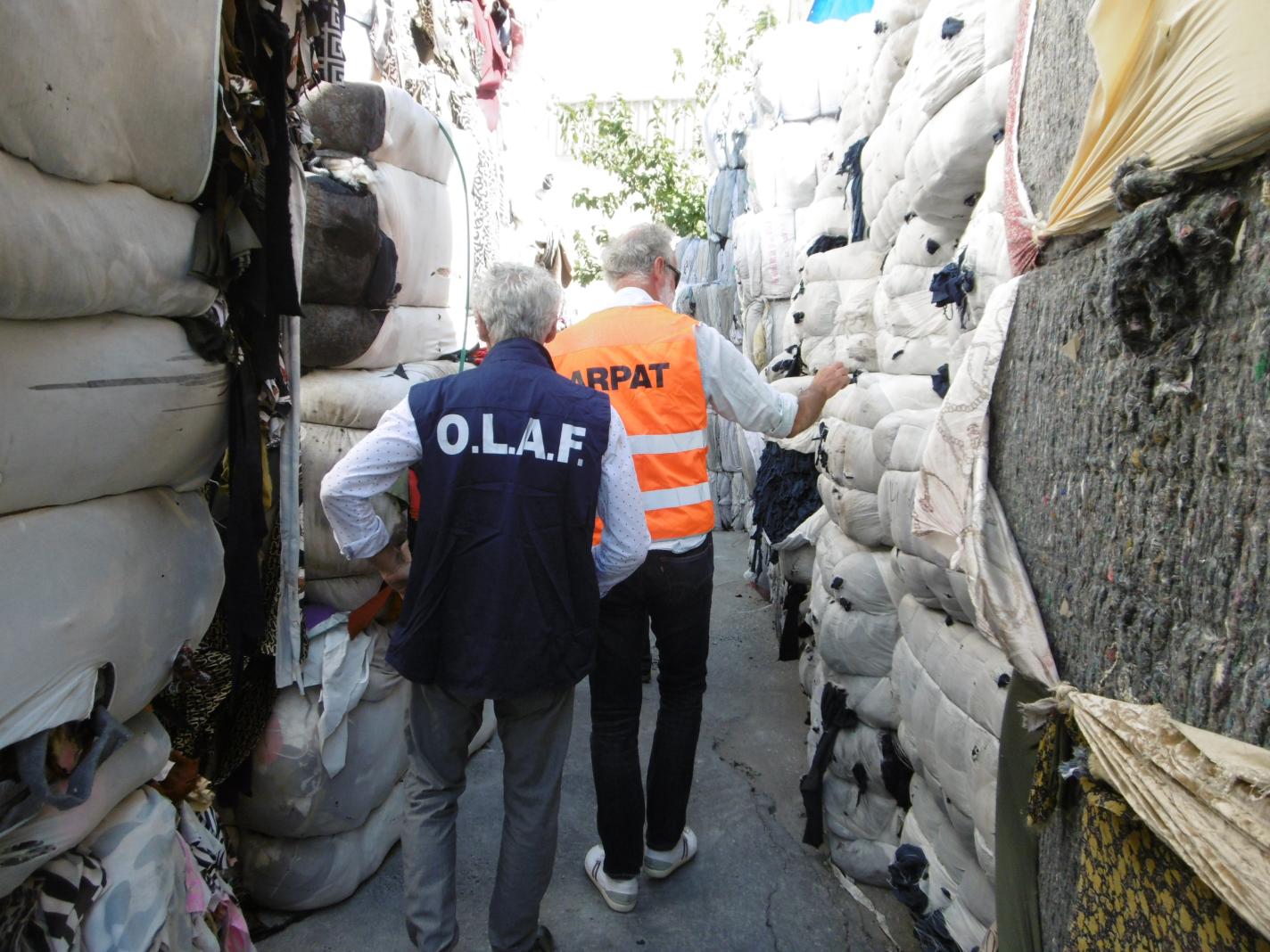
OLAF inspectors joined an on-the-spot inspection organised by Turkish authorities alongside Carabinieri and specialists from the Tuscany regional environmental protection agency (ARPAT) from Italy © ARPAT
The case adds to a growing body of enforcement evidence showing that the distinction between secondhand textiles and textile waste is frequently blurred in international trade, with importing countries often left to manage materials they did not consent to receive and are ill-equipped to handle.
The findings come as parties to the Basel Convention continue discussions at OEWG-15 on how to address the growing problem of used textiles and textile waste. These discussions build on momentum, catalysed in part by EIA, which raised the issue of textile waste trade ahead of COP17 and worked with partners and ambitious countries to bring it onto the Basel agenda through a series of technical briefings and side events.
EIA Legal and Policy Specialist Amy Youngman said: “We welcome growing recognition among parties that textile waste trade needs stronger controls under Basel, but OLAF’s findings make the reality impossible to ignore – misdeclared waste is already moving across borders at scale.
“This is not about stopping legitimate reuse or trade, it is about stopping waste being disguised as something it is not. If lobby groups are not trading in contaminated or mislabelled goods, there is nothing to fear from clearer rules. Basel addresses waste and it should cross borders for disposal only with the importing country’s consent. The question now is whether action moves fast enough to prevent further pollution and harm.”
At OEWG-15, the majority of parties and observers reiterated the need for stronger international controls on textile waste, agreeing on a need for guidance to distinguish waste from genuine reusable goods, strengthened prior informed consent procedures for waste and improved classification to close loopholes that currently enable mislabelling and illegal exports.
EIA has consistently warned that without these safeguards, the global trade in used textiles risks functioning as a pathway for waste dumping rather than a system for circular reuse.
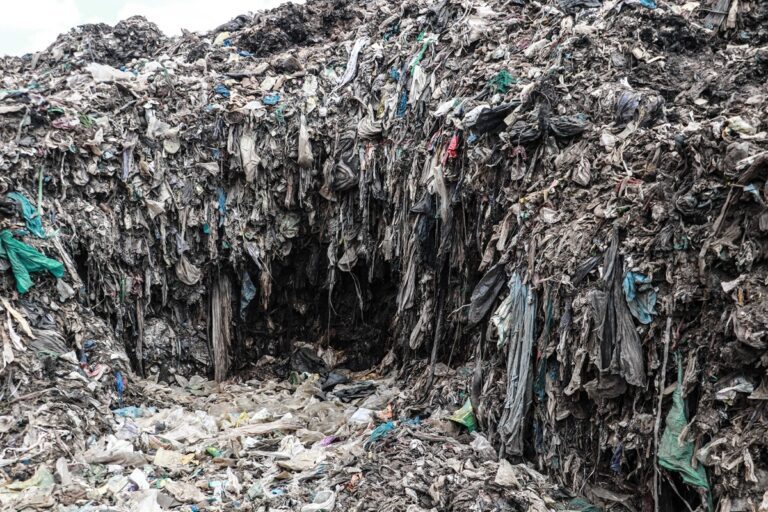
This concern is becoming more urgent as the composition of textiles shifts increasingly towards synthetic, plastic-based and chemically complex materials. These materials are more difficult to sort, recycle or safely manage and they place growing pressure on waste management systems in importing countries, increasing the risk of leakage, pollution and environmental harm.
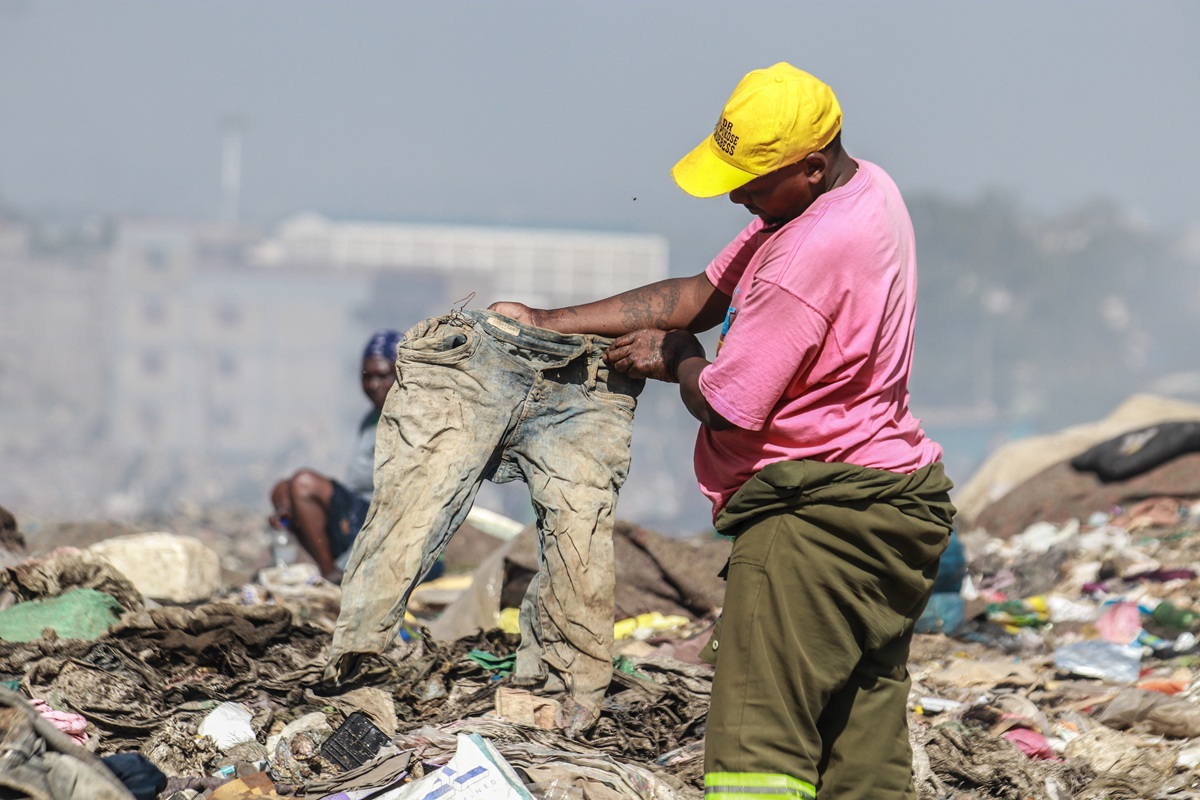
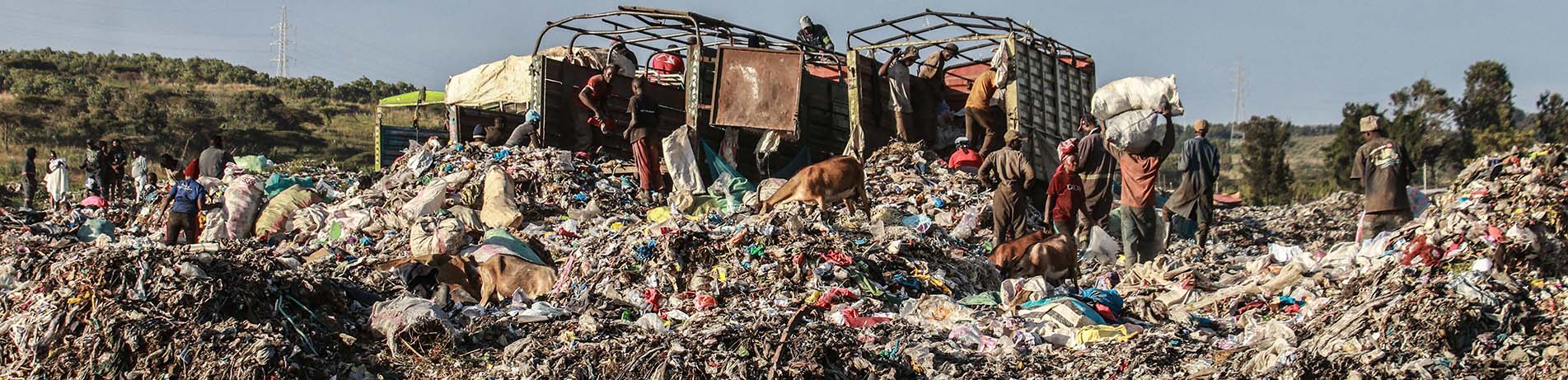
A waste picker working at Dandora dump, outside Nairobi, Kenya (c) EIA/James Wakibia
In many importing regions, waste management infrastructure is already under strain. The addition of large volumes of contaminated or plastic-rich textile waste exacerbates capacity constraints, increases residual disposal needs and contributes to broader environmental pressures, including microplastic pollution and chemical exposure risks.
While used textiles are often presented as a climate and circular economy solution, enforcement cases such as OLAF’s demonstrate that significant volumes are being traded outside the conditions necessary for environmentally sound management.
Industry groups representing parts of the international used-textile trade, including Humana and SMART, have argued against stronger Basel controls, warning they could restrict legitimate reuse markets. These positions have been presented alongside arguments highlighting the environmental benefits of textile reuse and repair.
However, a new study cited by those groups in support of maintaining current trade conditions was co-funded by Humana LT, a major commercial actor in the used-textile export sector. While the funding was disclosed, this underscores the importance of ensuring that policy decisions are informed by a balanced evidence base, including independent research and enforcement data, particularly where commercial interests are directly engaged in the trade under discussion.
EIA stresses that the OLAF investigation reinforces a central conclusion emerging from Basel discussions – effective circularity depends on effective regulation. The Basel Convention already provides a legal framework to control transboundary movements of waste, but gaps in classification, enforcement and consent procedures continue to enable environmental harm.
Clearer legal definitions, stricter contamination thresholds and strengthened prior informed consent requirements are therefore essential to ensure that only shipments which can be managed in an environmentally sound manner are traded internationally. Without such measures, importing countries will continue to bear disproportionate environmental and financial burdens associated with misdeclared textile waste.
The OLAF case adds further urgency to ongoing negotiations, demonstrating that stronger international oversight is not a barrier to circularity, but a prerequisite for it.