When deforestation, corruption and rights violations are just another palm oil family affair

A new report by EIA and our Indonesian partner Kaoem Telapak lays bare alleged deforestation, corruption and human rights violations by companies in Indonesia’s palm oil sector which all have one thing in common – the Fangiono family.
The report A Family Affair – Ongoing allegations of deforestation, corruption and human rights violations in Indonesia’s palm oil industry shows how the family’s connections reach into a multitude of palm oil companies in the country and catalogues some of the worst, ongoing violations of which they are accused.
 EIA Senior Forests Campaigner Siobhan Pearce said: “The Fangiono family’s activities are spread far and wide across Indonesia’s palm oil industry and all too often we find routine, flagrant violations of the law, human rights and the environment.
“These activities are a stain on the sector’s reputation. Numerous reports by NGOs over the years have exposed the opaque corporate layers of the family’s companies and their alleged environmental and social harms, yet their operations and violations have continued.
“The Government of Indonesia, buyers and investors need to take prompt and decisive action. Our report A Family Affair offers a clear place to start and a wealth of pertinent information.”
Indonesia is the world’s biggest producer of palm oil, a substance used in thousands of everyday items such as food stuffs, cleaning products and shampoos and well as in biofuels.
It is a hugely lucrative industry, with exports of palm oil and related products worth almost $28 billion in 2024.
The Fangiono family, through a web of family members, is linked to an ever-increasing number of palm oil companies and other businesses in Indonesia. These are variously accused of deforestation, land-grabs, corruption, operating without proper permits and conflicts with local and indigenous people, with evidence suggesting these are continuing and even expanding issues.
The Fangiono family is headed up by its patriarch – known by his first name, Martias – who was convicted in 2007 of obtaining palm oil permits through bribery and corruption. He was fined more than $38 million and jailed for one-and-a-half years.
But today the family operates across several major corporate groups, including First Resources, FAP Agri and Ciliandry Anky Abadi, in which Martias’ relatives have key positions.
The report’s case studies span the different groups across the Indonesian regions of Sumatra, Kalimantan and Papua, which not only represent different ecological zones but also host distinct indigenous populations and present different legal and political challenges.

Fangiono family patriarch Martias
Allegations of control of a network of shadow companies, accused of some of the most serious deforestation and violations of communities’ rights, have been largely denied by First Resources and FAP Agri, both of which have sustainability policies. Prominent brands, including Unilever and PepsiCo, are reported to have suspended sourcing palm oil from them due to the allegations.
First Resources is also a member of the Roundtable on Sustainable Palm Oil (RSPO) – one of the most well-known certification schemes intended to assure consumers that palm oil is produced ethically.
Following a complaint made to the RSPO in 2021 alleging that First Resources controls other groups, the RSPO ruled on 1 August 2025 to suspend First Resources’ membership for three months after finding it had not been open and transparent. Although the RSPO has not ruled that First Resources controls other groups, the watchdog has previously failed to address similar complaints and company ownership is partly hidden in offshore jurisdictions.
In A Family Affair, EIA and its long-term regional partner Kaoem Telapak outline how the number of businesses linked to the family continues to grow and present ongoing allegations of illegal activities, human rights violations and environmental destruction connected with them.
Kaoem Telapak Senior Campaigner Olvy Tumbelaka said: “This report reveals a governance failure that has enabled the Fangiono family’s corporate network to engage in deforestation, legal violations and the criminalisation of indigenous peoples. As long as groups such as FAP Agri and CAA continue to operate without oversight, accountability or legal consequences for their actions, indigenous and local communities will keep losing their land, livelihoods and fundamental rights.
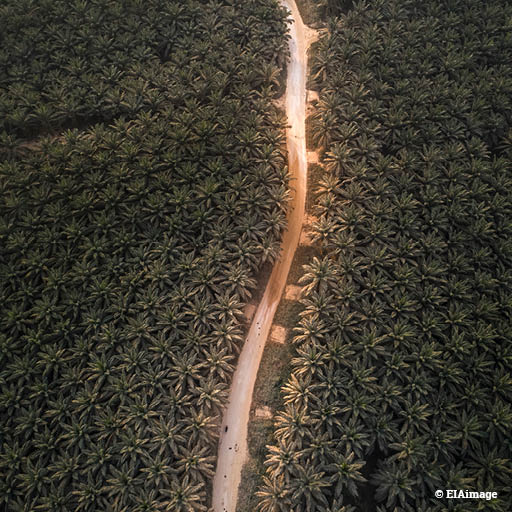
Oil palm plantation on deforested land, Indonesia (c) EIA
“We urge the Government of Indonesia and law enforcement agencies to take firm action against these violations and we call on buyers and investors to be more selective and responsible in their business dealings. The transformation of the palm oil industry must begin with holding violators accountable – not merely echoing empty promises of sustainability.”
In response to the report, both First Resources and FAP Agri have reiterated their commitments to sustainability and compliance with relevant regulations in Indonesia. FAP Agri acknowledged, however, there were ongoing challenges with managing land and community relations while First Resources noted that there are legal pathways for resolution in the event of any discrepancies concerning plantation licensing.
No reply was received from the other groups, including Ciliandry Anky Abadi and New Borneo Agri.
The report calls on a variety of parties – the Government of Indonesia, buyers, investors and certification bodies – to urgently look into and take action against the ongoing alleged violations by palm oil companies linked to members of the Fangiono family and the links between them.