DONATE

Climate

Our climate programme seeks to keep global warming below 1.5°C and meet the climate challenge through rapid, sustained reductions of emissions of all the major greenhouse gases.

This will be achieved by developing, implementing and enforcing ambitious national, regional, global and sectoral obligations to reduce emissions of ozone depleting substances (ODS), fluorinated gases (F-gases), methane (CH4), nitrous oxide (N2O) and carbon dioxide (CO2). These obligations should be reinforced by strong governance frameworks ensuring corporate accountability and sustainable financing for a just and fair transition for all.

Help us slow global warming

FAQs

Global warming refers to the warming of Earth’s atmosphere, caused by the greenhouse gases (GHG) emitted by human activities. This can also be referred to as human-induced climate change. Not all regions will experience the same degree of warming. Some will get wetter, others will become drier. The overall system is experiencing warming which will result in dramatic changes to Earth’s climate.

Earth has a greenhouse effect whereby naturally occurring atmospheric gases (such as carbon dioxide, methane and water vapour) trap some of the sun’s heat, allowing Earth to sustain life. Human activities such as agriculture, deforestation, industrial processes and especially burning fossil fuels emit GHGs that increase this greenhouse effect, thus warming the atmosphere further and raising global average temperatures.

GHG emissions resulting from human activities have increased exponentially since the beginning of the Industrial Revolution. Carbon dioxide (CO₂) has resulted in the most warming and is widely known, released through burning fossil fuels and deforestation. However non-CO₂ GHGs also result in significant global warming. Methane (CH₄) is emitted by fossil fuels, livestock, landfills and rice farming. Nitrous oxide (N₂O) is emitted through the use of fertilisers and industrial processes. Finally, the emission of fluorinated gases (F-gases) results primarily from their use as refrigerants. These gases are much more effective at warming the atmosphere than CO₂ on a tonne per tonne basis. EIA’s climate programme seeks to deliver rapid, sustained reductions of emissions of all the major greenhouse gases.

Yes, there has been some progress in addressing greenhouse gas (GHG) emissions and there are reasons for hope. An increasing number of countries are taking action by setting net‐zero targets, deploying renewables, and beginning to phase out fossil fuels. Companies are working to reduce their supply chain emissions and procure renewable electricity. There is greater public awareness of climate change, with global mobilisation of youth activists demanding change, but not nearly enough is being done to avoid the most severe risks of climate change.

Global warming is happening - global surface temperatures have increased by about 1.1°C above pre-industrial levels (1850-1900). Changes to our climate system are evident with increasing frequency and severity of extreme weather events witnessed across the globe. It is now very likely that we will exceed the Paris Agreement global climate target which aims to limit warming to 1.5°C, thus increasing the risk of hitting dangerous climate tipping points.

Fundamentally, global GHG emissions continue to increase. As we continue to extract and consume fossil fuels, more and more carbon dioxide is released, which will continue to warm the Earth’s atmosphere for hundreds of years. The amount of methane in the atmosphere is increasing at record rates. Methane is the second most important GHG. Tonne per tonne it is 82.5 times more potent than carbon dioxide (CO2) over a 20-year period and responsible for a third of the warming that has occurred so far. EIA is working to reduce methane emissions at EU and international level through advocating for ambitious implementation of the EU Methane Regulation, and the delivery of Global Methane Pledge.

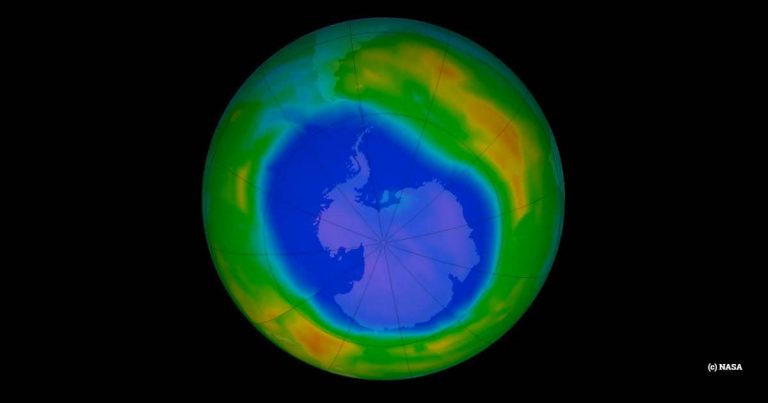
Fluorinated greenhouse gases, such as hydrofluorocarbons (HFCs) and ozone depleting substances like chlorofluorocarbons (CFCs) are groups of gases which can be thousands of times more potent than CO2 per tonne. The phase out of CFCs and other ozone depleting substances under the Montreal Protocol is one of the best success stories we have – in fact scientists estimate that up to 2.5°C warming by 2100 has already been avoided by the Montreal Protocol.  avoided by 2100 due to the Montreal Protocol. The treaty – often regarded as the most successful environmental treaty of all time – is now focused on reducing the production and consumption of HFCs. EIA is advocating a number of other measures whereby the ozone treaty can secure further significant GHG reductions in the future.

Predictions of the future of climate change are dependent on the action we take now. There are very concerning and entirely possible future scenarios where large areas of the planet become increasingly difficult, or impossible, to live in.

Extreme weather, including deadly heatwaves, floods and droughts, ecosystem collapse and species extinction are predicted, while passing climate tipping points could trigger irreversible significant changes over the next two decades due to global warming. When the last global assessment by the Intergovernmental Panel on Climate Change (IPCC) was published in 2022, UN Secretary General António Guterres described it as an “atlas of human suffering and a damning indictment of failed climate leadership.”

The Paris Agreement saw countries commit to keeping global warming well below 2°C above pre-industrial levels and with a target of 1.5°C. The latest data suggests we will almost inevitably pass 1.5°C in coming years. Climate Action Tracker, which analyses and scores countries’ emissions reduction plans, estimates that with currently implemented policies we would see 2.7 °C of warming by 2100. If all currently non-binding pledges and targets made by countries were met, they predict 2.1°C of warming by 2100.


These are worst case scenarios, but the truth is that every increment in global warming makes life more difficult and precarious, particularly for those living in poverty or in climate vulnerable countries.

Like all developed economies, the UK has significantly contributed to climate change. In 2023, total UK net territorial greenhouse gas emissions were estimated to be 385 million tonnes carbon dioxide equivalent (MtCO2e), a decrease of 5% from the 2022 estimate, and a 53% decrease compared to 1990. These emissions result from activities such as energy consumption, land-use change and agriculture; and are much higher compared to the emissions of most countries in the global south. Although the UK has decreased its emissions, part of this has been achieved by offshoring polluting industries like manufacturing and steel production.

While the UK’s present-day emissions may be smaller than large emitters like China, the US, or India, it bares huge responsibility for historical emissions. Studies suggest the UK is responsible for around 3% of global cumulative emissions (compared with 1% of present-day emissions), or even as much as 5% if colonial-era emissions are included, meaning its past industrialisation contributed significantly to the warming currently being experienced. The UK thus has a responsibility to reduce its present-day emissions and support less wealthy countries to do the same.

Importantly, the UK has significantly reduced its GHG emissions in recent years and is committed to reaching net zero by 2050. This means that the total greenhouse gas emissions would be equal to the emissions removed from the atmosphere, with the aim of limiting global warming and resultant climate change.

The best way to help reduce the impacts of climate change is by rapidly reducing GHG emissions across all sectors. Mitigation requires a transformation of our energy, transport, industry and land use sectors. We must decarbonise our energy system through rapid fossil fuel phase out and widespread renewables deployment. We need to rethink both transport and industry, investing in public services, electrifying processes and developing new, cleaner fuels. The buildings we live and work in require retrofitting and refurbishment, to reduce energy consumption and improve standards of living in a warming world. Crucially, we must protect and restore the natural world to continue to enjoy the benefits of ecosystem services, preserve soils and find a balanced approach to food production.

This means different things for different actors. Governments across the world must set decarbonisation targets, supported by a comprehensive policy framework that prioritises sustainability, rather than short term economic benefits. Private companies are crucial to innovate, provide technological solutions and the required investment. Civil society has a key role to play in holding governments to account and calling for ambitious climate action. This is a collective challenge that we all face.

Although studies demonstrate that just 100 companies are responsible for 71% of global emissions, individual choices matter. Individuals can help reduce global warming by reducing their own carbon footprint, which involves changes in behaviour. Some of the most impactful changes include reducing energy related emissions (e.g. choosing a heat pump over a gas boiler), adopting a vegetarian diet, avoiding air travel and using public transport.