
Falling Apart at the Seams
The story of textile waste is not just about discarded clothes – it’s about a global system that shifts the burden of pollution from rich nations to poorer ones under the guise of charity and recycling.
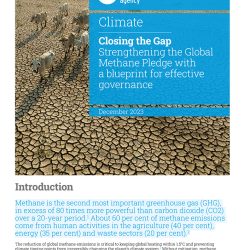
Launched at CoP26 in 2021, the Global Methane Pledge (GMP) is the first global initiative focused on reducing emissions of methane - a super-pollutant responsible for about one-third of current warming.
What is methane and why care? Methane is a potent greenhouse gas (GHG) with significant environmental and health impacts. It warms the planet around 30 times more than Carbon Dioxide over a 100 year period and over 80 times more over a 20 year period.
Nitrous oxide (N2O) is the most significant ozone-depleting substance (ODS) in the world today and is projected to remain so throughout the 21st century. It is also the third most important greenhouse gas (GHG), being 273 times more potent than carbon dioxide (CO2) on a tonne-for-tonne basis over a 100-year period.
From 8th to 12th July 2024, the Parties to the Montreal Protocol will be attending the 46th Open-Ended Working Group (OEWG-46) in Montreal. EIA has produced a new briefing for the meeting, exploring the significant opportunities for the Parties to the Montreal Protocol to demonstrate strong leadership in living up to its reputation as the “most successful environmental treaty.”
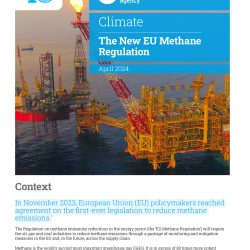
The Regulation on methane emissions reductions in the energy sector (the ‘EU Methane Regulation’) will require the oil, gas and coal industries to reduce methane emissions through a package of monitoring and mitigation measures in the EU and, in the future, across the supply chain.