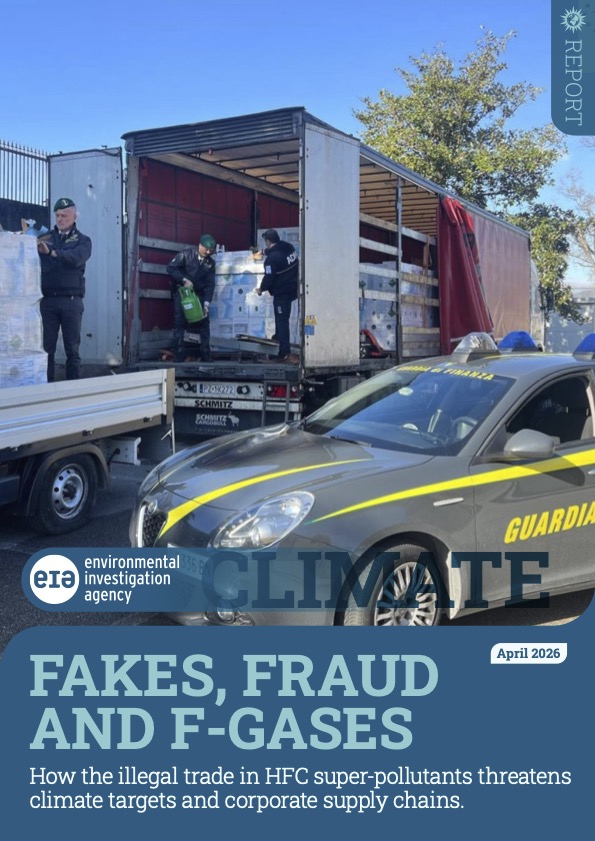
Fakes, Frauds and F-Gases
Fakes, Frauds and F-Gases exposes how illegal trade in hydrofluorocarbons (HFCs), potent greenhouse gases used in cooling equipment, continues to undermine climate policy across Europe.
- Areas of work:
- Campaigns:

Fakes, Frauds and F-Gases exposes how illegal trade in hydrofluorocarbons (HFCs), potent greenhouse gases used in cooling equipment, continues to undermine climate policy across Europe.

Following revelations of unexpected CFC-11 emissions in 2018 and reports of record atmospheric HFC-23 concentrations and other unexpected emissions, legitimate questions have been raised as to whether the Montreal Protocol’s institutions and controls are fit for purpose, not only to sustain the phase-out of ozone depleting substances (ODS) but also to address the unique challenges of the hydrofluorocarbons (HFC) phase-down.

Five years after EIA first revealed a widespread European illegal trade in hydrofluorocarbon (HFC) climate super pollutant gases, a new investigation has revealed that significant levels of trafficking persist, despite the worsening climate emergency.

Despite this undeniable success, significant greenhouse gas emissions equivalent to almost half a billion tonnes of CO2 are occurring each year, linked to unregulated fluorochemical industrial processes. This briefing explores additional measures that can be taken under the Montreal Protocol to contribute to averting the climate crisis.
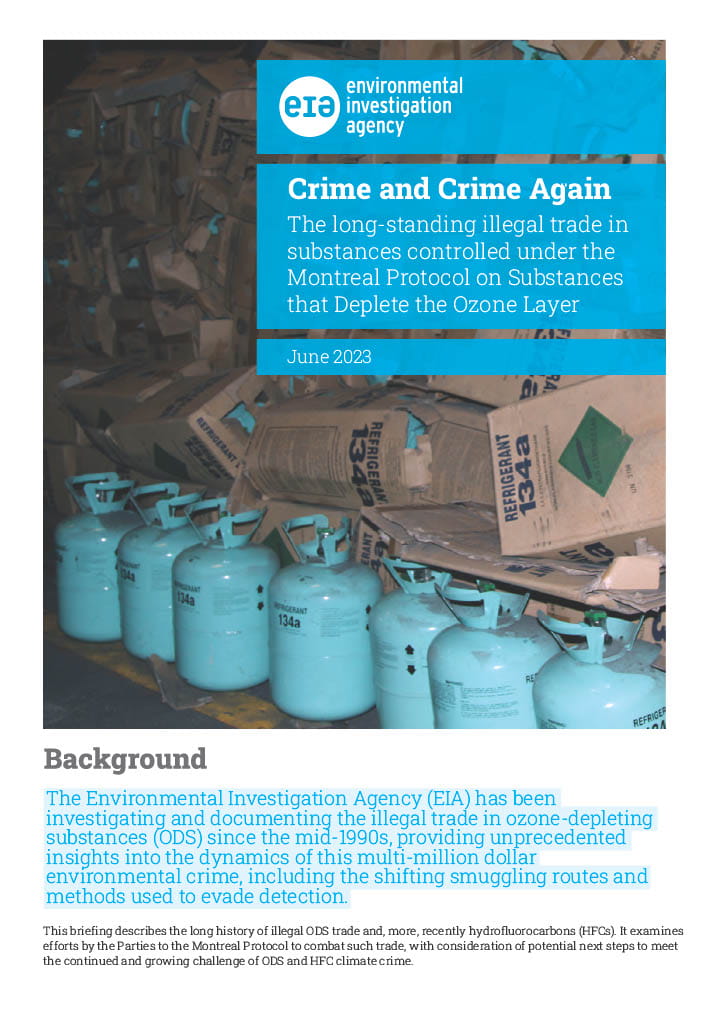
This briefing provides a history and overview of the issue of the illegal trade of substances controlled under the Montreal Protocol including CFCs, HCFCs, and HFCs.

Despite a brief dip in carbon dioxide emissions caused by the COVID-19 pandemic, the world is still heading for a temperature rise in excess of 3°C this century, far beyond the universally recognised Paris Agreement target of 1.5°C.